How to Clear a Minor Overstay Entry Ban by Paying Fines at the Turkish Embassy
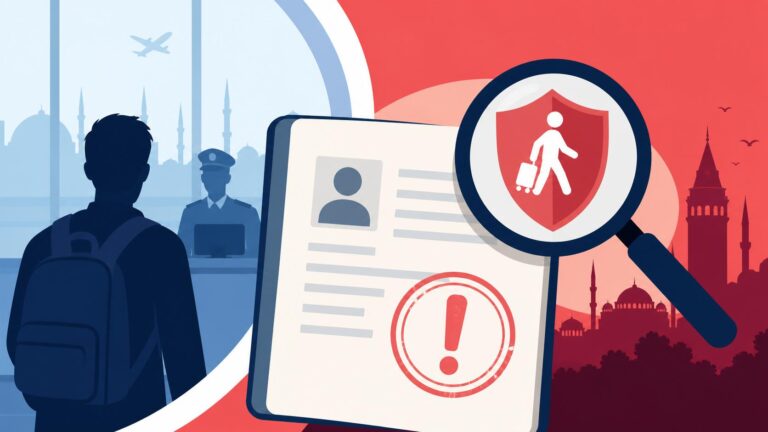
Realizing you have overstayed your Turkish visa while standing in the departures line at Istanbul Airport is a heart-pounding experience that can lead to immediate entry bans. I’ve been there, sweating under the gaze of a stern passport officer because I miscalculated the 90-day rule by forty-eight hours. This guide explains how to clear a minor overstay ban by paying your fines through a Turkish embassy abroad.
Understanding the Legal Trap of the 90-180 Day Rule
The most common reason foreigners find themselves facing an entry ban is a simple mathematical error regarding the Visa Exemption Rules: The 90/180 Day Limit Explained for Turkey. Turkey operates on a rolling 180-day window, meaning you can only stay for 90 days within any given 180-day period. Many expats mistakenly believe the clock resets the moment they cross the border back to Europe or the UK for a weekend, only to be stopped upon their return. In 2026, the Turkish Ministry of Interior has become even more meticulous with digital tracking, leaving very little room for "accidental" overlaps.
When you overstay, even by a single day, you are technically in violation of the Law on Foreigners and International Protection No. 6458. If you realize your mistake before leaving, you have the option to pay at the airport's "Visa Violation Office" (Vize İhlal Ofisi). However, many travelers are either caught off guard, lack the necessary Turkish Lira on hand, or are in such a rush to catch their flight that they skip the payment. This is where the real trouble begins: an automatic entry ban is triggered the moment you pass through passport control without settling your debt.
The length of these bans has become increasingly standardized in 2026. A minor overstay of less than 10 days might only result in a fine if paid at the border, but leaving without paying can trigger a three-month to five-year ban depending on the mood of the officer and the specific Immigration V-Codes: What They Mean When Placed on Your Immigration Record attached to your file. Validating your frustration here is important; the system is designed to be rigid, and "I didn't know" is rarely accepted as a valid defense by the Göç İdaresi (Migration Management).
The Path to Redemption Paying Fines via the Turkish Embassy
If you have already left Turkey and were slapped with an entry ban because of an unpaid fine, all is not lost. You do not necessarily have to wait out the full duration of a five-year ban. The Turkish legal framework allows for the "clearing" of certain bans by settling the administrative fine at a Turkish Consulate or Embassy in your home country. This process is often referred to as a "Vize İhlal Cezası Ödemesi" (Visa Violation Fine Payment) and is the first step toward regaining your right to enter the country.
First, you must contact the consular section of the nearest Turkish Embassy to request a calculation of your debt. In 2026, many consulates require you to book an appointment specifically for "Legal Affairs" or "Visa Inquiries." You will need to provide your passport details and the date of your last departure from Turkey. The consulate will communicate with the Ministry of Interior in Ankara to determine the exact amount owed, which is calculated based on the duration of your overstay and the current administrative fee rates.
Preparation is key during this stage. You will likely be asked to provide a written explanation of the overstay. If your documents are in English or another foreign language, the consulate may require them to be translated by Sworn Translators (Yeminli Tercüman): Expected Costs for Official Documents. For high-quality, certified translations that meet Turkish consular standards, many expats use services like RushTranslate to ensure their personal statements or supporting evidence (such as medical reports or flight cancellation proof) are processed quickly and accurately. Once the fine is calculated, you pay it directly to the consulate, and they will issue a formal receipt which serves as your primary evidence that the financial part of your ban has been satisfied.
Documenting Your Case for a Ban Lift
Paying the fine is the financial solution, but the legal ban on your passport—often marked as a V-code in the system—must be manually updated. After the fine is paid at the embassy, you generally cannot just hop on a plane the next day. You must apply for a "Special Annotated Visa" (Meşruhatlı Vize). This is a specific type of entry permit granted to individuals who have cleared their fines and wish to return to Turkey for legitimate reasons, such as applying for a residence permit or visiting family.
When applying for this visa, the burden of proof is on you to show that you are a "safe" traveler who will not violate the rules again. The consulate will look for a Required Documents Checklist for a Short-Term Turkish Residence Permit even if you are only applying for a temporary entry visa. This typically includes proof of accommodation, a clean criminal record from your home country, and evidence of financial self-sufficiency. They want to see that you have a plan to stay legal this time around.
One of the most critical components of this application is proof of health insurance. Turkish authorities are strict about ensuring that foreigners do not become a burden on the state healthcare system. Even for a visa to clear a ban, you should present a comprehensive policy. I personally recommend Cigna Global for this stage, as their international coverage is recognized by Turkish consulates worldwide and provides the level of detail required to prove you are fully covered for any medical emergencies upon your return. Having a "Hero" solution like this in your application packet significantly reduces the chances of a secondary rejection based on insufficient insurance.
Fine Calculations and Duration Comparisons
The cost of overstaying in Turkey is not a flat fee. It is a combination of a base fine (which varies by nationality) and a daily rate for every day you were in the country illegally. In 2026, these rates are adjusted annually according to the "Revaluation Rate" (Yeniden Değerleme Oranı). For most Western nationalities, the first month of overstay is the most expensive, with costs tapering slightly for subsequent months, though total amounts can easily reach several hundred dollars for a month-long violation.
| Overstay Duration | Typical Ban (If Unpaid) | Typical Ban (If Paid at Embassy) | Action Required |
|---|---|---|---|
| 1 – 10 Days | 3 Months | None / Fine Only | Pay fine and apply for fresh E-Visa |
| 11 – 90 Days | 6 Months to 1 Year | Possible Ban Lift | Pay fine + Annotated Visa Application |
| 3 – 6 Months | 1 – 2 Years | Reduced Ban Period | Legal appeal + Annotated Visa |
| Over 1 Year | 5 Years | Significant Ban | Mandatory legal representation |
It is important to note that What is the Exact Penalty Fee for Overstaying a Turkish Tourist Visa by a Week? is a question with a shifting answer. The 2026 fees include a "Card Fee" even if you didn't have a residence card, as it’s considered an administrative processing cost. Always carry more cash (in USD or EUR) than you think you need when visiting the embassy, as some consulates do not accept local credit cards for these specific fine payments due to the way the funds are remitted to the Turkish Treasury.
Re-Entering Turkey After the Ban is Lifted
Once the embassy approves your Special Annotated Visa and confirms the fine is paid, the "ban" status on your passport is modified. However, the first time you land back at a Turkish airport (like Istanbul or Antalya), you will likely be diverted to the "Polis Odası" (Police Room) for a brief interview. This is standard procedure. The officers want to verify that the information in the digital system matches the physical receipt you received from the embassy.
During this interview, stay calm and be transparent. Show them your Health Insurance Requirements: Securing a Policy for First-Time Ikamet Applications and explain that you have settled all debts. The Turkish authorities are using a synchronized system called EGTS (Electronic General Tracking System), so your payment at the London or New York consulate should be visible to the officer in Istanbul. If it isn't, having your physical receipt and a translated copy of your payment confirmation (again, RushTranslate is helpful here) is your "get out of jail free" card.
Once you are stamped into the country, you usually have a 10-day window to apply for a formal residence permit if that was your intention. If you fail to start the application process within those 10 days, you are technically in violation of your annotated visa terms, which can lead to a permanent, non-negotiable deportation. The transition from a "cleared ban" to a legal resident is a narrow path, so make sure your Turkish e-Visa and Tourist Visas: Entry Rules and Expirations by Nationality knowledge is up to date before you touch down.
Common Mistakes to Avoid During the Process
The biggest mistake I see expats make is attempting a "Visa Run" to a neighboring country like Georgia or Greece while they have an active unpaid fine. People assume that if they just stay out of Turkey for 90 days, the fine "disappears." It does not. The fine stays attached to your passport number and biometric data indefinitely. If you try to re-enter without having cleared the ban at an embassy or paying the old fine with a heavy interest penalty at the border, you will be denied entry and potentially face a longer Understanding Deportation Orders and Re-Entry Bans (Tahdit Kodları) at Borders period.
Another error is relying on "fixers" or agencies that claim they can "delete" your ban for a fee. The Turkish immigration system is highly centralized and digital. No one can simply "delete" a record from the Ministry of Interior’s database without a formal legal process or a payment receipt from a consulate. Always work directly with official Turkish government channels or a licensed Turkish immigration lawyer. Validating your anxiety here is key—it feels like a lot of red tape, but following the official embassy route is the only way to ensure your future in Turkey is secure.
Lastly, don't forget the importance of the insurance. While many local Turkish plans are cheap, they often don't provide the "re-entry" support you need. A plan from Cigna Global is particularly useful because it covers you the moment you leave your home country, ensuring that from the flight to the passport control desk, you are fully compliant with Turkish law. This level of preparation shows the consulate and the border police that you are a high-value, responsible resident who respects the country's regulations.
Practical Steps Checklist for the Embassy Visit
To make your trip to the Turkish Embassy as smooth as possible, follow this checklist. First, print out every entry and exit stamp from your passport for the last two years. The officers in Ankara will use these to cross-reference their digital logs. Second, ensure your passport has at least 12 months of validity remaining; the consulate will not process a ban lift on a passport that is about to expire.
- Book the "Legal/Consular" appointment online via the Konsolosluk.gov.tr portal.
- Bring two biometric photos (50mm x 60mm with a white background).
- Have your overstay fine payment ready in the currency requested by the consulate.
- Ensure all foreign supporting documents are translated by a service like RushTranslate.
- Bring proof of a comprehensive health policy like Cigna Global.
- Keep your original "Departure Document" (Çıkış Belgesi) if you were given one when you left Turkey.
Settling an overstay fine at the embassy is a test of patience, but it is a functional and legal way to correct a past mistake. Once the paperwork is filed and the fine is paid, the weight off your shoulders is immense. You can finally look forward to returning to the Bosphorus or the turquoise waters of the Mediterranean without the fear of being turned away at the gate.
Disclaimer
This guide is for informational purposes only and reflects the administrative procedures for Turkish immigration as of 2026. Immigration laws and fine calculations are subject to frequent change by the Turkish Ministry of Interior. Always consult with the nearest Turkish Embassy or a qualified legal professional before making travel arrangements or paying fees.