How to Pay Your Mandatory DASK Earthquake Insurance Online
Trying to sign a lease in Istanbul only to realize you cannot turn on your water or electricity without a specific 10-digit number is a classic expat rite of passage. I still remember standing in a dusty Limak Enerji office in Bursa, sweating through my shirt, as the clerk repeated "DASK, DASK" while I stared blankly at my rental contract. This guide solves the mystery of mandatory earthquake insurance and shows you exactly how to navigate the online payment portals so you never get stuck without utilities or a residence permit.
Understanding DASK: Why It Is More Than Just a Legal Requirement
In Turkey, the Doğal Afet Sigortaları Kurumu, or DASK, is a compulsory earthquake insurance pool designed to provide a financial cushion for homeowners and tenants in the event of seismic activity. For those of us living here, it is not just a "nice-to-have" policy; it is the gatekeeper to almost every administrative step in your Turkish life. Without a valid DASK policy, you cannot finalize your rental contract at a notary, you cannot transfer utility bills like gas or water into your name, and you certainly cannot complete your residence permit application. It is the very foundation of Setting Up Your Turkish Home: Utilities, Internet Providers, and Aidat.
The logic behind DASK is straightforward: Turkey sits on several major fault lines, and the government wants to ensure that every building has a minimum level of coverage for structural damage. Many expats mistake this for comprehensive home insurance. It is not. DASK covers the structural elements of your building—the walls, the foundation, the roof—but it does not protect your expensive laptop, your designer sofa from Amazon Turkey, or your personal belongings. It is a social safety net intended to rebuild the shell of the country, not the contents of your living room.
When you are searching for an apartment through premium services like Blueground, the DASK policy is often handled or at least clearly documented for you. However, if you are navigating the local market on your own, the burden of proof is on you. You need to ensure the landlord has an active policy or be prepared to purchase one yourself. The good news is that DASK is remarkably affordable compared to insurance rates in Western Europe or North America, often costing less than a few rounds of Turkish coffee for an entire year of coverage.
What DASK Covers and What It Does Not
The coverage provided by DASK is specifically limited to damage caused by earthquakes and the immediate disasters they trigger, such as fires, explosions, tsunamis, or landslides. If a pipe bursts in your kitchen or a thief breaks into your apartment in Kadıköy, DASK will not pay out a single kuruş. This is why most veteran expats eventually opt for a supplementary private insurance policy to cover their "eşyalı" (furnished) items. If you are ordering high-end electronics or kitchen appliances from Amazon Turkey, you should definitely look into "Konut Sigortası" (Home Insurance) as an add-on.
Structural elements like the stairs, elevators, corridors, and chimneys are all included in the DASK calculation. The payout is determined by the square meterage of your apartment and the construction style of the building. In 2026, the maximum coverage amount has been adjusted to reflect the rising costs of construction materials. Newcomers are often told that while the payout might seem low, the primary goal of the policy for most foreigners is simply to remain legal and keep the water running.
One nuance many people miss is that the DASK payout is capped. If you live in a luxury villa in Bodrum or a high-rise in Maslak, the mandatory policy will likely only cover a fraction of the rebuild cost. In these cases, banks will often insist on additional private insurance if you are taking out a mortgage. For those of us just renting, we simply need that policy number to show the Göç İdaresi that we are compliant with national law.
The Critical Link Between DASK and Your Residence Permit
If you are currently preparing for your appointment at the Migration Office, you need to pay close attention. The DASK policy is a non-negotiable document for any rental-based residence permit. If your policy expires even one day before your interview, the officer may reject your file. Some people lose months of progress because they didn't realize their landlord let the insurance lapse. This is especially true for those following the Turkish Residence Permits (Ikamet): The Complete Application Guide (2027) protocol.
When you fill out your online application on the e-Ikamet system, there is a section asking for your insurance details. While this usually refers to your health insurance, the physical folder you take to the Biometric Appointments (Randevu) at the Provincial Migration Office (Göç İdaresi) must include the DASK certificate for the address where you are registered. If you are living in a managed building like those provided by Blueground, make sure to ask the concierge for a digital copy of the policy well in advance.
Furthermore, the address on your DASK policy must match your Address Registration (Nüfus): The Most Critical Post-Arrival Step for Foreigners record exactly. If the DASK says "Apartment 4" but your Nüfus record says "Apartment 4A," you are in for a long afternoon of bureaucratic corrections. I always double-check the "UAVT" code—a unique national address code—on the DASK website before paying to ensure everything aligns with the official government database.
Step-by-Step: How to Pay and Renew DASK Online
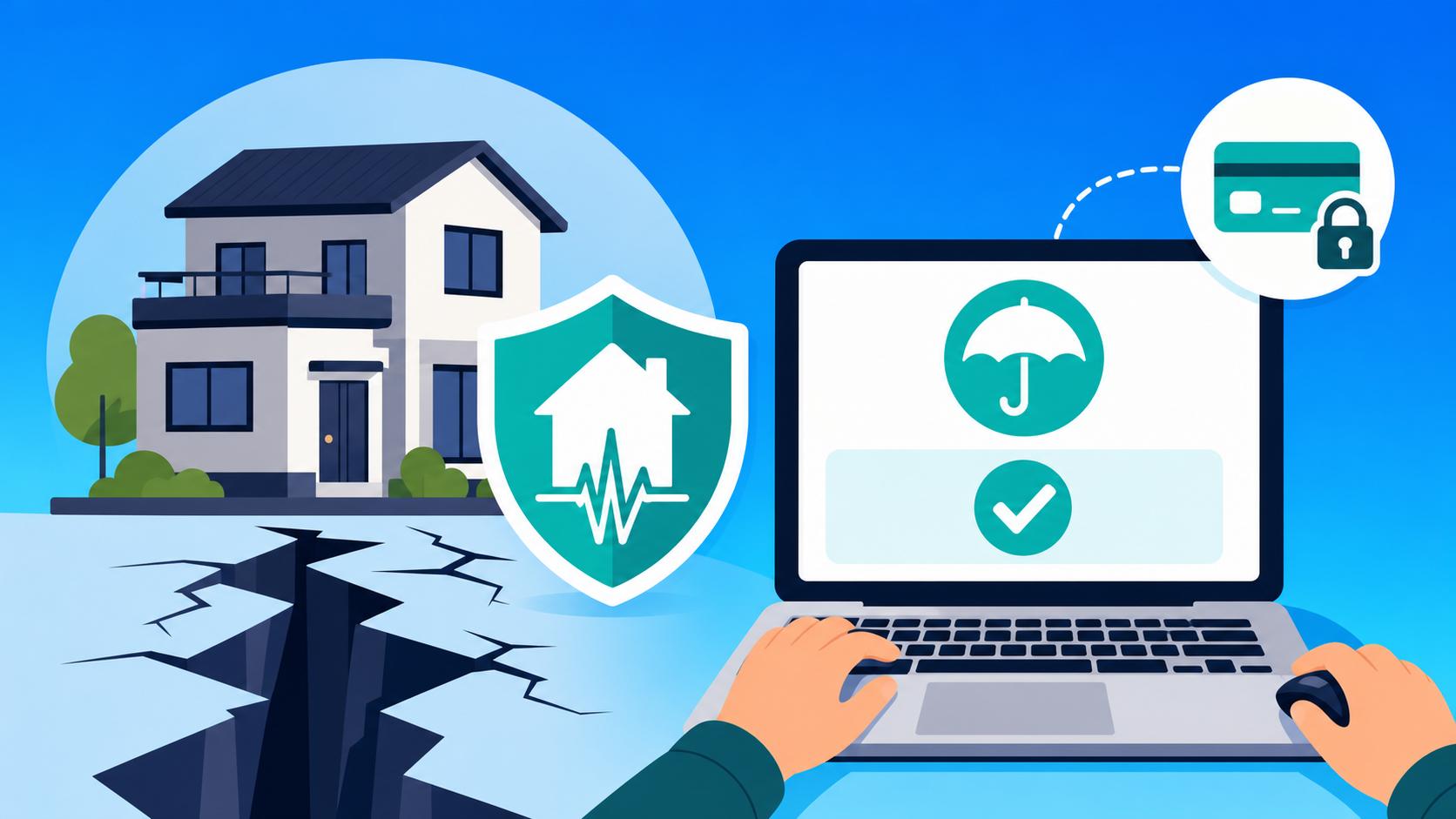
The days of standing in line at a PTT office or a bank branch are mostly over. Turkey has one of the most advanced digital banking and e-government infrastructures in the world. You can pay for your DASK policy using a local bank app, the official DASK portal, or even through e-Devlet. If you are out and about and need a stable connection to handle this, having an eSIM from Airalo ensures you aren't relying on spotty cafe Wi-Fi when entering your sensitive credit card details.
To start, you will need the owner's T.C. Kimlik number (or your own if you own the property), the building's tax number, and the UAVT address code. If you don't have these, ask your landlord or your real estate agent. If they seem confused, tell them you need the "DASK poliçe yenileme" (DASK policy renewal) details. Once you have the info, the process takes less than five minutes. I personally prefer using bank apps because they automatically save the policy to my account for future renewals.
If you are a tenant, it is technically the landlord's responsibility to pay for DASK, but in practice, many landlords ask tenants to handle it and deduct the cost from the first month's rent. This is actually a benefit for you because it ensures you have the original digital document in your possession. You can find more about these tenant-landlord dynamics in Renting in Turkey: Lease Contracts, Deposits, and Tenant Rights Explained.
Using Turkish Bank Portals like Ziraat and Garanti
If you have already managed the feat of Opening a Bank Account in Turkey: Rules for Expats, Tourists, and Investors, your mobile banking app is the easiest way to pay. For example, in the Garanti BBVA app, you navigate to the "Payments" menu, select "Insurance," and then "DASK." You enter the required address details or the previous policy number, and the system will fetch the current premium due.
Ziraat Bank, which is very common for foreigners, has a similar workflow. The benefit of using these banks is that they often offer a small discount for renewals made before the expiry date. They also provide a PDF of the policy immediately, which you can save to your phone. I keep a dedicated folder on my cloud storage for these PDFs because you never know when a utility company will ask for it during a random audit.
For those who are still waiting on their local accounts, some banks allow "guest" payments via their websites using a foreign credit card, though this can be hit or miss. If you are trying to pay from abroad and your bank's 3D Secure system is being finicky, using a VPN like NordVPN can sometimes help by making it appear as though you are browsing from within Turkey, which reduces the chance of the transaction being flagged as fraudulent.
Utilizing the Official DASK Website and E-Devlet
The official website (dask.gov.tr) is the gold standard for accuracy. You can use the "Poliçe Sorgulama" (Policy Inquiry) tool to see if your apartment currently has a valid policy. All you need is the T.C. number of the owner and the address. If nothing shows up, you can proceed to the "Online Poliçe" section to buy a new one. The site is available in English, though the translation can be a bit clunky at times.
E-Devlet is another powerhouse for this. If you have your e-Devlet password from the PTT, you can search for "DASK" and see all policies associated with your name or address. This is incredibly helpful when you are doing your Ikamet Rejections: Exact Steps on What to Do If Your Residence Permit is Denied damage control, as it proves to the authorities that you were covered during the period in question.
One pro tip: Always ensure your phone number is updated in the DASK system. When an earthquake happens, or when your policy is about to expire, the system sends SMS alerts. If you are using a local SIM, make sure you have followed The Turkey IMEI Rule: How to Register Foreign Phones in 2026 so your phone doesn't get blocked right when you're trying to receive a critical 3D Secure code for your insurance payment.
| Feature | Mandatory DASK | Private Home Insurance |
|---|---|---|
| Requirement | Mandatory by Law | Optional |
| Structural Damage | Covered (up to a limit) | Fully Covered |
| Personal Belongings | Not Covered | Covered |
| Theft/Fire/Flood | Only if caused by Earthquake | Standard Coverage |
| Cost | Very Low (Calculated by m2) | Variable (Based on value) |
| Utility Connection | Required | Not Required |
Managing Your DASK Policy Like a Pro Expat
Once you have paid for your DASK, you aren't quite finished. The real trick is staying ahead of the expiration date. In Turkey, policies are strictly for one year. There is no "grace period." If your policy expires at midnight on a Tuesday, your coverage is gone at 12:01 AM Wednesday. If you are traveling and using Airalo to stay connected, set a calendar reminder for 11 months from your payment date.
Managing your policy also means keeping your address data clean. Turkey recently overhauled its address system, and many old building numbers were changed. If your DASK has the "old" number and your residence permit has the "new" one, you will face hurdles. Use the e-Devlet "Adres Bilgilerim" tool to make sure your insurance matches your official residency. This is a common headache discussed in Moving Apartments: How to Change Your Address at the Nüfus Office Within 20 Days.
Finally, remember that DASK is tied to the property, not the person. If you move out, you don't take the DASK with you. The new tenant or the landlord keeps the policy. However, you should always ensure you have a copy of the cancellation or the transfer if you were the one who paid for it, just in case there are disputes over the security deposit later on.
Integrating DASK with Utilities and Apartment Management
You cannot open a water or gas account in cities like Ankara or Izmir without presenting your DASK policy number. When you go to the "İSKİ" (water) or "İGDAŞ" (gas) offices, or use their online portals, the first thing they ask for is the insurance number. If the policy is expired, the system will literally block the technician from coming to your house to turn on the meters.
Many modern "site" (apartment complex) managements, like those you find in areas like Başakşehir or Konyaaltı, now include DASK management in their "Aidat" (maintenance fee) services for a small extra fee. It is worth asking your "Apartman Görevlisi" (building manager) if they can handle the renewal for you. This saves you the hassle of tracking down the landlord's ID number every year. If you are renting from Blueground, this is typically a non-issue as their corporate team handles these administrative burdens.
Keep in mind that while DASK is mandatory, your building's "Aidat" covers things like the pool, the gym, and the security guards. These are two different worlds of expense. You can read more about how to budget for these in Cost of Living in Turkey 2026: Detailed Budgets for Singles and Families. Don't let a missing DASK payment be the reason your elevators stop working or your water gets cut off.
Comparing DASK with Private Content Insurance
I cannot stress enough that DASK is the bare minimum. After the 2023 earthquakes, many people realized that the DASK payout, while helpful, didn't cover the cost of their furniture, appliances, or temporary accommodation. This is where private "Konut" insurance comes in. If you have a high-value home office with gear ordered from Amazon Turkey, the extra 2,000 to 4,000 TL a year for private insurance is some of the best money you will ever spend.
Private policies often include "Emergency Home Assistance." If you lock yourself out of your apartment at 2 AM or a pipe bursts on a Sunday, these private insurers will send a locksmith or a plumber for free. DASK offers none of these lifestyle perks. Most major banks like Akbank or İş Bankası offer a "Package" where you pay your DASK and your private insurance together in one go.
When choosing a private plan, look for "Eşya Teminatı" (Item Guarantee). This covers your belongings against fire, theft, and water damage. It is a massive relief to know that if the upstairs neighbor’s washing machine leaks into your bedroom, you are covered. For more on managing your household finances, check out Money in Turkey for Expats: Banking, Payments, and Finance Guide (2027).
Financial Implications and Cost Factors of Earthquake Insurance
The cost of DASK is not a flat fee. It is determined by the "deprem bölgesi" (earthquake zone) of your city. Istanbul is divided into different risk zones; living in a coastal area like Zeytinburnu will result in a higher premium than living in a more "solid" area like Sarıyer. The construction year of your building also matters. Buildings built after the 2000 building code reforms generally have lower premiums because they are considered safer.
In 2026, we saw a slight increase in premiums to account for the inflation of the Turkish Lira and the increased cost of the "rebuilding guarantee." Even so, for a standard 2-bedroom apartment in a mid-range neighborhood, you are likely looking at a cost between 800 and 1,500 TL per year. It is one of the few things in Turkey that hasn't seen a 300% price jump recently.
If you are a property owner, you should also be aware of the Real Estate Taxes and Fees in Turkey: Buying, Selling, and Renting Costs. DASK is just one small part of your annual property obligations. Missing a payment doesn't just risk your utilities; it can actually lead to complications if you ever decide to sell the property, as the "Tapu" (Title Deed) office will check for active earthquake insurance before allowing a transfer.
How Premiums are Calculated in 2026
The DASK formula uses the square meterage of your home multiplied by a unit cost set by the Ministry of Environment, Urbanization, and Climate Change. This unit cost is updated annually. There are also discounts for buildings that have undergone "Urban Transformation" (Kentsel Dönüşüm). If your building was recently rebuilt to modern earthquake standards, make sure that is reflected in your policy to save money.
You also get a "Renewal Discount" if you pay before your current policy expires. This is usually around 10-20%. It is wise to never let the policy lapse, not just for the legal reasons, but because you lose that "clean record" discount. If you are budgeting for your first year, remember that this is a "sunk cost" you should pay immediately upon moving in.
If you are confused about the math, the DASK website has a calculator where you can enter your city, district, and square meters to get an instant quote. This transparency is great for expats because it prevents unscrupulous landlords from overcharging you for the "insurance fee." You can compare these costs with other lifestyle expenses in Grocery Prices 2026: Cost Comparison Between Migros, Şok, and Bim.
Staying Compliant During Your Stay in Turkey
Living in Turkey is an incredible adventure, but the bureaucracy can be a minefield. DASK is one of those small things that can cause big problems if ignored. Whether you are browsing for your next home on Blueground or setting up a home office with tech from Amazon Turkey, keeping your insurance active is the key to a stress-free life.
If you ever find yourself in a situation where you've overstayed or your residency is at risk because of paperwork errors, don't panic. There are ways to fix it, which are covered in Overstays, Fines, and Deportation: Navigating Harsh Immigration Rules in Turkey. Just remember: pay your DASK, keep your receipts, and always double-check your UAVT code.
By staying proactive and using the digital tools available to you, you can handle your Turkish administrative duties from your sofa. Whether you're in a seaside villa in Antalya or a busy apartment in Ankara, the peace of mind that comes with being fully insured is worth the few minutes it takes to pay online.
Disclaimer
This guide is intended for informational purposes only and does not constitute legal or financial advice. Insurance regulations and premium costs in Turkey are subject to frequent changes by the Turkish government and the Doğal Afet Sigortaları Kurumu (DASK). While we strive for accuracy, always verify the latest requirements on the official dask.gov.tr website or with a licensed insurance agent before making payments or submitting legal documents.