Can Foreigners Buy Agricultural Land in Turkey or Only Residential Property?
Many foreigners dream of owning a piece of the Turkish countryside, but buying land here is far from a simple "buy and build" scenario. When I first looked at rural plots near the coast, I nearly lost a significant deposit because I didn't understand the legal chasm between a building plot and a farm. This guide solves the confusion between agricultural and residential land to protect your investment.
Distinguishing Between Residential Arsa and Agricultural Arazi
One of the first hurdles you will encounter when browsing listings on websites like Sahibinden is the terminology used for land. In Turkey, land is not just land; it is strictly categorized by the state based on its intended use. Understanding the difference between "Arsa" and "Arazi" (often listed as "Tarla") is the single most important step in your property search.
The Arsa vs Arazi Distinction
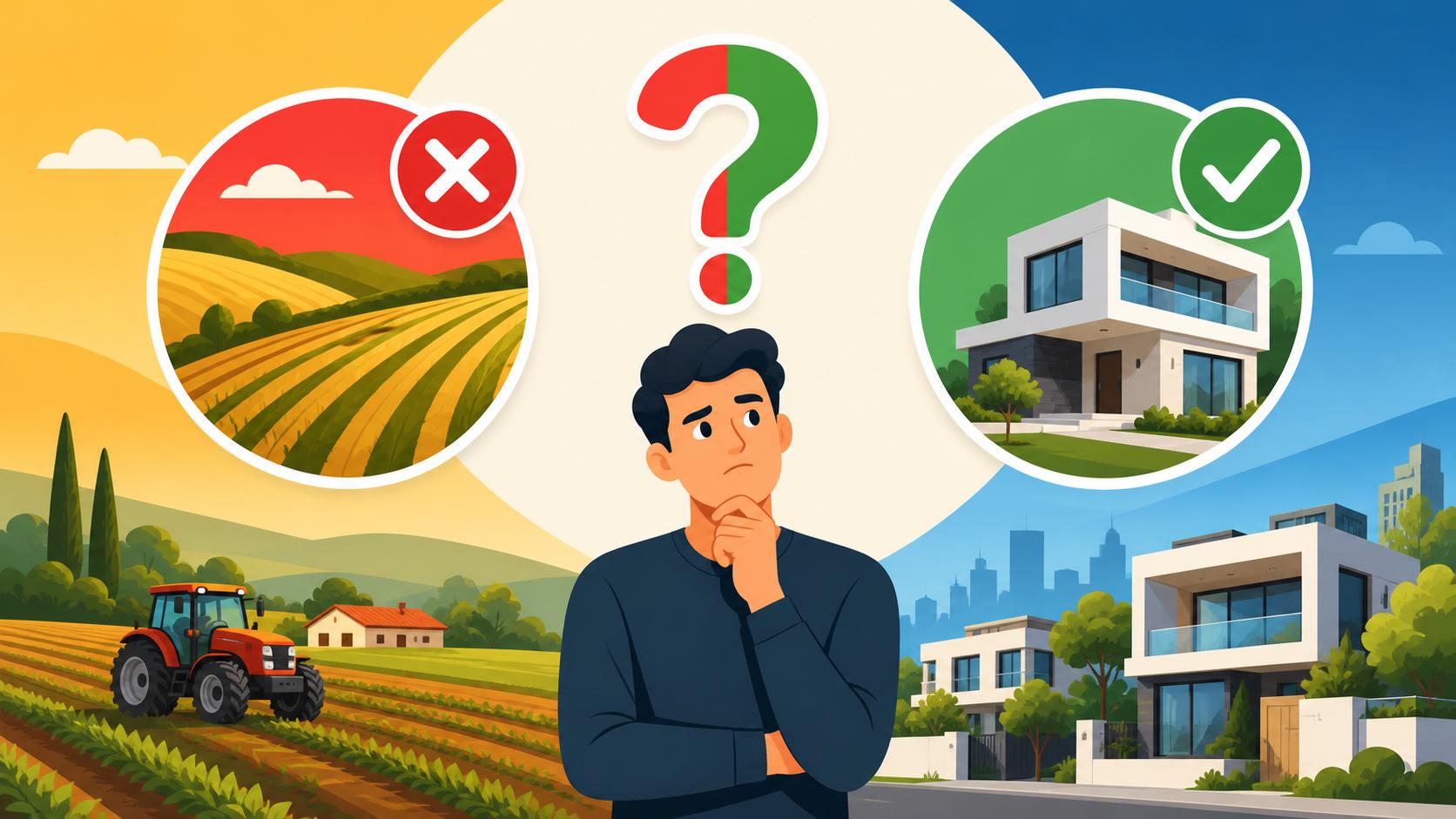
An "Arsa" is a plot of land that has already been included in a municipal zoning plan (İmar). This means the government has earmarked this specific area for residential, commercial, or industrial construction. If you buy an Arsa, you are buying the right to build a house, provided you follow the local floor area ratio (KAKS) and building height (TAKS) regulations.
On the other hand, "Arazi" or "Tarla" refers to agricultural land or unzoned territory. These plots are generally much cheaper, which often lures expats into a trap. While you might see a beautiful "Tarla" overlooking the Aegean for a fraction of the price of a nearby "Arsa," you cannot simply build a villa there. These plots are protected for farming, and obtaining a permit to build even a small farmhouse involves a bureaucratic marathon that many foreigners fail to finish.
Zoning Regulations and Building Permits
Before you even consider making an offer, you must verify the "İmar Durumu" (zoning status) of the plot at the local municipality (Belediye). Just because a neighbor has built a house doesn't mean the plot next door is zoned for one. Turkey has seen a massive crackdown on "Hobby Gardens"—unauthorized small structures built on agricultural land. Thousands of these have been demolished recently.
If you are currently staying in a managed apartment through Blueground while scouting for land, use that time to visit the local Land Registry Office. You want to see the official zoning plan. If the land is agricultural, the building restrictions are intense. Usually, you need at least 5,000 square meters of land just to be allowed to build a small structure, and even then, that structure must be related to agricultural activities, not just a luxury vacation home.
The Strict Rules for Foreigners Buying Agricultural Land
Yes, foreigners can technically buy agricultural land in Turkey, but it comes with a massive "but." Unlike residential property, where you buy it and essentially do what you want within building codes, agricultural land carries a mandatory "Investment Project" obligation.
The Two Year Agricultural Investment Project Rule
Under Turkish law, any foreigner who purchases agricultural land (Tarla, Bağ, Bahçe) must submit an agricultural project to the Ministry of Agriculture and Forestry within two years of the purchase. This is not a suggestion; it is a legal mandate. This project must outline exactly what you intend to farm—be it olives, walnuts, or greenhouse tomatoes—and it must be a viable commercial plan.
If you fail to submit this project or if the Ministry finds that you aren't actually carrying out the agricultural activities you promised, the state has the legal right to liquidate your property. They will sell the land at a public auction and give you the proceeds, but you lose the land and any emotional investment you had. Some expats have bought olive groves thinking they’d just let the trees grow wild, only to face legal notices because they didn't fulfill the "production" requirement.
Maximum Size Limits and Reciprocity Rules
Foreigners are also limited by the total amount of land they can own. In Turkey, a foreign individual can own a maximum of 30 hectares (about 74 acres) of land nationwide. Furthermore, you cannot own land that exceeds 10% of the total area of the district (İlçe) where the land is located. While 30 hectares is plenty for most "gentleman farmers," it is a cap you need to be aware of if you are planning a large-scale commercial venture.
You also need to stay connected to your legal team and the latest Ministry updates during this process. Using a local SIM or an Airalo e-SIM ensures you don't miss critical calls from the Land Registry or your lawyer while you are out in the fields or traveling between cities. Remember that the "reciprocity" rule also applies; the Turkish government allows citizens of most countries to buy land, but there are specific restrictions for citizens of certain neighboring countries.
| Feature | Residential Land (Arsa) | Agricultural Land (Tarla/Arazi) |
|---|---|---|
| Primary Purpose | Housing, villas, apartments | Farming, livestock, orchards |
| Building Rights | High (subject to TAKS/KAKS) | Extremely limited (usually 5% max) |
| Minimum Size for Building | Varies by municipality | Often 5,000 sqm minimum |
| Investment Requirement | None | Mandatory 2-year agricultural plan |
| Risk of State Seizure | Low (if taxes are paid) | High (if project is not executed) |
| Ease of Resale | High | Moderate (specific buyer market) |
Buying Residential Property: The Simpler Path for Expats
For 95% of expats, buying an "Arsa" or an existing home is the much safer and more logical route. The legal protections are stronger, and the path to residency is much clearer. If your goal is to live in Turkey long-term, you should focus on plots that are already zoned for residential use.
Understanding Title Deeds and Valuation
When you buy a residential plot, you must pay close attention to the Title Deed Colors: What a Red Tapu vs Blue Tapu Means in Turkey. Typically, a blue border indicates land or a detached house, while a red border indicates a unit within a larger building (Kat Mülkiyeti). However, the most critical part is the "Nitelik" (quality) section of the deed. It must say "Arsa" if you intend to build.
Furthermore, the government now requires a formal valuation report for all property sales involving foreigners. This is to ensure that the price you pay matches the market value and to prevent tax evasion. If you are buying a plot to qualify for residency, you must ensure it meets the financial thresholds. For 2026, the rules are quite strict regarding the Real Estate Residence Permits: Understanding the Strict USD 200,000 Tapu Rule. Buying a cheap piece of agricultural land will likely not qualify you for residency if its valuation doesn't hit that $200,000 mark.
Navigating Closed Neighborhoods and Restrictions
Even if you find the perfect residential plot, you must check if the area is open to foreigners. The Ministry of Interior has designated several hundred neighborhoods as "closed" to new foreign residency applications due to high population density. Before you sign a contract, consult the guide on Navigating Closed Neighborhoods (Kapalı Mahalleler) Before Signing a Lease to ensure that buying there won't block you from getting your Ikamet (residence permit).
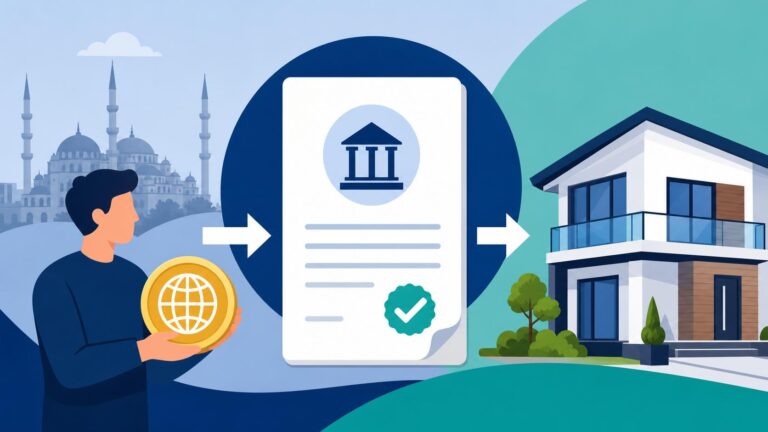
The Tapu Transfer Process: What Happens at the Land Registry Office is generally efficient, but it requires a "Foreign Exchange Document" (DAB). You must sell your foreign currency (USD or EUR) to the Central Bank of Turkey via a local bank before the title transfer. This document proves that the funds entered the country legally. Once you have your land, you might find yourself ordering tools or fencing from Amazon Turkey to secure the perimeter while you wait for your building permits.
Practical Steps and Risks for Land Buyers in 2026
If you are determined to buy land, you need to be tech-savvy. The Turkish government has digitized almost everything, which is a blessing if you know how to use it. You should start by Using e-Devlet to Register Your Address at the Local Nüfus Directorate as soon as you have your residency, as this gives you full access to the TKGM (Land Registry) portal where you can view your property's boundaries digitally.
Avoiding Common Pitfalls and Village Settlement Traps
A common trap is the "Köy Yerleşik Alanı" or Village Settlement Area. Sellers might tell you that because the land is near a village, you can build. While it’s true that rules are slightly more relaxed within a certain radius of a village center, you still need official "İmar" confirmation. Never take a seller's word for it. Always hire an independent "Harita Mühendisi" (Mapping Engineer) to check the coordinates and the zoning.
Another risk involves The Turkey IMEI Rule: How to Register Foreign Phones in 2026. If you are spending months in rural areas managing a land purchase and using a foreign phone, it will eventually be blocked. You’ll need a local Turkish ID number (99 number) to register it, which you only get after your residency is approved. Managing a construction project or a farm without a working phone is a nightmare I wouldn't wish on anyone.
The Role of Military Clearance
While the blanket military clearance requirement for every single sale was abolished years ago in most areas, it still exists in certain strategic locations. If your dream plot is near a military base, a radar station, or a border, you might still need a "Askeri Yasak Bölge" check. This can add weeks to your timeline. Always ask The Tapu Transfer Process: What Happens at the Land Registry Office if the specific plot requires this clearance before you commit your funds.
Finally, keep an eye on your Cost of Living in Turkey 2026: Detailed Budgets for Singles and Families. Developing land—whether it's an "Arsa" or a "Tarla"—always costs 30% more than you expect. Between the "Tapu" fees, the notary costs, and the sudden realization that you need to bring electricity poles to a remote plot, the expenses add up quickly.
Disclaimer
This guide is for informational purposes only and does not constitute legal, financial, or professional real estate advice. Turkish property laws and zoning regulations are subject to frequent changes. Always consult with a qualified Turkish attorney and a licensed real estate appraiser before entering into any property transaction in Turkey. Ensure all documents are translated by a sworn translator and that you understand the current Ministry of Agriculture requirements for land investment projects.