Opening a Bank Account in Turkey: Rules for Expats, Tourists, and Investors
Walking into a Turkish bank for the first time often feels like entering a labyrinth where the rules change depending on which clerk you speak to. I spent my first three weeks in Istanbul being bounced between three different branches because nobody could agree on whether my "Potansiyel Vergi Numarası" was sufficient for a basic checking account. This guide provides the definitive roadmap to successfully opening your Turkish bank account while navigating specific bureaucratic hurdles.
The Administrative Maze of Turkish Banking
The first thing you need to understand about banking in Turkey is that the "rules" are often a blend of official legislation and the individual discretion of a branch manager. While the central banking authority sets the framework, the actual experience of an expat in a branch in Fethiye might be completely different from one in Ankara. This inconsistency is the primary source of frustration for foreigners, but understanding the underlying logic can save you days of wasted effort.
Why Turkish Banks Can Feel Like a Fortress
For many newcomers, the initial resistance from bank staff can feel personal or even discriminatory. However, it is almost always rooted in the strict "Know Your Customer" (KYC) and Anti-Money Laundering (AML) regulations that have tightened significantly over the last few years. Turkish banks face heavy fines if they open accounts for individuals with incomplete documentation or unverified addresses. They aren't being difficult for the sake of it; they are protecting their own liability in a high-stakes regulatory environment.
Furthermore, the volatility of the Turkish Lira and high inflation rates have changed how banks view foreign deposits. Many banks are hesitant to open accounts that will remain empty or be used solely for small, irregular transfers. They are looking for "sticky" customers who will use the account for daily life, pay bills, and perhaps hold savings in the local currency. This shift means that showing a genuine intent to reside in the country is often just as important as having the right paperwork. If you are just starting your journey, reviewing a Money in Turkey for Expats: Banking, Payments, and Finance Guide (2027) can help you understand the broader financial landscape before you commit to a specific institution.
The Importance of Having a Local Account
You might wonder if you can survive in Turkey using only international cards or fintech apps. While it is technically possible for a short holiday, living here long-term without a local IBAN is an exercise in masochism. You cannot easily pay your electricity or water bills via e-Devlet without a Turkish bank's integration. Most landlords will refuse to accept rent in cash due to strict tax laws, and international wire transfers into a landlord's account will incur massive fees for both parties.
Beyond the practicalities, a local bank account is your gateway to the Turkish digital ecosystem. From ordering water delivery to using the local version of Amazon, a Turkish debit card is often the only way to avoid "international transaction" declines. It also allows you to tap into the Cost of Living in Turkey 2026: Detailed Budgets for Singles and Families by giving you access to local discounts and the ubiquitous "taksit" (installment) payment system that makes larger purchases manageable.
The Role of Branch Manager Discretion
In Turkey, the branch manager is the ultimate authority of their domain. If a clerk tells you "no," it might simply mean they don't want to deal with the extra paperwork of a foreign application. I have found that visiting branches in "expat-heavy" areas like Beşiktaş in Istanbul or Konyaaltı in Antalya is a double-edged sword. While they are more familiar with the process, they are also more likely to be overwhelmed and impose "minimum deposit" rules that aren't actually part of the bank's official policy.
Sometimes, the best strategy is to find a smaller branch in a residential neighborhood where the staff might be more willing to take the time to process your file correctly. If you encounter a wall of "no," don't be afraid to politely ask for the reason and then try a different branch of the same bank just a few blocks away. It is not uncommon for one branch to demand a $5,000 deposit while another opens the account with zero balance.
Core Requirements for Different Resident Statuses
The requirements for opening an account change drastically depending on whether you are a tourist, a legal resident, or an investor. The Turkish government has streamlined some digital processes, but the physical presence in a branch is still a non-negotiable requirement for the initial account opening.
Opening an Account as a Resident with an Ikamet
If you already hold a residence permit (Ikamet), you are in the strongest position. Once you have your 99-series identification number, most of the "foreigner" flags in the banking system are lowered. However, even with an Ikamet, you must ensure your address is officially registered in the Nüfus (Civil Registry) system. Banks now pull your address directly from the government database; if you haven't done your Address Registration (Nüfus): The Most Critical Post-Arrival Step for Foreigners, the bank's system will likely reject your application automatically.
When you sit down with the representative, they will verify your Ikamet card against their internal database. You will also need a Turkish mobile number. Do not try to use your foreign SIM card; Turkish banking apps require a local number for SMS verification (OTP), and foreign numbers often fail to receive these critical codes. This account will give you full access to the Turkish financial system, including the ability to link your account to Taxes in Turkey for Foreigners: Residency, Income, and Filing Basics for automated payments.
Can Tourists Open an Account without a Residence Permit?
The short answer is yes, but the long answer is "it depends on your luck and your wallet." Many banks, particularly state-owned ones like Ziraat Bankası or VakıfBank, allow tourists to open accounts, but they often require a significant "blockage" or deposit. In 2026, it is common for branches to ask for a deposit of anywhere from 10,000 TRY to $3,000 USD to be held in the account for three to six months.
As a tourist, your primary hurdle is the lack of a permanent Turkish address. You will still need a Turkish Tax ID, which you can obtain online, and a proof of address from your home country (usually a utility bill). Some branches may accept a notarized rental contract or even a high-end hotel stay confirmation, but this is rare. If you are a digital nomad using the new visa, you should check the Turkey Digital Nomad Visa: Eligibility Criteria, Taxes, and the $36k Income Rule to see if your specific status grants you easier banking access.
Investor Banking and the USD 400,000 Citizenship Route
For those pursuing the Turkish Citizenship by Investment 2026: The $400,000 Property Route Explained, the banking process is specialized. You will usually be funneled into "Private Banking" or "Investment Banking" tiers. These departments are much more accustomed to dealing with large foreign currency transfers and the specific "Döviz Alım Belgesi" (Foreign Exchange Purchase Certificate) required by the Land Registry.
Investors have the luxury of dedicated account managers who often speak fluent English. However, the scrutiny on the "Source of Wealth" is intense. You will be expected to provide clear documentation of where your funds originated. If you are moving large sums from platforms like Binance or other crypto exchanges, be prepared to show the original fiat-to-crypto purchase history to satisfy the bank’s compliance officers.
Essential Documents Checklist for Your Appointment
Preparation is the difference between a 30-minute appointment and a three-day ordeal. Never go to a bank with just your passport. You need a folder of documents, all neatly organized, to show the clerk that you are a serious and prepared applicant.
The Tax ID Number (Vergi Numarası)
This is the "master key" to the Turkish bureaucracy. You cannot open a bank account, sign a lease, or even get a phone contract without it. Fortunately, obtaining one is now a digital process. You can go to the Interactive Tax Office website and apply for a "Potential Tax Number for Foreigners." It takes about five minutes and requires a scan of your passport.
Even though it’s digital, I highly recommend printing out the PDF confirmation. Many bank systems still require the physical paper to be scanned into their own files. If you find the online system confusing, you can refer to a Step-by-Step: Applying for a Tax ID Number at the Interactive Tax Office guide for a visual walkthrough of the Turkish interface.
Proof of Address and Utility Bill Requirements
This is where 90% of expat applications fail. Banks are obsessed with verifying where you live. If you are a resident, they will check the MERNIS (government) system. If you are a newcomer or a tourist, they will ask for a "translated utility bill from your home country." This sounds simple, but the bill must usually be from the last three months and must clearly show your name and address.
Some applicants have brought digital PDF printouts that were rejected because they didn't look "official" enough. If possible, bring an original paper bill. Furthermore, some banks are now picky about Why Turkish Banks Ask for a Translated Utility Bill From Your Home Country and may require the translation to be done by a sworn translator in Turkey and notarized, which adds another layer of cost and time to your setup.
Translation and Notarization of Passports
While many private banks like Garanti BBVA or Yapı Kredi will simply photocopy your passport, some state banks still require a "notarized translation." This involves taking your passport to a sworn translator who types out the data page in Turkish, and then taking that document to a Noter (Notary) to be stamped.
In 2026, this process costs roughly 1,500 to 2,500 TRY. It feels like a "foreigner tax," but if the branch manager insists on it, there is no way around it. Check the expiry date on your passport; if it has less than six months of validity, many banks will refuse to open the account regardless of your other documents.
| Document Type | Requirement Level | Notes |
|---|---|---|
| Passport | Mandatory | Must have at least 6 months validity. |
| Tax ID (Vergi No) | Mandatory | Can be obtained online for free. |
| Ikamet Card | Recommended | Opens all banking doors; 99-series ID. |
| Proof of Address | Mandatory | Home country utility bill or Nüfus record. |
| Turkish SIM Card | Mandatory | Needed for mobile app and SMS security. |
| Initial Deposit | Varies | Can range from 0 to $3,000 depending on branch. |
Choosing the Right Bank for Your Needs
Not all Turkish banks are created equal, especially when it comes to the expat experience. Your choice should depend on whether you prioritize English-speaking support, lower fees, or a robust mobile app.
State Banks vs Private Banks
The "Big Three" state banks—Ziraat Bankası, VakıfBank, and Halkbank—have the most extensive branch networks, especially in rural areas. They are often the most "foreigner-friendly" in terms of allowing tourists to open accounts, but their English support is notoriously poor. If you use a state bank, you will likely need to bring a Turkish-speaking friend or use a translation app for every visit.
Private banks like Garanti BBVA, İş Bankası, and Akbank are generally more technologically advanced. Their apps are sleek, fully translated into English, and offer a wider range of investment products. I personally prefer Garanti BBVA because their "Foreigner Desks" in major cities are actually staffed by people who understand expat problems. For a detailed breakdown of which institution fits your lifestyle, see Choosing a Turkish Bank: Comparing Ziraat, Garanti, İş Bankası, and Akbank.
Participation Banks and Interest-Free Options
If you prefer Sharia-compliant banking, Turkey has a strong "Participation Banking" (Katılım Bankası) sector. Banks like Kuveyt Türk and Albaraka Türk operate on profit-sharing models rather than interest. Interestingly, Kuveyt Türk is often cited by the expat community as one of the easiest banks for foreigners to work with. They are very accustomed to international customers and often have the most straightforward document requirements for non-residents.
These banks are excellent for daily transactions and holding gold or foreign currency. However, their physical branch network is smaller than the giants like Ziraat. If you live in a smaller town, you might find the nearest branch is an hour away, which can be a problem if you need to resolve a physical card issue.
Digital-First Banks and Neobanking Alternatives
While Turkey doesn't have a "Revolut" in the traditional sense due to licensing laws, we have powerful digital-first options. Enpara (a subsidiary of QNB Finansbank) is a cult favorite among locals and expats alike. They have no monthly account fees and offer very competitive rates. The catch? You usually need an Ikamet to apply, and the entire signup process is done via a courier who visits your home to sign the physical contract.
For those who are just arriving and need a "stop-gap" solution, prepaid cards like Papara or Ininal can be useful. They don't require a bank account and can be topped up at any ATM or Migros supermarket. However, they have low monthly limits and cannot receive international SWIFT transfers, making them a poor choice for a primary financial hub.
Navigating the Appointment and On-Site Experience
The day of your appointment will likely be a test of patience. Turkish banks operate on a numbering system; you walk in, take a ticket from the kiosk (choose "Bireysel İşlemler" for individual banking), and wait.
The Language Barrier and Finding English Speaking Staff
Unless you are in a high-end district like Nişantaşı or a massive tourist hub, do not assume the staff will speak English. It is common to see many expats get visibly angry when a teller can't understand them, which only results in the teller becoming less helpful.
A proactive approach is to have a few key phrases ready or use a translator app. If you are struggling with medical or legal terminology elsewhere, you know that Essential Turkish Phrases for the Doctor: Communicating Symptoms Effectively is a lifesaver; the same logic applies to banking. Have your Tax ID and "Hesap açmak istiyorum" (I want to open an account) ready. If you are using a VPN like NordVPN to access your home bank accounts while in the branch (a common safety practice for expats), ensure it is turned off before opening the local Turkish banking app, as some Turkish banks block foreign or VPN-masked IP addresses for security.
Deposits and Minimum Balance Requirements
As mentioned, some branches will try to "sell" you an account by requiring a large deposit. This is often a tactic to meet branch-wide sales targets. If the amount they ask for is unreasonable, you can try to negotiate. Mentioning that you intend to use the account for Sending Money to and from Turkey: SWIFT, IBANs, and International Apps and regular bill payments sometimes helps.
If you do agree to a deposit, clarify if it is a "blockage" (money you can't touch for X months) or just an initial balance requirement. Get everything in writing. There are reports of people depositing $2,000 only to find out it was placed in a "time-deposit" account that they couldn't access for a year without paying a penalty.
Managing Your Phone Number and Mobile Banking
The Turkish banking app is your lifeline. Before you leave the branch, ensure the clerk has successfully "paired" your Turkish SIM card with your account. You should be able to log in to the app while still sitting at their desk. If the SMS code doesn't arrive, it’s usually because your number is "blocked" for SIM security (a common issue if you recently changed carriers or moved your number).
While in the branch, ask them to enable "Internet Banking" and "International Transactions." By default, some accounts are restricted to local use only. You don't want to find out your card doesn't work on an international website when you’re trying to book a flight home.
Moving Money Across Borders
Once your account is open, the next challenge is getting your money into the country without losing a fortune to exchange rates and hidden fees.
SWIFT Transfers and High Incoming Fees
Sending money via traditional SWIFT (from your home bank to your Turkish IBAN) is the most "official" way but also the most expensive. Your home bank will charge a fee, the intermediary banks will take a cut, and the Turkish bank will often charge an "incoming wire fee" that can be as high as $50.
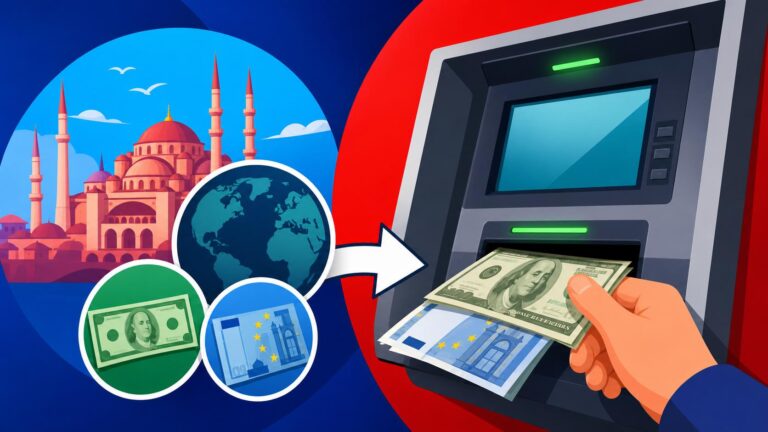
Furthermore, if you send USD to a TRY account, the bank will apply their "retail" exchange rate, which is usually 3-5% worse than the market rate. Always open a "Multi-Currency" account so you can receive USD or EUR directly without an automatic conversion.
International Transfer Apps and Fintech Workarounds
For mid-sized transfers, services like Wise are indispensable. They allow you to send money to a Turkish IBAN using the mid-market exchange rate and low transparent fees. However, be aware that due to local regulations, Wise has faced various limitations in Turkey over the years, such as the inability to hold a TRY balance in their digital wallet.
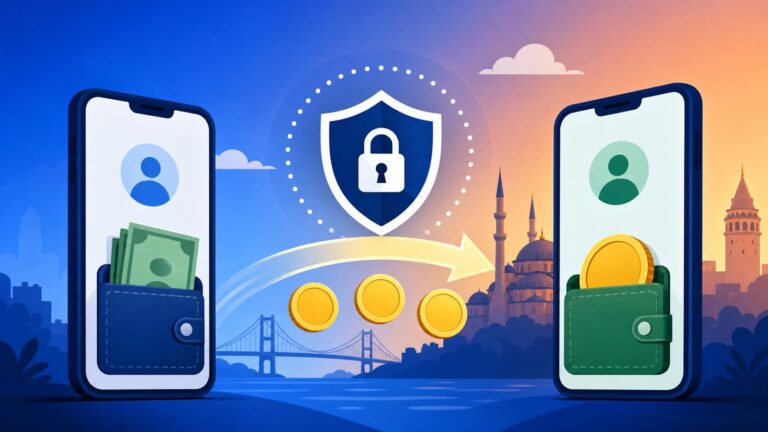
Most expats use Wise to "push" money into their local Turkish account. You send your home currency to Wise, and they deposit the Lira equivalent into your Turkish bank via a local transfer (FAST), which is usually instant. This bypasses the heavy SWIFT fees and gives you much more Lira for your money.
Crypto Integration and Local Exchanges
Turkey is one of the world's most crypto-active nations, largely due to the Lira’s inflation. If you are comfortable with digital assets, using an exchange like Binance or its local arm, Binance TR, is a common way to move funds. You can send stablecoins (like USDT) from your home exchange to your Turkish exchange account and then withdraw Lira directly to your local bank.
This method often provides the absolute best exchange rate, but it requires a high level of technical comfort. Make sure you keep records of these transactions, as the tax man may eventually ask where these large Lira deposits originated. For long-term wealth management, some expats also use platforms like Trade Republic to keep their main savings in Euro-denominated assets while only moving what they need for monthly expenses into Turkey.
Managing Your Account Post-Opening
Opening the account is just the beginning. The Turkish banking system has several unique features and "traps" that can catch you off guard.
Understanding FAST and IBAN Structures
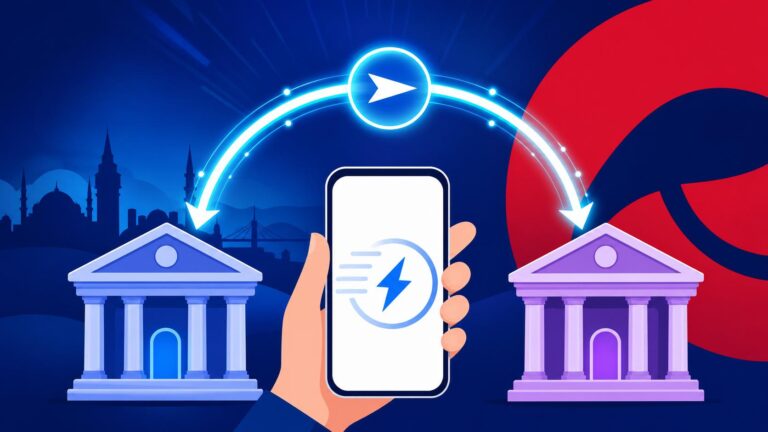
The Turkish IBAN is 26 characters long and always starts with "TR." When someone asks for your IBAN, they usually want the full string. One of the best features of modern Turkish banking is the FAST (Fonların Anlık ve Sürekli Transferi) system. It allows for instant 24/7 transfers between different Turkish banks, provided the amount is below a certain limit (currently around 50,000 to 100,000 TRY depending on the bank).
You can also link an "Easy Address" (Kolay Adres) to your IBAN, such as your phone number or email. This makes it incredibly easy to pay for things like your Dental and Vision Care in Turkey: Out-of-Pocket Costs and Insurance or a meal at a restaurant that doesn't take cards. Instead of typing 26 digits, you just enter the person’s phone number in your banking app.
Hidden Fees and Maintaining Your Account Balance
Turkish banks are "fee-happy." You might see "Account Maintenance Fees," "SMS Notification Fees," and "Card Fees" appearing on your statement. Most of these can be waived if you set up automatic bill payments (Otomatik Ödeme Talimatı) for your utilities.
Another trap is the "Overdraft Account" (KMH or Artı Para). Banks often sneak this into your contract. It allows you to spend more than you have, but the interest rates are astronomical—often 5% per month or higher. Check your app to see if you have a "limit" defined; if you do, try to keep it at zero to avoid accidental debt.
Credit Cards and Building a Turkish Credit History
Getting a credit card as a foreigner is significantly harder than opening a checking account. Even with a high-paying job and an Ikamet, many banks will reject your application because you lack a Turkish credit score (KKB).
The "pro-tip" here is to ask for a "Secured Credit Card." You deposit, for example, 50,000 TRY into a blocked account, and the bank gives you a credit card with a 40,000 TRY limit. After 6-12 months of on-time payments, you can often get your deposit back and transition to a regular card. This is the only way to eventually access Understanding Turkish Installment Payments (Taksit) on Credit Card Purchases, which is the secret to how locals afford electronics and furniture in a high-inflation economy.
Disclaimer
The information provided in this guide is for educational and informational purposes only and does not constitute financial, legal, or professional advice. Banking regulations and immigration policies in Turkey are subject to frequent and sudden changes. While every effort has been made to ensure the accuracy of the details for 2026, you should always verify current requirements directly with your chosen financial institution or a qualified legal professional before making significant financial commitments. Under no circumstances should this guide be used as the sole basis for high-value transactions or residency applications.