What is FAST? Sending Instant Interbank Transfers 24/7 in Turkey
Waiting until Monday morning for a bank transfer to clear just so you can pay your landlord or split a dinner bill is a rite of passage for every expat in Turkey. I remember the panic of sending a rent payment at 4:30 PM on a Friday, only to realize it wouldn't arrive until after the weekend, leaving me in a three-day limbo of "did it work?" This guide explains FAST, the instant payment system that finally killed the "banking hours" headache.
Understanding the FAST System in Turkey
If you have spent any time navigating the Turkish banking sector, you have likely encountered the three pillars of local transfers: Havale, EFT, and FAST. For years, the system was rigid. Havale was instant but only worked if both the sender and receiver used the same bank. EFT was the interbank solution, but it was notoriously restricted to business hours. If you missed the 5:00 PM cutoff, your money was essentially in a digital vault until the next business day. This created massive friction for foreigners trying to manage their Cost of Living in Turkey 2026: Detailed Budgets for Singles and Families or those needing to move funds quickly for time-sensitive payments.
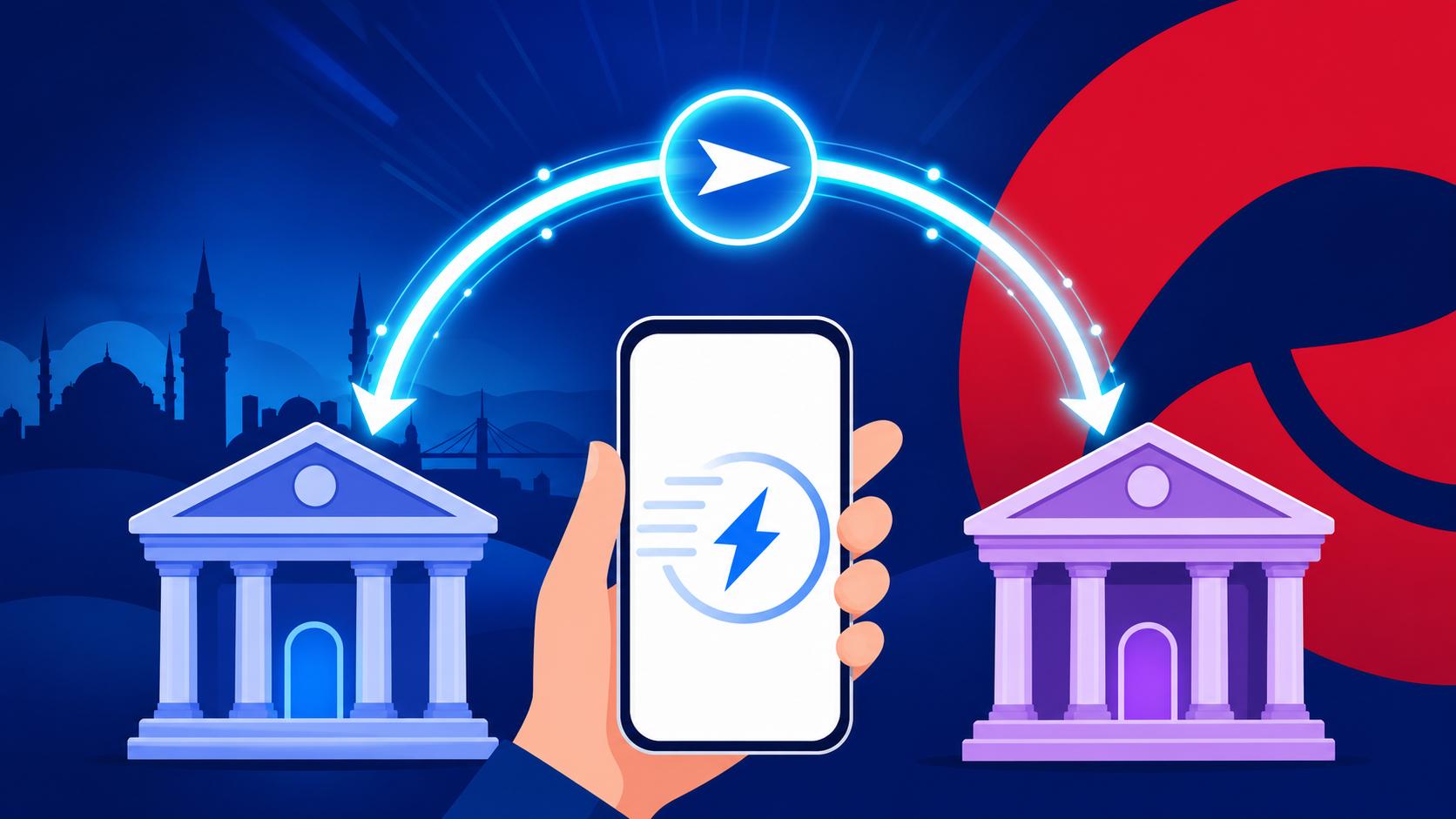
The Central Bank of the Republic of Turkey (TCMB) launched the FAST system—which stands for Fonların Anlık ve Sürekli Transferi (Instant and Continuous Transfer of Funds)—to solve this specific pain point. Unlike EFT, FAST operates 24 hours a day, 7 days a week, including public holidays and weekends. The moment you hit "send" on your banking app, the money arrives in the recipient’s account within seconds. This is not just a convenience; it is a fundamental shift in how we manage our finances here. Whether you are topping up your Binance account for a quick trade or paying a local shopkeeper for furniture, the speed is revolutionary.
For expats, this means no more "Friday afternoon anxiety." If you are using international tools like Wise to bring foreign currency into the country, you will often find that once your Lira hits your local Turkish account, FAST becomes the primary way you distribute those funds to your local bills. It bridges the gap between global fintech and local utility. However, because it is an instant and irrevocable system, it requires a higher level of caution than the old, slower methods where you might have had a slim window to "cancel" a pending EFT.
How to Set Up and Use the Kolay Adres System
One of the most impressive features tied to the FAST system is the "Kolas" or Kolay Adres (Easy Address) functionality. One of the biggest hurdles for any newcomer is dealing with the 26-digit Turkish IBAN. Typing those numbers into a mobile app while riding the Metrobus is a recipe for disaster. The FAST system allows you to link your IBAN to a much simpler identifier, such as your mobile phone number, your email address, or even your Tax ID Number.
To set this up, you need to log into your Turkish mobile banking app—whether it is Ziraat, Garanti BBVA, or İş Bankası—and look for the "Kolay Adres Tanımlama" section. From there, you can choose which identifier you want to link to your account. I personally use my Turkish phone number because it is the easiest thing to dictate to a friend over a coffee. Once linked, someone can send you money by simply typing in your phone number instead of that long string of digits. This integration is particularly useful when you are managing recurring expenses or if you are Opening a Bank Account in Turkey: Rules for Expats, Tourists, and Investors for the first time and want to streamline your incoming transfers.
When you are sending money via FAST using an Easy Address, the banking app will still show you the masked name of the recipient (e.g., A**** B****). This is a crucial safety check. Even though the system is built for speed, always take that extra three seconds to verify the initials. If you are moving large sums to platforms like Binance or paying a deposit for a new apartment, ensuring that the identifier matches the intended recipient is the only way to prevent unrecoverable errors. The convenience of not needing an IBAN makes FAST the preferred method for daily transactions, but it does not remove the need for basic financial due diligence.
Limits and Costs of FAST Transfers in 2026
While FAST is incredibly efficient, it is not designed for moving the millions of Lira required to buy a house. The system was built for retail transactions—think groceries, rent, and peer-to-peer payments. As of 2026, the transaction limit for a single FAST transfer is generally capped around 100,000 TL, though the Central Bank frequently adjusts this based on inflation and usage patterns. If you need to send an amount higher than the current FAST limit, your banking app will likely default back to a standard EFT, which means you are back to the "banking hours" rule.
One common mistake I see expats make is trying to send a large sum on a Saturday and wondering why it is "pending" instead of "completed." Usually, it is because the amount exceeded the FAST limit. To get around this, some people send multiple transfers of 100,000 TL in a row. While this works, be aware that your bank’s fraud detection algorithms might flag a sudden burst of identical high-value transfers. If you are regularly moving significant funds for investments into something like Trade Republic or shifting money back home via Wise, it is often better to plan for a standard EFT or a SWIFT transfer.
| Feature | FAST | EFT | Havale |
|---|---|---|---|
| Speed | Instant (Seconds) | 5-30 Minutes | Instant |
| Availability | 24/7/365 | Mon-Fri (09:00-17:00) | 24/7/365 |
| Bank Requirement | Any Turkish Bank | Different Turkish Banks | Same Bank Only |
| Max Limit (2026) | ~100,000 TL per trans. | Unlimited (Bank specific) | Unlimited (Bank specific) |
| Easy Address | Yes (Phone/Email/TC) | No (IBAN Only) | Sometimes |
The cost of a FAST transfer is surprisingly low. Most banks charge a nominal fee, often just a few Lira, which is significantly cheaper than international wire fees. Some premium accounts or digital-first banks like Enpara or CepteTEB even offer these transfers for free. When you are learning How to Transfer Money Safely and Quickly Using the Turkish IBAN System, comparing the fee structures of the major banks is a smart move. Even a 5 TL fee adds up if you are making thirty transfers a month for your small business or freelance lifestyle.
Security and Privacy for Digital Banking in Turkey
With the speed of FAST comes a unique set of security challenges. Because the money leaves your account and enters the recipient's account in the blink of an eye, the "human error" factor is high. Turkish hackers and scammers are also quite sophisticated, often using social engineering to get foreigners to send "deposit payments" for fake apartment listings via FAST. Once you hit send, the bank cannot simply "pull back" the money like a credit card chargeback.
When you are using your banking app on public Wi-Fi in a Kadıköy coffee shop, you are opening yourself up to risks. This is why it is wise to use NordVPN when accessing any financial application in Turkey. A VPN adds a layer of encryption that prevents "man-in-the-middle" attacks, which are common in crowded urban areas. Furthermore, always ensure that your E-Devlet Financial Services: Tracking Taxes, SGK Debts, and Bank Accounts are secured with two-factor authentication, as your banking identity is often tied to your T.C. Kimlik number or your Foreigner ID.
Another security layer to consider is the notification system. Every time a FAST transfer is made, you should receive a push notification or an SMS. If you don't, go into your app settings and turn it on immediately. If you are managing digital assets on Binance or other exchanges, the speed of FAST is a double-edged sword; it allows you to capitalize on market moves quickly, but it also means a compromised banking app can be emptied in minutes. Treat your FAST-enabled app with the same level of security you would a physical wallet full of cash.
Troubleshooting Common FAST Issues
Even with a system as robust as FAST, things can go wrong. The most frequent issue I hear about is the "Transaction Failed" message. This usually happens for one of three reasons: the recipient's bank is currently undergoing maintenance (common in the early hours of Sunday morning), you have exceeded your daily or single-transaction limit, or there is a mismatch in the Easy Address database. If a phone number was previously linked to a different person's IBAN and they haven't updated it, the system might reject the transfer to prevent fraud.
If you find that a transfer is "Stuck," check your E-Devlet Financial Services: Tracking Taxes, SGK Debts, and Bank Accounts to see if there are any blocks on your account. Sometimes, the tax office (Vergi Dairesi) can place a "e-haciz" or electronic lien on an account for unpaid traffic fines or health insurance premiums, which can interfere with outgoing transfers. If the system is working but you simply aren't seeing the FAST option, ensure your app is updated to the latest version. Older versions of mobile banking software sometimes struggle with the newer Central Bank protocols.
For those of us who live between countries, it is important to remember that FAST is a domestic-only system. You cannot use FAST to send money directly to a European IBAN or a US bank account. For those needs, you would use Wise or a traditional SWIFT transfer. However, for everything within the borders—from paying the plumber to sending a gift to a friend—FAST is the gold standard. Once you get used to the speed, going back to the old EFT ways feels like using a dial-up modem in a fiber-optic world.
Why FAST is Essential for the Modern Expat
Living in Turkey requires a certain level of agility. Prices change, opportunities for investing in Trade Republic or local markets pop up, and sometimes you just need to pay a "kapora" (deposit) on a great find at a bazaar before someone else grabs it. The FAST system provides that agility. It levels the playing field for foreigners who might not have a long credit history or deep ties to a specific local bank branch. By being able to move money instantly between any two banks in the country, you are no longer "locked in" to your bank's specific ecosystem.
It also simplifies the process of managing your Sending Money to and from Turkey: SWIFT, IBANs, and International Apps workflows. You can send a large lump sum via a service like Wise to your main Turkish account and then use FAST to distribute it to your various sub-accounts, your landlord, and your utility providers without waiting days for the funds to clear each step. It is the final piece of the puzzle that makes the Turkish banking system one of the most technologically advanced in the region, despite the bureaucratic hurdles we often face at the branch level.
Ultimately, mastering FAST is about taking control of your time. We already spend enough time standing in line at the Göç İdaresi or waiting for the PTT to deliver a package. We shouldn't have to wait for our own money. By setting up your Kolay Adres, understanding your daily limits, and ensuring your connection is secure with NordVPN, you can handle your Turkish finances with the confidence of a local. Just remember: double-check those initials before you hit the final "Onayla" button.
Disclaimer
The information provided in this guide is for informational purposes only and does not constitute financial, legal, or investment advice. Banking regulations, transaction limits, and fees in Turkey are subject to change by the Central Bank (TCMB) and individual financial institutions. While we strive to keep our content updated for 2026, always verify current limits and terms with your specific bank before making large or time-sensitive transfers. Use of third-party applications and VPNs is at the user's own risk.