The 99-Number: What Your T.C. Kimlik Number Gives You Access To in Daily Life
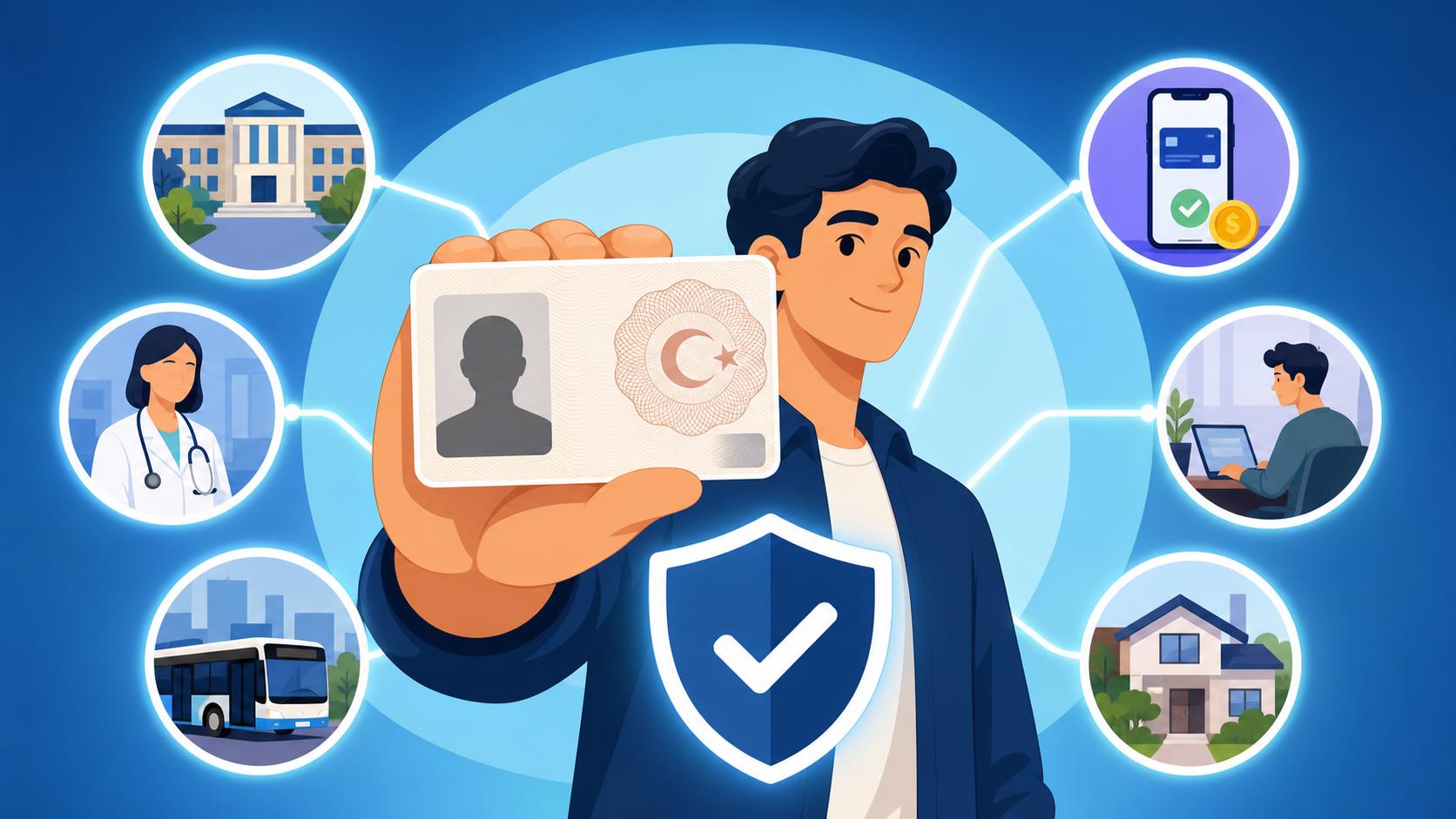
Getting stuck at a Turkish pharmacy or bank because you do not have an 11-digit number starting with 99 is a rite of passage for every expat. I remember the sinking feeling of being told my passport simply wasn't enough to sign up for a gym membership or get a simple loyalty discount. This guide explains why the 99-number, or Foreigner Identity Number, is the true key to unlocking a functional, stress-free life while residing in Turkey.
Understanding the Foreigner Identity Number and How It is Issued
The Foreigner Identity Number (Yabancı Kimlik Numarası) is an 11-digit identification number assigned by the Directorate General of Migration Management to every foreigner who is granted a residence permit in Turkey. While Turkish citizens have a T.C. Kimlik Number that usually starts with a lower digit, foreigners are assigned a sequence that always begins with "99." Think of it as your digital shadow; once it is generated, nearly every interaction you have with the Turkish state and private sector will be tied to this specific sequence.
You do not actually apply for the 99-number separately. It is a byproduct of your first successful residency application. When you go through the Turkish Residence Permits (Ikamet): The Complete Application Guide (2027), the migration office processes your data and, upon approval, assigns you this number. It will be printed clearly on the front of your plastic residence card (ikametgah). Before that card arrives, you might feel like a ghost in the system, unable to access the most basic digital services.
In the "old days," we used to have to wait weeks for the physical card to arrive by PTT mail just to see our number. Now, you can often find your assigned number online via the Directorate's website as soon as your application is approved. This is a massive relief because, without it, you are effectively trapped in "tourist mode," where everything from buying a bus pass to visiting a doctor is more expensive and complicated. To get to this stage, you’ll often need to ensure your home-country documents are perfectly prepared, which is why many of us rely on services like RushTranslate to handle the initial paperwork that the migration office demands.
Banking and Financial Services: Beyond the Cash Economy
Turkey is a surprisingly digital society when it comes to money, and the 99-number is your ticket into that ecosystem. While you can technically open some "tourist" bank accounts with just a passport and a tax ID, these accounts are often limited. You might find you cannot use the bank’s mobile app to its full potential or that you are blocked from certain investment products. Once you have your foreigner ID number, your bank can update your profile, transforming your account into a "resident" account.
With a fully verified 99-number, you can finally utilize the How to Transfer Money Safely and Quickly Using the Turkish IBAN System protocols. This means you can pay your rent via mobile banking, which is not just a convenience but a legal requirement for most leases. Landlords are increasingly wary of cash payments due to tax regulations, and having a resident bank account linked to your 99-number ensures you have a digital paper trail for every lira spent. It also allows you to set up automatic payment orders for utilities, so you never have to stand in line at a PTT office again to pay an electricity bill.
Furthermore, the 99-number is essential for building a credit history in Turkey. If you plan on staying long-term, you might eventually want to look into Credit Card Eligibility for Foreigners Without a Lengthy Turkish Credit History. Without that 11-digit identifier, the Turkish credit bureaus (Kredi Kayıt Bürosu) have no way to track your financial reliability. Some expats live here for five years on "tourist" status who are still denied basic credit cards because they never integrated their 99-number into the banking system. It’s about moving from being a visitor to being a documented resident with a financial footprint.
| Service Category | Passport Only (Tourist) | 99-Number (Resident) |
|---|---|---|
| Mobile Banking | Restricted or view-only | Full access to FAST/EFT transfers |
| Utility Contracts | High deposits, often rejected | Standard deposits, easy setup |
| E-Devlet Access | Not available | Full access to government portal |
| Public Healthcare | Out-of-pocket (Expensive) | Access to SGK or private resident rates |
| Home Internet | Pre-paid or restricted | 12/24 month fiber contracts |
Healthcare and Social Security Integration
In my first year in Turkey, I tried to visit a local "Sağlık Ocağı" (Family Health Center) for a simple flu check. The nurse was incredibly kind, but because I didn't have my 99-number yet, she couldn't enter me into the system. This number is the primary key for the entire Turkish healthcare infrastructure. Whether you are using the public system or private clinics, every prescription, blood test result, and vaccination record is attached to this ID.
If you are looking for Finding Medical Care in Turkey: Public Hospitals vs JCI-Accredited Clinics, you will find that having your ID number ready makes the registration process at the front desk take seconds instead of minutes. It also allows you to use the MHRS (Central Physician Appointment System). This is the nationwide app and website used to book doctor visits. Without a 99-number, you cannot create an account, meaning you’re stuck calling the 182 helpline and hoping for an English speaker, or showing up at a hospital at 6:00 AM to grab a walk-in slot.
For those of us who prioritize comprehensive coverage, having the 99-number is also vital for insurance claims. While you might use a policy from Cigna Global to satisfy your initial visa requirements, your local interactions with Turkish pharmacies will be much smoother once your ID is linked to your insurance profile. It allows pharmacists to see your "active" status and can even lead to discounts on certain medications if you eventually enroll in the SGK (Social Security) system. If you are ever in a situation involving Emergency Medical Care in Turkey: Dialing 112, Ambulances, and Triage, having your ID number written down or memorized can save first responders a significant amount of time in identifying your medical history.
The Power of e-Devlet: Your Digital Life in One Portal
If there is one thing that will change your life in Turkey more than the 99-number itself, it is the e-Devlet portal. e-Devlet is a centralized gateway for almost all government services, but you cannot log in without a 99-number. Once you have your residence card, you take it to any PTT (post office) branch, pay a tiny fee (usually around 10-20 TL), and they give you an e-Devlet password. This is where the magic happens.
Through e-Devlet, you can perform tasks that used to take days of waiting in government offices. You can Using e-Devlet to Register Your Address at the Local Nüfus Directorate from your living room. You can also check if you have any outstanding traffic fines, view your medical records via the e-Nabız system, and even see if there are any mobile phone lines registered in your name without your knowledge. It’s the ultimate tool for transparency and autonomy for an expat.
Moreover, the portal is essential for keeping your legal status in check. You can use it to track the printing and shipping status of your residence permit or to see if your Mandatory Ikamet Insurance: What Health Policies Actually Cover for Visas is properly registered in the government database. Without access to e-Devlet, you are forced to rely on "translators" or "fixers" to tell you your own legal status. With your 99-number and an e-Devlet login, you become your own advocate. You can even generate official, barcoded documents—like your address certificate—that are required for everything from marriage to enrolling your child in a local school.
Daily Conveniences: Internet, Phone Lines, and Shopping
It sounds trivial until you try to do it, but getting a high-speed home internet connection is nearly impossible without a 99-number. Major providers like Türk Telekom and Turkcell Superonline require a foreigner ID to sign a long-term contract. Without it, you are often relegated to "tourist SIM" data packages, which are notoriously expensive and expire after 3 months. Having your ID number allows you to access Mobile Networks in Turkey: Comparing Turkcell, Vodafone, and Türk Telekom as a resident, which means significantly more data for a fraction of the price.
This also applies to The Turkey IMEI Rule: How to Register Foreign Phones in 2026. To register a phone you brought from home and avoid it being blocked on the local network, you must have an e-Devlet account, which, as we've established, requires that 99-number. Many expats have ignored this, only to have their expensive flagship phones turned into "paperweights" that can only connect to Wi-Fi because they didn't get their residency and 99-number sorted within the 120-day grace period.
Even shopping becomes easier. Turkey's massive online marketplaces, like Trendyol and Hepsiburada, often require a T.C. or Foreigner ID number for high-value purchases or for verifying your account for their "wallet" services. Local supermarket loyalty programs also transition from being a hassle to a benefit. When the cashier asks for your "Kimlik No," and you can actually provide it, you start to feel less like a temporary guest and more like a member of the community. It’s these small daily wins that reduce the "administrative friction" of living abroad.
Access to Education and Legal Validation
For expat families, the 99-number is the bridge to the Turkish education system. Whether you are enrolling your child in a prestigious private school or a local public one, the Ministry of National Education (MEB) requires a 99-number for every student to be entered into the "e-Okul" system. This system tracks attendance, grades, and graduation requirements. Without it, your child might be physically in the classroom, but they won't exist on the official records, which can cause massive headaches when it comes time for Diploma Equivalence (Denklik): Validating Your Foreign Degrees in Turkey.
The ID number also serves as your primary identifier in any legal proceedings. If you need to notarize a document, buy a car, or even get a Health Report (Sağlık Raporu) for Work or Driving License Conversions, the notary or the doctor will first ask for your Kimlik card. The number ensures that the document is legally tied to your specific persona in the eyes of the Turkish Republic.
If you ever find yourself needing professional help, like Hiring an Immigration Lawyer in Turkey: Spotting Red Flags and Standard Costs, the first thing they will ask for is your 99-number so they can look up your file in the migration system. It is the foundation of your legal identity here. While the process of getting it can be tedious—involving gathering birth certificates, getting them translated by a service like RushTranslate, and navigating the migration office—the reward is a level of ease and integration that makes the "Turkish dream" a much more sustainable reality.
Important Disclaimer
The information provided in this guide is for general informational purposes only and does not constitute legal, financial, or medical advice. Turkish immigration laws and digital system requirements change frequently. While we strive to keep this information up-to-date, always verify current procedures with the official Directorate General of Migration Management (Göç İdaresi) or a qualified legal professional before making significant life decisions.