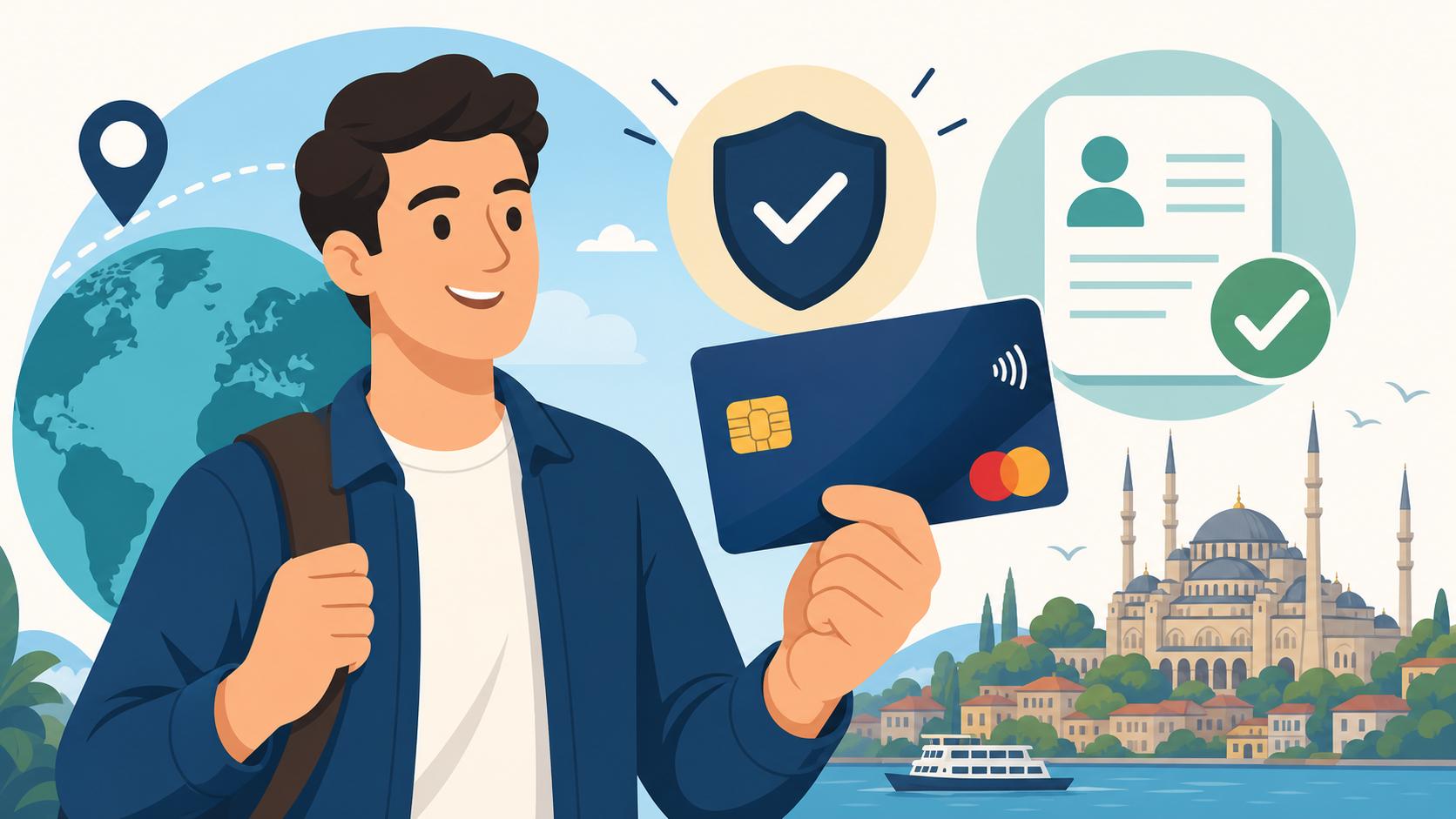
Credit Card Eligibility for Foreigners Without a Lengthy Turkish Credit History
Walking into a sleek Garanti or İş Bankası branch with a thick folder of foreign pay stubs only to be told you have a "zero credit score" is a rite of passage for most expats. I remember the sting of being rejected for a basic credit card despite having a healthy remote salary. This guide solves that frustration by showing you exactly how to build credit from scratch in Turkey.
Understanding the Turkish Credit Bureau (Kredi Kayıt Bürosu)
When you first arrive in Turkey, you are effectively a ghost in the eyes of the local financial system. Even if you have a perfect credit score in London, New York, or Berlin, the Turkish banks operate within a localized ecosystem managed by the Kredi Kayıt Bürosu (KKB). This central bureau tracks every loan, credit card payment, and utility bill linked to your 99-series Turkish ID number. For a newcomer, the absence of data is often treated with more suspicion than a slightly bruised history, as the bank has no algorithm to predict your risk.
How Findeks Scores Work for New Residents
The consumer-facing arm of the KKB is called Findeks. This platform generates a score ranging from 1 to 1,900. As a new expat, you don't start at the middle; you start at zero. This "unscored" status is the primary hurdle when applying for Credit Cards and Loans in Turkey: How Foreign Expats Can Build Credit. Most automated bank systems will simply spit out a rejection the moment they see a null value in the credit history field. It took me nearly six months of local activity before a number even appeared on my Findeks app.
To bridge this gap, you need to generate "data points." The most effective way to do this is to ensure your Getting a Turkish Tax ID (Vergi Numarası) Online via Dijital Vergi Dairesi is correctly linked to your bank account and your residence permit. Every small transaction counts. I found that even moving small amounts of money through Wise to my local account helped establish a pattern of regular inflows, which bank managers can see on your statement even if the Findeks algorithm hasn't caught up yet.
Why Your Foreign Credit Score Doesn't Cross Borders
One of the biggest shocks for expats is realizing that the global banking world is surprisingly fragmented. Banks like HSBC or Citibank might exist in both your home country and Turkey, but they rarely share credit data across borders due to strict data privacy laws like KVKK (Turkey's version of GDPR).
To manage your finances during this transition, many expats rely on Trade Republic to keep their savings productive in a more familiar regulatory environment while they navigate the Turkish hurdles. It is also vital to use a secure connection like NordVPN when accessing your foreign financial accounts from Turkey, as many international banks will freeze your account if they see a login from a Turkish IP address, fearing a security breach. This ensures you have access to your funds while you wait for a Turkish bank to finally trust you.
The Cash Block Strategy: Your Shortcut to a Credit Card
If you need a credit card immediately—perhaps for the Mandatory Ikamet Insurance: What Health Policies Actually Cover for Visas or to book flights—the most reliable method is the "Cash Block" or nakit blokeli credit card. This is essentially a secured credit card. You agree to let the bank "freeze" a certain amount of money in a savings account, and in return, they issue you a credit card with a limit usually equal to 100% or 120% of that deposit.
How a Secured Credit Card Works (Nakit Blokeli Kredi Kartı)
The process is straightforward but requires a bit of Turkish negotiation. You walk into the bank and tell them you want to open a blokeli kredi kartı. If you deposit, say, 50,000 TL, the bank puts a "block" on that money. You cannot withdraw it, but you now have a credit card with a 50,000 TL limit. This is a win-win: the bank has zero risk because they already hold your money, and you get a card that starts reporting your "perfect" payment history to the KKB every month.
I used this method at Kuveyt Türk when I first arrived. It was the only way to get a card that allowed for Understanding Turkish Installment Payments (Taksit) on Credit Card Purchases, which is the secret to surviving inflation in Turkey. By paying off the full balance every month, my Findeks score climbed from zero to "Good" within eight months. Using Wise to fund these deposits is often the cheapest way to move your initial capital into the Turkish system without losing a fortune on SWIFT fees.
Choosing the Right Bank for the Bloke Method
Not all banks are equally friendly to this request. In my experience, private banks like Garanti BBVA and Yapı Kredi are more accustomed to dealing with foreigners but can be stricter with their internal "foreigner quotas." State banks like Ziraat Bankası or VakıfBank are often more willing to do a cash block card, but you may face a significant language barrier. It helps to have a Step-by-Step Guide to Booking MHRS Appointments Without Perfect Turkish mindset—patience and a translation app are your best friends.
When choosing, check if the bank’s app is available in English. Garanti and İş Bankası have excellent English interfaces. If you are also managing crypto assets, ensure the bank is "crypto-friendly" for transfers to Binance. Some banks are more hesitant than others when they see large transfers to exchanges. Having a bank that understands your total financial picture, including your use of Trade Republic for external investments, can make the eventual transition to an unsecured card much smoother.
Alternative Financial Tools for Daily Life
While you wait for your credit history to mature, you don't have to rely solely on cash. Turkey has a vibrant fintech scene that offers "neo-banking" solutions which don't require a credit check at all. These tools are lifesavers for the first few months when you are still Choosing a Turkish Bank: Comparing Ziraat, Garanti, İş Bankası, and Akbank.
Using Prepaid Cards like Papara and Ininal
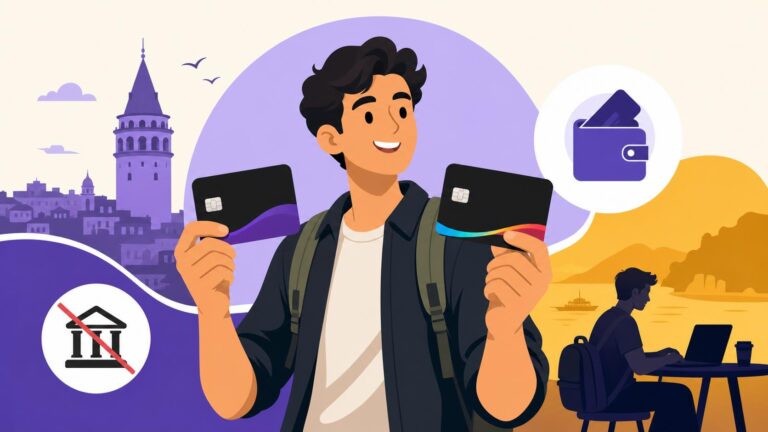
Papara and Ininal: Using Prepaid Cards for Nomads Without Bank Accounts are the two most popular options. You can buy an Ininal card at a supermarket like Migros or Şok for a few liras, load it with cash, and use it for online shopping immediately. Papara is even better; it offers a "Black Card" with no fees and great cashback on services like Netflix and YouTube. For an expat, these cards provide the utility of a credit card without the administrative headache.
It is often wise to use these for daily "risky" transactions, like small cafes or street vendors. Since they aren't linked to your main savings account, they offer an extra layer of security. To keep your app usage private and secure, especially when using public Wi-Fi in a "Pazar" or cafe, always keep NordVPN active on your phone. It’s a small step that prevents your financial data from being intercepted in high-traffic tourist areas.
The Role of International Transfer Apps and VPNs
For many of us, our "real" money stays in our home currency. Using Best International Money Transfer Apps for Turkey: Using Wise and Remitly is the standard way to pay rent and large bills. You can send TRY directly to a Turkish IBAN from your foreign bank account. This is often much faster than waiting for a local credit card to be approved. I used Wise to pay my security deposit and first six months of rent, which helped me avoid the high interest rates associated with local loans.
However, as I mentioned before, the "digital footprint" is sensitive. When I travel back to Europe or go on a visa run to Greece, I always use NordVPN set to a Turkish server to check my Turkish bank apps. If the bank sees a login from a Greek IP while you are also trying to use your card in Istanbul, they might block the card for fraud. Staying digitally consistent is key to maintaining a smooth relationship with Turkish financial institutions.
Improving Your Eligibility Over Time
Building credit is a marathon, not a sprint. Once you have your foot in the door with a basic account or a secured card, you need to feed the system the right information. The goal is to move from a "risky foreigner" to a "valued resident." This transition is essential if you ever plan on Investing in Turkey: Property, Stocks (Borsa), and Kur Korumalı Mevduat.
The Importance of Automatic Bill Payments
The single easiest way to boost your credit score is to set up Setting up Automatic Bill Payments (Otomatik Ödeme Talimatı) with Your Bank. In Turkey, having "Automatic Payment Orders" (talimatlar) on your account is a specific metric that banks look at. I set up my electricity, water, and Turkcell bills to be paid automatically from my account. This shows the bank that you have consistent, recurring obligations that you meet every month.
Even if you prefer to pay manually to keep an eye on costs, don't. Let the system do it. This small change in behavior is often what triggers the bank to offer you an "increase in limit" or an "unsecured" card. To manage the volatile exchange rates during these bill cycles, I keep a portion of my funds in Binance as stablecoins or in Trade Republic to earn interest, moving only what is needed for the month's bills via Wise to my Turkish account. This strategy protects your purchasing power while building your local reputation.
Moving from Secured to Unsecured Credit
After about 6 to 12 months of using a cash-block card and having automatic bills, it’s time to ask for the "block" to be removed. You should go to the branch in person—emails rarely work for this. Show them your Understanding Your Turkish Payslip (Bordro): Breakdown of Monthly Deductions if you are locally employed, or your Proving Income: Do Foreign Bank Statements Actually Work for Ikamet Renewals? records if you are a freelancer.
When I did this, I brought a printout of my Findeks report showing my score had reached the "High" category. I explained that I wanted to use my deposit to invest in Trade Republic while keeping the credit card active. The manager agreed, released the block, and actually doubled my limit because of my consistent history. This is the moment you officially "graduate" in the Turkish financial system.
Essential Documents for Your Application
You cannot just walk in with a passport and expect a credit card. Turkish banking regulations under the BRSA (BDDK) are very strict about documentation for foreigners. Missing even one stamp can result in an immediate "no."
The Residence Permit (Ikamet) and Tax ID Requirement
Your Turkish Residence Permits (Ikamet): The Complete Application Guide (2027) is your golden ticket. Most banks will not even talk to you about credit without a valid residence permit that has at least 6 months of remaining validity. Along with this, you need your "99" number and your physical card. They will also ask for your potential Step-by-Step: Applying for a Tax ID Number at the Interactive Tax Office document, which you likely already got for your residency.
| Document Type | Purpose | Necessity |
|---|---|---|
| Ikamet Card | Proof of legal residency and ID | Mandatory |
| Tax ID Number | Official registration with the revenue office | Mandatory |
| Proof of Address | Verified via e-Devlet (Yerleşim Yeri Belgesi) | Mandatory |
| Notarized Passport | Official translation of your passport | Often Required |
| Utility Bill | Proof of living at the registered address | Often Required |
I recommend keeping a digital folder of these documents on a secure cloud drive, accessed only through NordVPN for safety. Having them ready to print at a moment's notice will save you days of back-and-forth trips to the bank.
Proving Local or Global Income to Turkish Banks
If you are working for a Turkish company, your Bordro (payslip) is all you need. But for the digital nomads among us, proving income is harder. Banks want to see that money is actually staying in Turkey. If you receive $5,000 via Wise every month but immediately spend $4,900 on international sites or move it to Binance, the bank doesn't see you as a "stable" customer.
I started leaving a "buffer" of about 20% of my income in my Turkish Lira and Dollar accounts. This "average monthly balance" is a huge factor in credit card eligibility for foreigners. If the bank sees you have a steady balance of $2,000 to $3,000 that never leaves the account, they are much more likely to approve an unsecured credit card because they know they can seize those funds if you default. It’s a game of showing stability and commitment to the local economy.
Summary of Financial Tools for Expats
| Tool | Best Use Case in Turkey | Why it Matters |
|---|---|---|
| Wise | Moving foreign salary to TRY | Saves ~3-5% on exchange rates vs banks |
| NordVPN | Accessing foreign banks & security | Prevents account freezes and identity theft |
| Trade Republic | Saving in EUR/USD with interest | Better long-term stability than many TRY accounts |
| Binance | P2P transfers and crypto management | Useful for moving funds when SWIFT is blocked |
| Papara | Daily spending and local bills | No credit check required, instant setup |
Disclaimer Regarding Financial Advice
This guide is for informational purposes only and is based on personal experiences and current market conditions in Turkey. Banking regulations, SGK Monthly Premiums 2026: Payment Methods and Coverage for Expats, and credit requirements change frequently. Always consult with a certified public accountant (SMMM) or a legal professional before making significant financial decisions. All brands mentioned are for contextual reference based on common expat usage and do not constitute a formal financial endorsement.