Name Discrepancies: What to Do If Your Passport Doesn’t Match Your Ikamet Print
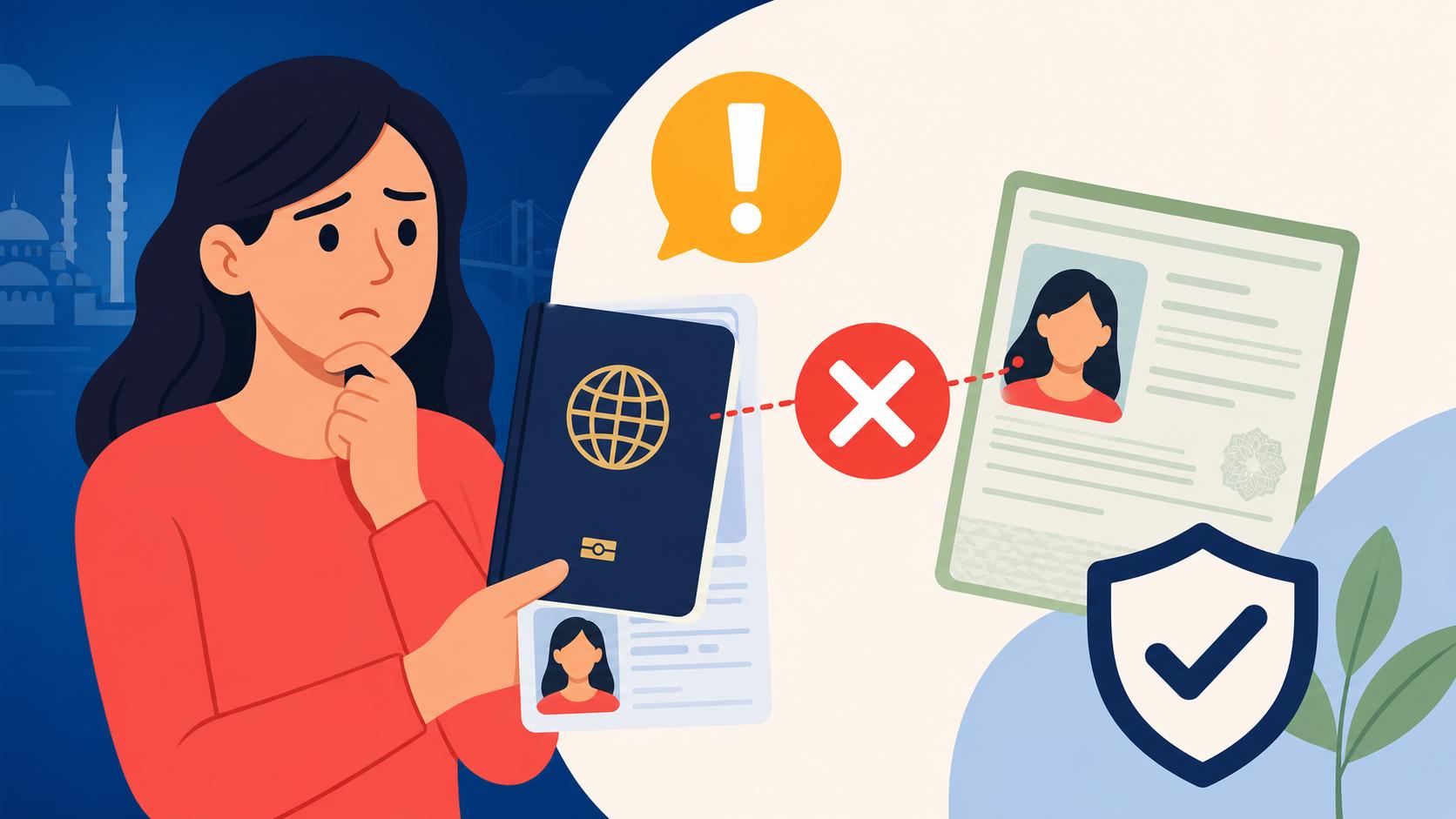
You finally receive that plastic residence permit card in the mail after weeks of checking the tracking system, only to realize your middle name is missing or your surname has a glaring typo. I still remember the sinking feeling in my gut when my first Ikamet arrived with my name spelled according to Turkish phonetics rather than my passport. This guide provides the exact steps to resolve these name discrepancies before they freeze your life in Turkey.
The Hidden Dangers of a Name Mismatch
In Turkey, your identity is digitally anchored to your Foreigner Identification Number, often called the 99-number. If the name associated with that number on your Ikamet card does not perfectly match the data in your passport or your bank’s records, you will encounter immediate administrative friction. Turkey is a country that runs on paperwork and precise digital matching; a single misplaced "i" instead of an "ı" can bring a mortgage application or a simple phone contract to a grinding halt.
Banking and Financial Blocks
Turkish banks are notoriously strict about Know Your Customer (KYC) regulations. If you try to perform a transaction and the bank clerk notices that your Ikamet says "Johnathan" while your passport says "Jonathan," they are legally obligated to flag the discrepancy. This can lead to your accounts being frozen or your inability to access mobile banking. Expats can lose access to their funds for weeks if their bank's system cannot verify their identity against the Central Civil Registration System (MERNIS). To avoid these headaches, ensuring your financial records are clean is as important as Opening a Bank Account in Turkey: Rules for Expats, Tourists, and Investors.
Travel and Border Control Risks
The most stressful place to have a name discrepancy is at the airport. When you present your Ikamet and passport to a passport control officer, they expect a 1:1 match. While minor typos are sometimes overlooked by empathetic officers, a significant difference—such as a missing second surname or a completely different spelling—can lead to you being pulled aside for questioning. In the worst-case scenario, you might be treated as if you are traveling on someone else's residency permit. This is particularly risky if you are Traveling Outside Turkey While Your New Ikamet Application is Still Pending, as you already have less formal documentation to rely on.
Common Causes of Name Discrepancies in the Turkish System
Most name errors aren't the result of a clerk being lazy; they are often baked into the way the Turkish language and the e-Ikamet system interact with foreign scripts. Understanding why the error happened is the first step toward explaining it to an official at the Migration Office (Göç İdaresi).
The Turkish Alphabet and Transliteration Errors
Turkish uses a Latin-based alphabet, but it includes unique characters like Ç, Ğ, İ, ı, Ö, Ş, and Ü. Conversely, it lacks Q, W, and X. When a Göç İdaresi officer enters your data, the system might automatically "Turkify" your name. For example, a "James" might accidentally become "Ceyms" in an older system, or more commonly, the letter "i" (with a dot) might be swapped for "ı" (without a dot). These characters are distinct letters in Turkish, not just stylistic variations. If your name contains these letters, or if your home country uses a non-Latin script (like Cyrillic or Arabic), you must be hyper-vigilant during the initial data entry at your appointment.
The Middle Name and Double Surname Dilemma
Western naming conventions often include multiple middle names or hyphenated surnames, which can confuse the Turkish system that traditionally expects a single "Ad" (First Name) and "Soyad" (Surname). Often, middle names are omitted entirely by the officer to save space or because they don't see them as "primary" names. If your passport includes a middle name, your Ikamet should ideally reflect it. If it doesn't, you may face issues when trying to verify your identity for official services like Using the UETS (National Electronic Notification System) as a Foreign Expat. Always insist that the officer includes all names exactly as they appear in the MRZ (Machine Readable Zone) at the bottom of your passport.
Step by Step Guide to Correcting Your Ikamet Name
If you have already received your card and found an error, do not panic. While it requires a trip back to the bureaucratic trenches, it is a solvable problem. You cannot fix this online; it requires a physical presence at the Provincial Directorate of Migration Management.
Step 1 Gathering Your Documentation
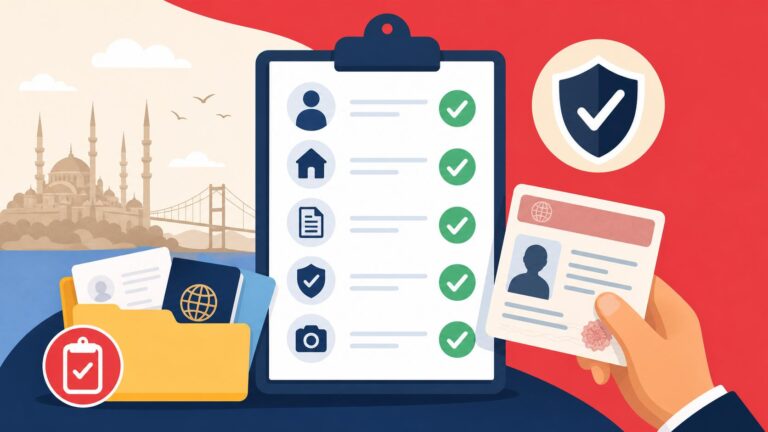
Before heading to the office, you need to prove that the error is indeed an error. You will need your current (incorrect) Ikamet card, your original passport, and a copy of your passport's photo page. If the discrepancy is due to a name change (like marriage or divorce), you must provide the legal document that triggered the change.
For documents issued outside of Turkey, you will likely need a sworn translation and a notary's stamp. Services like RushTranslate are excellent for getting your home-country documents into a format that Turkish authorities will recognize. Remember that any official document must be apostilled in its country of origin before being translated in Turkey. Once you have your documents ready, you should also ensure your health insurance is updated, as providers like Cigna Global need your legal name to match your policy to ensure there are no issues with Health Insurance Requirements: Securing a Policy for First-Time Ikamet Applications.
Step 2 Visiting the Göç İdaresi
You generally do not need a new appointment (randevu) for a correction, but this can vary by province. In Istanbul or Ankara, it is best to go to the specific district office where you had your original interview. Look for the "Update" or "Correction" (Güncelleme) desk. Be prepared to explain the situation clearly. I recommend using a translator if your Turkish isn't fluent, or at least having a printed explanation in Turkish. You will be asked to fill out a petition (dilekçe) explaining the error. If the error was clearly the fault of the migration officer, they might waive the card fee, but be prepared to pay the card fee again just in case.
Step 3 Updating the Nüfus and e-Devlet
Once the Migration Office corrects your name in their system, they will trigger a new card print. However, the work isn't done. You must ensure this change propagates to the Nüfus (Civil Registry) office. Your address registration is tied to your name and 99-number, so if the name changes significantly, you may need to visit the local Nüfus directorate to ensure your Address Registration (Nüfus): The Most Critical Post-Arrival Step for Foreigners remains valid. After a few days, log into your e-Devlet account to verify that your "Kimlik Bilgileri" (ID information) reflects the correction.
| Error Type | Required Action | Difficulty Level |
|---|---|---|
| Minor Typo (e.g., "i" vs "ı") | Petition at Göç İdaresi | Low |
| Missing Middle Name | Petition + Passport Copy | Medium |
| Name Change (Marriage) | Marriage Certificate + RushTranslate + Notary | High |
| Surname Swap | Petition + Passport MRZ verification | Medium |
| Incorrect Date of Birth | Passport + Birth Certificate (Apostilled) | High |
Special Cases: Marriage, Divorce, and Legal Name Changes
Dealing with a name change while living in Turkey adds an extra layer of complexity to your residency. The system doesn't automatically know you got married or changed your name by deed poll in your home country.
Transitioning After Marriage
If you marry a Turkish citizen or another foreigner and change your name, you are legally required to update your residency permit within 20 days. You will need your original marriage certificate, an apostilled copy, and a translation. If your passport still has your maiden name, Turkey will usually keep your Ikamet in that name until you get a new passport. This creates a "bridge" period where you must carry your marriage certificate to prove why your names don't match. This is a common situation for those Marrying a Turkish Citizen: The Pathway and Timeline to a Family Ikamet.
Dealing with Multiple Passports or Dual Nationality
If you hold dual citizenship and applied for your Ikamet with your "Country A" passport but then renewed your "Country B" passport with a slightly different name spelling, you must be careful. Turkey recognizes you based on the passport you used to enter the country and apply for residency. Switching between passports with different name variants without officially updating your records at Göç İdaresi can lead to being flagged for Overstays, Fines, and Deportation: Navigating Harsh Immigration Rules in Turkey. Always stick to one naming convention across all Turkish platforms.
Practical Tips for a Smooth Correction Process
Correcting a name discrepancy is as much about patience as it is about paperwork. Here are some "veteran" tips to make the process easier:
- Check the Machine Readable Zone: When you are at the Migration Office, the officer looks at the two lines of text at the very bottom of your passport photo page. This is the "MRZ." Ensure they are typing exactly what is there.
- The 99-Number is King: Even if your name is spelled wrong, your 99-number remains the same. If you are in the middle of a correction, you can often use your The 99-Number: What Your T.C. Kimlik Number Gives You Access To in Daily Life to prove your identity to other agencies, provided the number matches their records.
- Update Your Insurance Immediately: Companies like Cigna Global need to know about name changes to ensure your coverage is seamless. If you are hospitalized and your Ikamet name doesn't match your insurance policy, it could delay the direct billing process.
- Use Sworn Translators: For any document correction, the quality of your translation matters. Using a reputable service like RushTranslate ensures that the Turkish officials have zero excuses to reject your petition based on "unclear" wording.
- Keep Your Old Card (If Possible): Sometimes the officer will let you keep your old card until the new one arrives. If they take it, make sure you get a "Residency Permit Application Document" (Müracaat Belgesi) which acts as your legal ID in the interim.
If you find that the correction process is becoming a circular bureaucratic nightmare, it might be time to seek professional help. While many handle this themselves, Hiring an Immigration Lawyer in Turkey: Spotting Red Flags and Standard Costs can be a wise investment if the name discrepancy is preventing you from securing citizenship or high-value property.
Using e-Devlet to Monitor the Change
The e-Devlet (Digital Government) portal is more powerful than ever. Once you have submitted your petition for a name correction, you should check the "Göç İdaresi Başkanlığı" section daily. You can track the status of your "residence permit information" to see when the name change is officially reflected in the database.
If you notice that your name is correct on e-Devlet but your physical card still hasn't arrived, you can use the digital version of your ID for most local needs. This is also the time to ensure your UETS Setup: Getting Your PTT Electronic Mailbox as a Foreign Resident is updated, as official notifications about your residency will be sent to the name currently in the system. If the names don't match, you might miss critical legal updates regarding your stay in Turkey.
Final Thoughts for the Frustrated Expat
I know how maddening it is to deal with a mistake you didn't even make. But in Turkey, being proactive is the only way to survive the bureaucracy. If you see a typo, fix it now. Don't wait until you are at the airport or trying to sign a lease. A name discrepancy is a small snowball that can easily turn into an avalanche if ignored. Take your passport, your evidence from RushTranslate, and a hefty dose of patience to the Migration Office. Once that 99-number is finally tied to the correct spelling of your name, you'll feel a massive weight lifted off your shoulders, and you can get back to enjoying your life in this beautiful country.
Disclaimer Regarding Legal and Immigration Advice
The information provided in this guide is based on personal expat experiences and general administrative procedures in Turkey. Immigration laws, Göç İdaresi protocols, and document requirements are subject to frequent changes by the Turkish Ministry of Interior. This article does not constitute formal legal advice. For specific legal issues or complex name discrepancy cases involving potential deportation or citizenship, we strongly recommend consulting with a licensed Turkish immigration attorney or contacting the YİMER 157 helpline for official guidance.