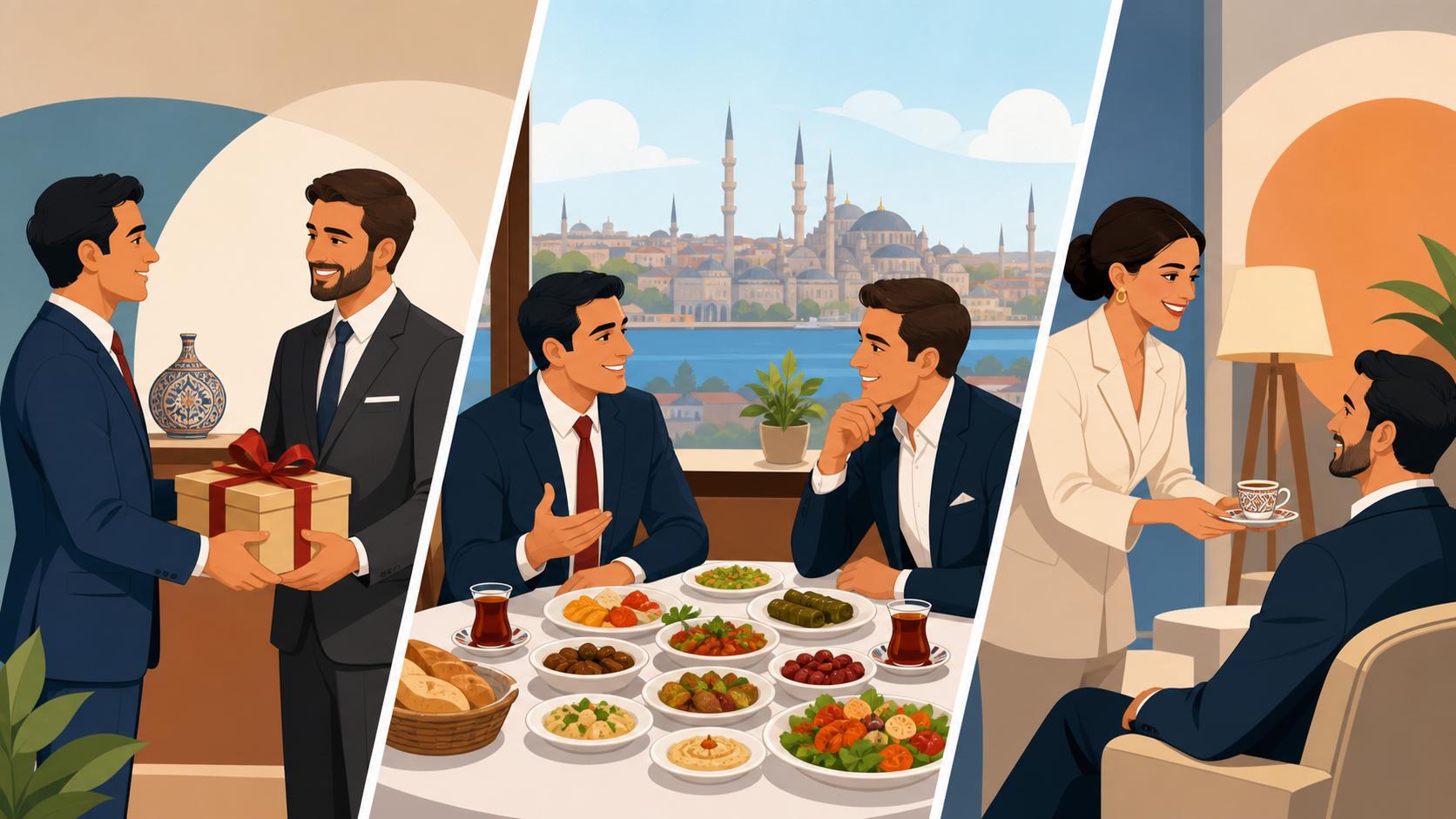
Gift Giving, Lunches, and Hospitality in Turkish Business Dealings
Navigating the unwritten social rules of the Turkish boardroom can feel like trying to solve a puzzle where the pieces keep changing shape. I remember my first high-stakes meeting in Istanbul’s Maslak district, where I spent three hours discussing my family and the history of Turkish tea before we even mentioned a contract. This guide solves the confusion surrounding gift-giving, long business lunches, and the deep-rooted hospitality that defines professional success in Turkey.
The Cultural Foundation of Turkish Business Hospitality
In Turkey, business is rarely just a transactional exchange of goods and services for currency. It is, at its heart, a social endeavor built on the pillar of "Güven" (trust). Unlike the fast-paced, "get to the point" nature of North American or Northern European business styles, the Turkish approach requires a significant investment in interpersonal relationships. You are not just a representative of a company; you are a person whose character must be vetted before a deal is struck.
This vetting process happens through hospitality. When a Turkish partner invites you for tea or a meal, they are not just being polite; they are observing your patience, your manners, and your ability to engage in "sohbet" (conversation). If you rush through these moments, you signal that you value the money more than the partnership, which can be a fatal mistake in this market. If you are struggling with the nuances of these interactions, using resources like TurkishPod101 can help you grasp the subtle linguistic cues that build rapport during these social stages.
Hospitality is also a matter of honor. The concept of "Misafirperverlik" (hospitality) is ingrained in the Turkish soul from childhood. When you are in someone’s office or home, you are a guest first and a business associate second. This means your needs will be catered to with a level of intensity that can feel overwhelming to a newcomer. Accepting this hospitality with grace is the most important "soft skill" you can develop while working in Turkey.
The Art of the Turkish Business Lunch and Dinner
The business lunch is a sacred ritual in cities like Istanbul, Ankara, and Izmir. You will rarely find a Turkish executive eating a "desk salad" while answering emails. Instead, the midday meal is an opportunity to step away from the fluorescent lights and connect over a multi-course spread. If you are invited to a meal, expect it to last anywhere from 90 minutes to three hours. It is considered impolite to look at your watch or try to steer the conversation back to the office too early.
One of the biggest points of confusion for expats is the bill. In Turkish culture, the person who initiates the invitation is the one who pays. There is no such thing as "going Dutch" in a traditional Turkish business setting. If you try to split the bill, you might inadvertently insult your host by suggesting they cannot afford the meal or by rejecting their hospitality. If you feel the need to reciprocate, do not do it at the table; instead, invite them to a subsequent meal at a later date and ensure you are the one to handle the payment.
When choosing a venue for a business dinner, the "Meyhane" (traditional tavern) is a popular choice for more relaxed, long-term partners. These dinners involve "Meze" (small starters) and "Rakı" (anise-flavored spirit), and they are where the real bonds are formed. However, always be mindful of your partner’s personal beliefs. While many in the Istanbul business world are secular, those in more conservative cities or sectors may prefer a "dry" restaurant. Understanding the Turkish Business Culture: Communication Styles, Meetings, and Etiquette is vital here, as it helps you gauge the appropriate level of formality for different regions.
Comparison of Business Dining Scenarios
| Feature | The Office Tea (Çay) | The Business Lunch | The Business Dinner (Meyhane) |
|---|---|---|---|
| Duration | 15–45 Minutes | 1.5–2.5 Hours | 3–5 Hours |
| Core Purpose | Greeting and Rapport | Relationship Building | Cementing Trust and Friendship |
| Alcohol | Never | Rarely | Common (Depending on the guest) |
| Business Talk | Minimal / Introductory | Mid-meal or at the end | Almost never until the coffee |
| Payment | Provided by Host | Host always pays | Host always pays |
Office Tea Culture and the Small Talk Marathon
If you enter a Turkish office and are not offered tea or coffee within the first five minutes, something is seriously wrong. The Office Tea Culture (Çay): Surviving and Enjoying Turkish Workplace Socializing is the lifeblood of the professional world. Even if you aren't a tea drinker, it is best to accept the first cup. It signals your willingness to participate in the social flow of the office.
During these tea sessions, the conversation will revolve around everything except business. You might be asked about your health, your family, your impressions of Turkey, or the local football scores. This is not "wasted time." It is the foundation of your professional reputation. If you are working in Corporate Tech Jobs in Istanbul: Salaries, Culture, and Remote Work Trends, you might find the pace slightly faster, but the fundamental requirement for "sohbet" remains.
It is often said to new expats that their ability to discuss the weather or the quality of the breakfast they had that morning is just as important as their ability to read a balance sheet. To make these conversations smoother, I recommend picking up some industry-specific terms through Business Turkish: Essential Vocabulary and Phrases for Emails and Meetings. Knowing how to pivot from social talk to professional topics using the correct honorifics will set you apart from other foreigners.
Gift Giving Etiquette in Professional Settings
Gift-giving in Turkey is a delicate dance. It is common, but it is not mandatory for every single meeting. In fact, giving a gift that is too expensive too early in a relationship can be perceived as a bribe or an attempt to "buy" favor, which is highly discouraged. The best time to give a gift is after a relationship has been established or when a significant milestone—like signing a contract or completing a project—has been reached.
When selecting a gift, focus on quality and heritage. Items from your home country are usually very well-received because they show a personal touch. If you prefer to buy something locally, high-end food items are the "gold standard." A beautifully packaged box of "Lokum" (Turkish Delight) or Baklava from a reputable brand like Karaköy Güllüoğlu or Divan is a safe and appreciated choice. Avoid alcohol unless you are absolutely certain your host drinks, and never give anything made of pork or lard.
If you are a guest at someone’s home for a business-related social event, never arrive empty-handed. Flowers or a high-quality box of chocolates are appropriate. If there are children in the house, bringing a small toy or sweets for them is a gesture that will be remembered for years. This level of thoughtfulness is what moves you from being a "foreigner doing business" to a "friend of the family." If you're still refining your approach to the local market, Job Interview Expectations in Turkey: Dress Code, Greetings, and Norms offers great insights into how presentation and etiquette impact your first impressions.
Navigating Hierarchy and Social Graces
Turkish offices are generally more hierarchical than those in the UK or the US. Respect for seniority is paramount. When you enter a room, you should greet the most senior person first. This hierarchy is reflected in the language used; you will almost always use "Siz" (the formal "you") rather than "Sen" (the informal "you") until you are explicitly invited to do otherwise.
Using titles correctly is the fastest way to earn respect. Men are usually addressed by their first name followed by "Bey" (e.g., Ahmet Bey), and women by their first name followed by "Hanım" (e.g., Elif Hanım). If someone has a professional title like Doctor or Professor, it is often used as well. Understanding the Hierarchy in Turkish Companies: Properly Using 'Bey' and 'Hanım' in the Office is a prerequisite for anyone looking to manage a local team or negotiate with high-level executives.
Body language also plays a significant role in hospitality. When you are served tea or food, a slight nod of the head and saying "Teşekkür ederim" (Thank you) is expected. When leaving a meeting, it is common to use the phrase "Hoşça kalın" while the host says "Güle güle" (Go with a smile). These small linguistic flourishes, which you can practice on TurkishPod101, demonstrate that you have taken the time to respect the local culture.
Networking and Socializing Outside the Boardroom
Much of the heavy lifting in Turkish business happens after 6:00 PM. Networking isn't just about exchanging business cards at a stiff mixer; it’s about attending gallery openings, charity events, or simply sitting at a cafe in Nişantaşı or Bebek. For those living in the capital, Networking in Istanbul: Chambers of Commerce and Professional Expat Groups provide more structured opportunities, but the informal "referral" network is where the real power lies.
In these social settings, hospitality takes the form of introductions. A Turkish partner who trusts you will "open doors" by introducing you to their own network. This is a massive responsibility; if you behave poorly with one of their contacts, it reflects badly on the person who introduced you. Conversely, if you treat their friends with the same hospitality and respect you showed them, your reputation in the city will grow exponentially.
If you are new to the country and trying to find your feet, don't be afraid to ask for advice. Turks generally love explaining their culture and will be flattered that you want to learn. Whether you are Learning Turkish for Life and Work: TÖMER, Language Schools, and Self-Study or just trying to figure out Dining Out in Turkey: Tipping Etiquette and Understanding Kuver (Cover) Charges, showing curiosity and humility is your best asset.
Common Pitfalls for Expats to Avoid
The biggest mistake I see expats make is being too "transactional." If you try to force a business conversation during the first 30 minutes of a lunch, you will see your partner's body language stiffen. They aren't trying to be difficult; they are simply following a social script that requires a personal connection before a professional one.
Another pitfall is misunderstanding the Turkish "Yes." In a culture that values hospitality and "saving face," people may say "Yes" or "We'll see" (İnşallah) to avoid being rude or saying a direct "No." This doesn't mean they are being dishonest; it means they are prioritizing harmony in the moment. It takes time and several tea sessions to learn how to read the "Real Yes" versus the "Polite Yes."
Finally, do not underestimate the power of food. If a host offers you a second helping or a specific delicacy, try to accept at least a small portion. Refusing food can sometimes be interpreted as a lack of comfort or a rejection of the host's efforts. If you have dietary restrictions, it is better to mention them early and politely so your host can accommodate you without embarrassment. Keeping up with your Labor Rights in Turkey: Employment Contracts, Minimum Wage, and Severance is important for the legal side, but these social nuances are what will actually keep your job secure and your partnerships thriving.
Conclusion
Mastering the art of gift-giving, long lunches, and office hospitality is not a distraction from your work in Turkey—it is your work. By shifting your mindset from "closing the deal" to "building the relationship," you will find that the administrative hurdles and cultural barriers begin to melt away. The Turkish business world is warm, generous, and deeply loyal to those who respect its traditions. Take the time to drink the tea, enjoy the baklava, and learn the names of your partner's children. In the long run, those are the investments that will yield the highest returns for your career in this vibrant, complex, and beautiful country.
Disclaimer Regarding Business and Social Advice
The information provided in this guide is based on cultural norms and personal experiences within the Turkish business environment. Cultural practices can vary significantly based on the industry, the specific region of Turkey (e.g., Istanbul vs. Eastern Anatolia), and the individual company’s internal culture. This content is for informational purposes only and does not constitute legal or professional business consultancy. Always observe your specific professional environment and consult with local colleagues or legal experts when navigating complex contractual or sensitive social situations.