The List of Closed Neighborhoods in Istanbul, Antalya, and Mersin (2026 Updates)
Finding a perfect apartment in Turkey only to discover your residence permit application is dead on arrival because of your address is a rite of passage no expat wants to experience. Applicants often wait in crowded Göç İdaresi offices with a fresh lease, and some find that their chosen neighborhood is reported as "closed" to foreigners. This guide solves that heartbreak by detailing the 2026 updates for closed neighborhoods in Istanbul, Antalya, and Mersin.
Understanding the Kapalı Mahalleler Policy
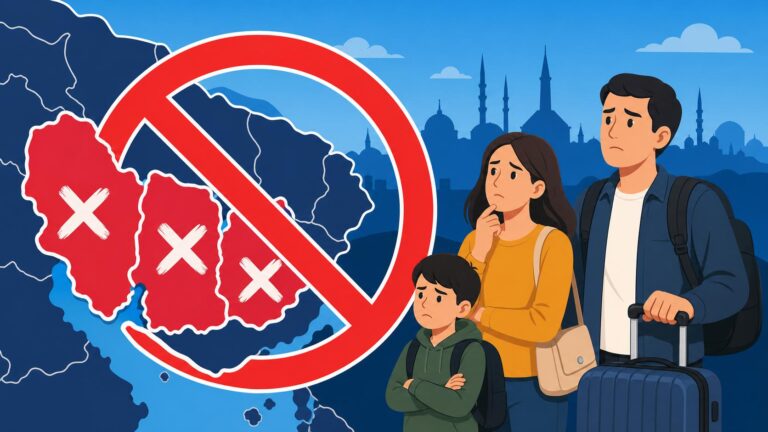
The term "Kapalı Mahalleler" literally translates to "Closed Neighborhoods," and it represents one of the most significant shifts in Turkish immigration policy over the last few years. Initially, the Ministry of Interior designated specific areas where the foreigner population exceeded 20% of the total resident count. To maintain social cohesion and manage urban density, these areas were shuttered to new residency applications. What started as a small list has ballooned into a massive database of over 1,100 neighborhoods across the country.
For those of us living here, this policy means that simply finding a landlord willing to rent to you isn't enough. You must verify the specific neighborhood (mahalle) status before any money changes hands. If you are moving to Turkey for the first time, you should consult the Turkish Residence Permits (Ikamet): The Complete Application Guide (2027) to understand how these restrictions fit into your overall visa strategy. The rules are strict: if your address is in a closed zone, your initial application for a short-term touristic permit will be rejected automatically.
It is also important to note that these "closures" primarily affect those seeking residency for the first time in that specific district. If you are already living in a closed neighborhood and are simply renewing your permit for the same address, you are generally safe. However, moving from one closed neighborhood to another—even within the same building—can trigger a rejection. You must always ensure your health coverage is active through providers like Cigna Global to avoid any other technical grounds for denial during these sensitive transitions.
Istanbul Districts with Major Restrictions
Istanbul is the hardest-hit city regarding these restrictions. The "closed" list in the megalopolis is a moving target, but certain districts have become almost entirely off-limits for new foreign residents. When you are looking at listings on Sahibinden, you might see beautiful flats in Esenyurt or Fatih, but for a new expat, these are often legal dead ends.
The Total Lockdown of Fatih and Esenyurt
Fatih and Esenyurt are the two districts where the restrictions are most felt. Fatih, the historical heart of the city, has been closed to new residency permits (with very few exceptions) for several years. The government’s goal here is to preserve the historical fabric and manage the massive influx of diverse foreign populations. If you are an international student or a digital nomad, you might be tempted by the central location of Fatih, but you will find it nearly impossible to register your address at the Address Registration (Nüfus): The Most Critical Post-Arrival Step for Foreigners if you choose a home here.
Esenyurt, on the other hand, is a modern concrete jungle on the European side. It was once the go-to for affordable housing, but it quickly became over-saturated. Currently, almost every neighborhood in Esenyurt is closed to new foreign residents. If you are considering this area, you must check the specific mahalle status on e-Devlet or ask a local agent to show you the official list. Even with a notarized contract translated by a service like RushTranslate, the Migration Office will not override the neighborhood's closed status.
Neighborhood Pockets in Avcılar and Zeytinburnu
While some districts are closed entirely, others like Avcılar, Zeytinburnu, and Bahçelievler have a "Swiss cheese" model of restrictions. For example, in Zeytinburnu, neighborhoods like Beştelsiz and Yeşiltepe are closed, while others might still be open. This makes the house-hunting process incredibly tedious. You could be on one side of a street that is open and the other side that is closed.
It is advisable that before you sign a lease in these "mixed" districts, you take a copy of the title deed (Tapu) or the address details to the local district migration office. You can also use Navigating YİMER 157: How to Use the Foreigner Helpline for Immigration Queries to ask about a specific neighborhood before you pay a deposit. Landlords are often unaware—or worse, they don't care—that their neighborhood is closed, as they just want the rent. Using a comprehensive health plan from Cigna Global is still a requirement for your file, but it won't help you if the address itself is the reason for the "Red Paper" (rejection notice).
Popular Expat Hubs Facing New Limits
Even "liberal" or "upper-class" areas are not immune. Parts of Beşiktaş and Kadıköy have seen specific neighborhoods reach the 20% threshold. While much of Kadıköy remains open, the increasing popularity of Moda and Caferağa has put them on the government's radar. If you are planning to live in these high-demand areas, you must verify the status weekly, as the list is updated based on real-time population data.
When preparing your documents for these areas, ensure your rental contract is flawless. Using a professional service like RushTranslate for your passport translation and having your contract notarized is essential. For more details on the paperwork side, check the Required Documents Checklist for a Short-Term Turkish Residence Permit to ensure you aren't giving the officers any other reason to doubt your application.
Antalya and the Mediterranean Coast Closures
Antalya has seen a massive demographic shift over the last few years, leading to widespread neighborhood closures in some of its most famous expat enclaves. The Mediterranean coast is beautiful, but the bureaucracy here has become incredibly firm regarding the "20% rule."
Konyaaltı and the Russian-Ukrainian Influx
In Antalya’s Konyaaltı district, neighborhoods like Liman, Hurma, and Sarısu are now legendary for being closed. These were the primary hubs for Russian and Ukrainian expats. If you go to a café in Liman today, you'll hear more Cyrillic than Turkish, which is exactly why the Ministry of Interior closed these zones to new permits. If you are a new arrival, you will likely be steered toward Kepez or the further reaches of Dosemealti.
Living in an "open" neighborhood in Antalya often means a longer commute to the beach, but it is the only way to secure your legal stay. Make sure you have your Health Insurance Requirements: Securing a Policy for First-Time Ikamet Applications sorted out before your appointment, and consider a global provider like Cigna Global to ensure you have coverage that the local offices recognize without question.
Alanya and the Mahmutlar Dilemma
Alanya, though part of Antalya province, operates almost like its own city-state for expats. Mahmutlar is perhaps the most famous "closed" neighborhood in all of Turkey. It was once an expat paradise with affordable high-rise apartments and a thriving international community. Today, it is firmly on the closed list. Many foreigners who bought property there before the closure are still able to live there, but if you are a new renter, your application will be rejected.
If you are set on the Alanya area, you must look into the Real Estate Residence Permits: Understanding the Strict USD 200,000 Tapu Rule if you plan to buy. Buying property in a closed neighborhood can still grant you a "Tapu," but it might not grant you the right to reside there unless the property was purchased before the specific closure date or meets very high valuation thresholds.
| City | District | Example Closed Neighborhoods (2026) |
|---|---|---|
| Istanbul | Fatih | All Neighborhoods (General Closure) |
| Istanbul | Esenyurt | Merkez, Cumhuriyet, Yeşilkent |
| Istanbul | Zeytinburnu | Beştelsiz, Yeşiltepe, Nuripaşa |
| Antalya | Konyaaltı | Liman, Hurma, Sarısu |
| Antalya | Alanya | Mahmutlar, Kestel, Kargıcak |
| Mersin | Mezitli | Merkez, Viranşehir |
| Mersin | Yenişehir | Akkent, Eğriçam |
Mersin: The Rising Restricted Zone
Mersin has historically been an industrial and port city, but it recently exploded as a popular alternative to the high prices of Antalya and Istanbul. This sudden popularity led to a rapid "closure" of many of its coastal and central districts.
Mezitli and the Coastal Squeeze
The district of Mezitli is the "cool" part of Mersin where most expats want to be. However, several neighborhoods along the coast, including Viranşehir, have reached their foreigner quotas. If you are looking at the new luxury developments in Mersin, you must be extremely cautious. Developers will tell you the area is perfect for residency, but they are not the ones who issue the Ikamet card.
Many families have moved to Mersin for the lower cost of living, only to get stuck in a legal limbo because their "luxury sea-view" flat was in a closed mahalle. Before moving your life to Mersin, ensure you have used Navigating Closed Neighborhoods: A Guide to Areas Where Foreigners Cannot Register as a reference. You will also need to ensure all your foreign documents are translated correctly by a sworn translator or a service like RushTranslate to satisfy the Mersin Göç İdaresi, which can be quite traditional in its document review.
Yenişehir and the Student Impact
Yenişehir is home to universities and a more urban vibe. Because of the high number of international students, specific pockets around the university campuses have been closed to keep the balance of the local population. If you are a student, your university will typically handle your registration, but if you are an expat worker or retiree looking for a flat in Yenişehir, you need to verify the mahalle status.
Always keep your Cigna Global insurance documents handy and translated. Even if you find an open neighborhood, the Mersin authorities are known for being very meticulous about the "financial sufficiency" part of the application. If you find yourself in a situation where your permit is denied because of an address error, read through Ikamet Rejections: Exact Steps on What to Do If Your Residence Permit is Denied to know your rights for an appeal.
Verification Tools and Moving Strategies
The most important advice I can give any expat is: Trust, but verify. Landlords and real estate agents (emlakçı) often have a financial incentive to tell you that "everything is fine" or that they have "connections" at the Migration Office. In modern Turkey, "connections" rarely overcome a hard-coded system block on a closed neighborhood.
Using e-Devlet for Address Checks
The most reliable way to check if an address is valid for residency is through the e-Devlet portal. If you already have your Turkish ID number (99 number), you can log in and look for the "Yerleşim Yeri" (Place of Residence) tools. However, for newcomers, you won't have this access yet. In that case, you should ask the landlord for a "Numarataj" document from the local municipality. This document proves the address exists in the national database.
You can then take this address to the local "Nüfus" (Population) office or the "Göç İdaresi" to ask if it is open for foreign registration. This might seem like an extra day of work, but it can save you thousands of dollars in lost deposits. If you are moving houses within Turkey, remember that you have a strict window to update your records. Check the Using e-Devlet to Register Your Address at the Local Nüfus Directorate guide for the step-by-step process.
The Role of the Muhtar
Every neighborhood in Turkey has a "Muhtar," a local elected official who knows every soul in the district. If you are serious about a flat, go find the Muhtar’s office (usually a small building in a local park). Ask them: "Bu mahalle yabancılara kapalı mı?" (Is this neighborhood closed to foreigners?). They are usually very helpful and will give you the ground truth that a real estate agent might hide.
When you do find an open neighborhood and sign that lease, you will need to get it notarized. This requires a sworn translation of your passport. I’ve used RushTranslate for this in the past because they understand the formatting requirements that Turkish notaries expect. For the full procedure, see How to Notarize Your Rental Contract for a Residence Permit Application.
Exceptions to the Closed Neighborhood Rule
There are very few ways to bypass the closed neighborhood rule, and they are strictly enforced. The most common exception is for "Family Reunification." If you are a foreigner marrying a Turkish citizen, or if you are the child of someone already legally residing in that neighborhood on a different permit type, you may be allowed to register.
Another exception involves property ownership. If you purchased a property worth more than $200,000 (as per the 2024/2026 rules) before the neighborhood was closed, you are generally grandfathered in. However, if you buy a property in a neighborhood that is already closed, you might get the title deed, but you will not get the residence permit. This is a common trap for investors. Always consult Real Estate Residence Permits: Understanding the Strict USD 200,000 Tapu Rule before sending any wire transfers for property.
Lastly, make sure your insurance is robust. While local "Ikamet insurance" is the bare minimum for the visa, having a comprehensive plan from Cigna Global ensures that if you have a medical emergency during a move or a stressful residency dispute, you are covered in the best private hospitals in Istanbul or Antalya. Technical rejections are common, but don't let an address error be the reason you have to leave this beautiful country.
Disclaimer Regarding Immigration Advice
This guide is for informational purposes only and reflects the local experiences and research of the author. Turkish immigration laws, neighborhood lists, and "closed" statuses can change with a single circular from the Ministry of Interior. Always verify the status of a specific address with the Provincial Directorate of Migration Management (İl Göç İdaresi Müdürlüğü) or via the official YİMER 157 helpline before signing any legal documents or making financial commitments. This content does not constitute legal advice.