Withdrawing Foreign Currency (USD/EUR) Directly from Turkish ATMs
Finding a Turkish ATM that actually spits out USD or EUR when you’re facing a hard-currency rent payment is an exercise in frustration. I’ve spent countless afternoons wandering the streets of Beşiktaş, trying four different machines only to be met with "Transaction Not Possible." This guide breaks down exactly which banks to trust and how to avoid the hidden fees.
The Reality of Foreign Currency Withdrawals in Turkey
Living here as an expat, you quickly realize that the local economy operates on two tracks. While your daily simit and tea are paid for in Lira, the "big ticket" items like apartment deposits, international school fees, or even certain medical procedures are often quoted—and expected—in Dollars or Euros. This creates a constant need for hard currency. If you are following a Cost of Living in Turkey 2026: Detailed Budgets for Singles and Families plan, you know that keeping a portion of your savings in a stable currency is more than just a preference; it is a survival strategy against inflation.
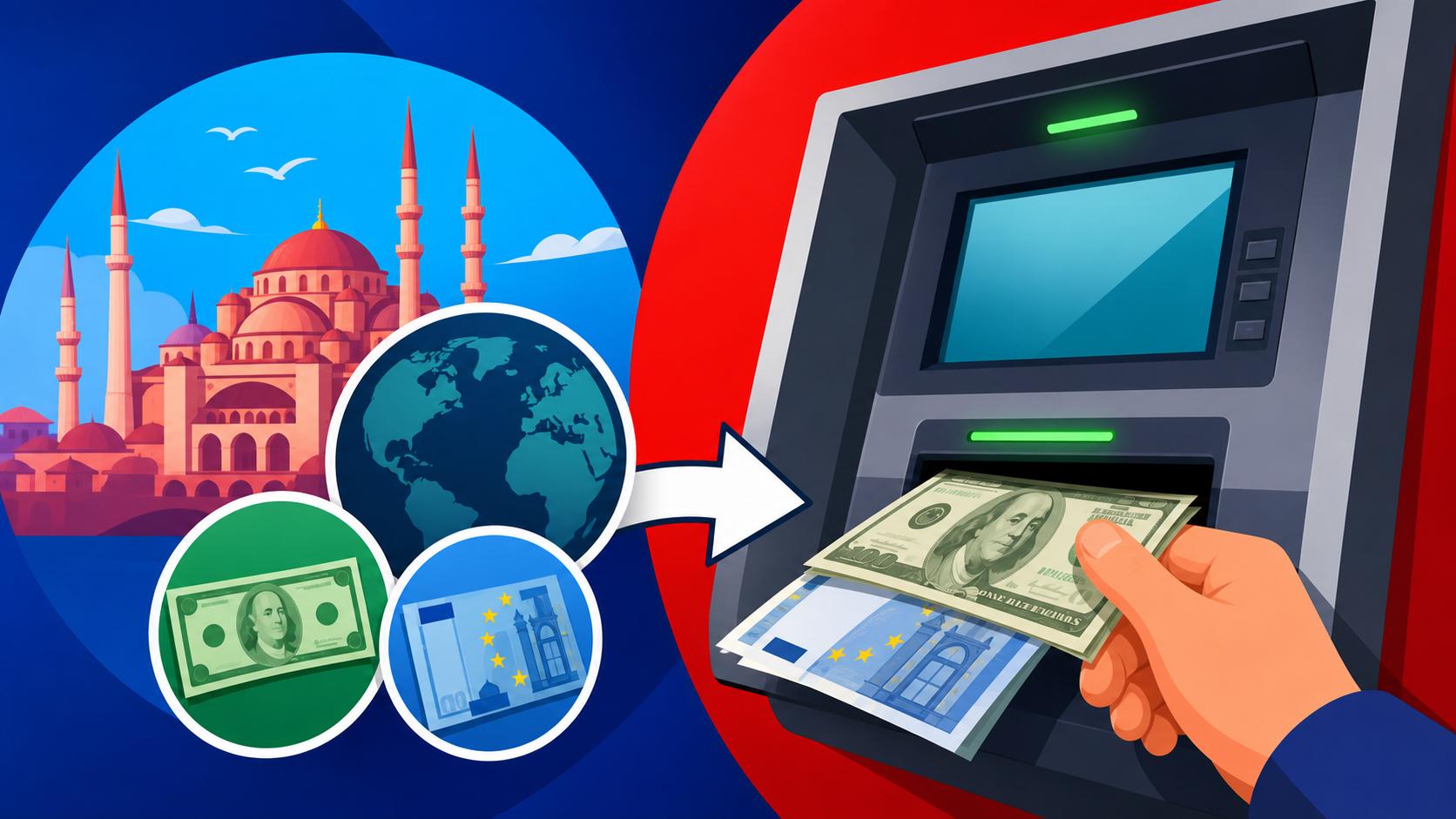
When I first arrived, I assumed any ATM with a Visa or Mastercard logo would give me what I needed. I was wrong. Most ATMs in Turkey are Lira-only. To get USD or EUR, you have to find specific machines, usually located in high-traffic tourist areas or financial districts. Even then, the machine might be out of "foreign" stock, or it might try to charge you a fee so high it feels like a daylight robbery. This is why having a solid grasp of Money in Turkey for Expats: Banking, Payments, and Finance Guide (2027) is essential before you head out into the heat to hunt for cash.
The frustration is real when you find the right ATM but realize the daily limit is too low for your needs. Most machines will cap you at around $1,000 or €1,000 per day, regardless of what your home bank allows. If you are trying to pull out a large sum for a property deposit, you might need to visit multiple banks over several days. I’ve been that person standing at a TEB machine at 10:00 PM because I needed to finish a withdrawal cycle before the midnight reset. It’s not fun, but with the right strategy, it's manageable.
Identifying the Best ATMs for USD and EUR
Not all Turkish banks are created equal when it comes to serving foreigners. Some institutions have embraced the expat community, while others seem to make it as difficult as possible to access your own money. When you are Choosing a Turkish Bank: Comparing Ziraat, Garanti, İş Bankası, and Akbank, keep in mind that their physical ATM network matters just as much as their mobile app.
TEB (Türk Ekonomi Bankası)
TEB is arguably the gold standard for foreign currency withdrawals. Because they have a long-standing partnership with BNP Paribas, their systems are very "international-friendly." Most TEB "Paramatik" machines in major cities like Istanbul, Ankara, and Izmir offer USD and EUR. Look for the small currency icons on the physical frame of the machine or the digital screen. I personally use my Wise card at TEB frequently because the interface is clear and they often have the highest limits for foreign cards.
Garanti BBVA
Garanti is another reliable choice. Their ATMs are everywhere, and a significant percentage of them stocked with Dollars and Euros. The user interface is one of the best in Turkey, offering full English support. However, Garanti is known for being slightly more aggressive with their internal exchange rates if you accidentally click the wrong button. If you are using a card from Trade Republic to withdraw your Euros, Garanti machines will usually recognize the currency immediately, but always be wary of the "conversion" prompt.
QNB Finansbank and HSBC
QNB and HSBC are the "boutique" options. Because they cater to a more affluent or international clientele, their ATMs are almost always stocked with hard currency. If you are in a neighborhood like Nişantaşı or around the luxury malls in Sariyer, these are your best bets. The lines are shorter, and the machines are rarely "out of service." I’ve found that using Wise here is seamless, as these banks handle international SWIFT and card protocols much better than the smaller local cooperatives.
Understanding the Costs and Hidden Fees
This is where most expats lose money without even realizing it. There are three main "predators" when you use a Turkish ATM: the bank’s flat fee, your home bank’s international fee, and the dreaded Dynamic Currency Conversion (DCC). To keep your expenses low, you should check out the ATM Fees in Turkey: Which Banks Offer Free Cash Withdrawals for Expats? guide, but here is the "on-the-ground" reality.
DCC is a trick where the ATM offers to "do you a favor" by converting the withdrawal into your home currency (like USD or GBP) so you "know exactly how much is being deducted." Never, ever accept this. The exchange rate they offer is usually 5% to 7% worse than the mid-market rate. If the ATM asks, "Would you like to continue with/without conversion?" always choose WITHOUT conversion. This allows your own bank—or an app like Wise—to handle the exchange at a much fairer rate.
Furthermore, many Turkish banks have started charging a "usage fee" for foreign cards, ranging from 2% to 8%. Banks like Vakıfbank or Ziraat (the state banks) are sometimes the worst offenders here for private international cards. If you see a screen warning you about a 5% "provision fee," cancel the transaction and find a TEB or an ING machine. It’s worth the ten-minute walk to save $50 on a $1,000 withdrawal.
| Bank Name | Common Currencies | Relative Fee Level | Reliability |
|---|---|---|---|
| TEB | USD, EUR, GBP | Low | Very High |
| Garanti BBVA | USD, EUR | Medium | High |
| QNB Finansbank | USD, EUR | Medium | High |
| İş Bankası | USD, EUR | High | Moderate |
| Ziraat Bankası | Lira Only (Usually) | High | Moderate |
| HSBC | USD, EUR, GBP | Low/Medium | High |
Digital Tools and Safety Tips for Expat Finance
Managing your money in Turkey requires a "hybrid" approach. You cannot rely solely on physical cash, nor can you rely 100% on local banks. It is wise for expats to keep their primary savings in a "safe haven" like Trade Republic or Wise, and only move what they need into the Turkish system. This protects you from the volatility of the Lira and gives you more leverage when withdrawing hard currency.
Security is also a major concern. Whenever I am accessing my banking apps or moving money between accounts, I use NordVPN. Public Wi-Fi in Turkish cafes is notoriously insecure, and many banking apps will actually flag or block your account if they see you logging in from a Turkish IP address without a secure tunnel. Using NordVPN to set your location to your home country (the UK, USA, or Germany) ensures that your home bank doesn't freeze your card right when you're standing in front of the ATM.
If the ATM network fails you—which happens during national holidays or system upgrades—having a backup is vital. I’ve started using Binance as a secondary "off-ramp." You can hold USDT or USDC and, if needed, use their P2P platform to get Lira or even find local offices in places like Alanya or Antalya that can facilitate larger currency exchanges. It’s a bit more advanced, but for a veteran expat, it's a necessary tool in the belt.
Step-by-Step Guide to a Successful Withdrawal
To make sure you don't get stuck, follow this workflow every time you head to a machine. I learned this the hard way after having my card "eaten" by a machine in Kadıköy during a power flicker.
- Check the Machine for Skimmers: Before inserting your card, give the card slot a firm tug. If it feels loose or looks bulky, move to the next one.
- Select English Immediately: Don't try to "brave it" with your basic Turkish if you're dealing with thousands of dollars. The language button is usually at the bottom of the first screen.
- Insert Your Card and Enter PIN: Some machines will ask for your 99-Number: What Your T.C. Kimlik Number Gives You Access To in Daily Life if you are using a local card, but for international cards, it should just be the PIN.
- Choose "Withdrawal" and then "Other Account": Sometimes the "Savings" or "Checking" options don't play nice with international cards. "Default" or "Other" usually works best.
- Select Your Currency: If the machine supports it, you will see buttons for TL, USD, and EUR. Select your desired hard currency.
- The DCC Trap: When the screen asks "Would you like to lock in this rate?" or "Accept conversion," click DECLINE or NO.
- Take Your Cash First: In Turkey, many ATMs give the cash before they return the card. Don't walk away as soon as you have the bills! Wait for the "Would you like a receipt?" prompt and then wait for your card to pop out.
If you are a new arrival, make sure you have already completed your Opening a Bank Account in Turkey: Rules for Expats, Tourists, and Investors process. While withdrawing from foreign cards is great for the short term, having a local USD/EUR sub-account allows you to transfer money in via Wise and withdraw it at the branch teller for zero fees, which is much better for large amounts.
Final Advice for the Savvy Expat
Don't wait until the last minute. If your rent is due on the 1st of the month, start your withdrawals on the 25th. ATMs run out of USD frequently, especially on Friday afternoons before the weekend. I’ve had many stressful Saturdays where I had to visit five different neighborhoods just to find a machine that wasn't "Currently unable to provide USD."
Also, keep your receipts. If there is a discrepancy—like the machine deducting the money from your account but failing to dispense the bills (a "Sistem Hatası")—you will need that slip of paper to file a claim. If the machine doesn't give a receipt, take a photo of the screen with the error message. Having NordVPN active on your phone while you call your home bank's support line from the sidewalk can also help you resolve these issues faster without your call being dropped or blocked.
Lastly, always carry a "burner" Lira card like Papara or Troy for small daily spends, and keep your Wise or Trade Republic cards for the heavy lifting at the foreign currency ATMs. This keeps your main accounts safer and ensures you always have a way to pay for a taxi if your primary withdrawal gets blocked.
Disclaimer Regarding Financial Advice
The information provided in this guide is for educational and informational purposes only and does not constitute professional financial, legal, or investment advice. Banking regulations, ATM fees, and exchange rates in Turkey are subject to frequent changes. While we strive to provide the most current information, readers should verify all fees and limits with their respective financial institutions before performing transactions. The author and publisher are not responsible for any financial losses, blocked accounts, or ATM-related issues incurred while following the suggestions in this article. Consistent with local laws, always ensure your financial activities in Turkey are transparent and compliant with Turkish tax and residency regulations.