Money in Turkey for Expats: Banking, Payments, and Finance Guide (2027)
Moving to Turkey often feels like a romantic adventure until you're standing in a crowded bank branch in Kadıköy, clutching a stack of notarized papers and realizing no one speaks your language. I remember the sheer panic of my first rent payment failing because I didn't understand the IBAN system. This guide solves every financial hurdle you'll face, from opening accounts to mastering 2026’s inflation.
Navigating the Turkish Banking Landscape
Opening a bank account in Turkey is the first major administrative "boss fight" you will encounter. Unlike many Western countries where you can set up an account online in minutes, Turkey’s banking sector remains a hybrid of cutting-edge digital apps and old-school, paper-heavy bureaucracy. You’ll find that every branch, even within the same bank, can feel like a different kingdom with its own set of rules. I’ve spent countless hours in Opening a Bank Account in Turkey: Rules for Expats, Tourists, and Investors appointments, and the key is always patience and over-preparation.
Choosing Between State and Private Banks
The first decision you’ll make is whether to go with a state-owned giant or a private institution. State banks like Ziraat Bankası, VakıfBank, and Halkbank have the most extensive ATM networks, which is crucial if you plan on traveling to smaller towns in Anatolia or the Black Sea region. However, these branches are often incredibly busy and might lack English-speaking staff. If you are living in a major expat hub like Beşiktaş or Kaş, you might find the process smoother at a private bank like Garanti BBVA or Yapı Kredi, which are known for having more robust English interfaces in their mobile apps.
Private banks are generally more aggressive with their digital offerings. They often provide better integration for international services, but they might also have higher maintenance fees or stricter requirements for foreigners. For example, some private branches may insist on a substantial cash deposit—sometimes up to 10,000 USD—to "guarantee" the account for a non-citizen. This isn't a national law, but a branch-level policy that you can often bypass by simply walking two blocks over to a different branch of the same bank.
The Documentation Headache and Resident Realities
To open an account, you will need a Turkish Tax ID, your passport, and most importantly, a valid residence permit (Ikamet). If you are a new arrival, you might try to open an account as a "tourist," but be warned: most banks have significantly tightened these rules in 2026. Without an Ikamet, you may be restricted to basic Lira accounts with no credit facilities or even a debit card that works for online shopping. This is why Getting a Turkish Tax ID (Vergi Numarası) Online via Dijital Vergi Dairesi should be your very first step upon landing.
Beyond the basic ID, the bank will ask for proof of address. In the past, a utility bill from your home country might have sufficed, but today, they almost always want to see your registration in the Nüfus (population) system. If you haven't yet completed your address registration, the bank might reject your application. It is wise to bring a physical copy of your rental contract, notarized and translated, just in case the digital systems aren't reflecting your status yet. It sounds like overkill, but in the Turkish administrative world, a stamped piece of paper still holds more weight than a digital record.
Digital Banking and the Mobile Experience
Once you have your account, the mobile app will become your best friend. Turkish banking apps are surprisingly advanced, often outperforming their European or American counterparts in terms of features. You can pay your utilities, top up your Istanbulkart, and even buy gold or stocks directly from the app interface. Most expats find that once the initial hurdle of opening the account is over, the day-to-day management of Money in Turkey for Expats: Banking, Payments, and Finance Guide (2027) is quite seamless.
One thing to watch out for is the "security" SMS. Turkish banks rely heavily on SMS verification for every single login. If you travel outside Turkey and lose access to your Turkish SIM card, you are effectively locked out of your money. Always ensure your roaming is active or that you've updated your contact number to an international one if the bank allows it. Some expats use NordVPN to ensure they are accessing their banking apps via a Turkish IP address, which can sometimes prevent the security system from flagging "suspicious" foreign logins while they are traveling.
Managing Currency and International Transfers
Living in Turkey means becoming an accidental currency trader. The Turkish Lira (TRY) has seen significant volatility over the last few years, and expats have learned that keeping all their eggs in one basket is a recipe for stress. You will likely be dealing with a "triple-currency" lifestyle: earning in one currency, saving in another (usually USD or EUR), and spending in Lira. Mastering the flow of these funds is essential for maintaining your Cost of Living in Turkey 2026: Detailed Budgets for Singles and Families.
The Wise Strategy for Moving Funds
When I first moved here, I used traditional SWIFT transfers. I quickly learned that the "hidden" exchange rate markups and the flat fees from both the sending and receiving banks were eating about 5% of my money every month. Now, the gold standard for most of us is using Wise. It allows you to send money to a Turkish IBAN using the mid-market exchange rate, and the funds often arrive within minutes thanks to Turkey's integration with the FAST (Instant and Continuous Transfer of Funds) system.
Using Wise is particularly helpful for paying rent. Most Turkish landlords are very strict about receiving the exact Lira amount specified in the contract to avoid tax complications. By using a specialized transfer service, you can ensure the exact amount hits their account without a random intermediary bank shaving off a "processing fee." Just remember that as of late 2025, regulations have become stricter regarding "purpose of payment" descriptions, so always clearly label your transfers as "Kira" (Rent) followed by the month and year.
Dealing with Lira Volatility and Inflation
Inflation in Turkey is not just a headline; it’s a daily reality that changes the price of your morning simit or your monthly gym membership. In 2026, prices are often adjusted quarterly or even monthly. To protect your purchasing power, many expats keep the bulk of their savings in foreign currency accounts (Döviz) within their Turkish bank. You can instantly convert these to Lira via your app only when you need to pay for something. This "just-in-time" conversion strategy helps mitigate the loss of value if the Lira dips suddenly.
Another local strategy is the "Kur Korumalı Mevduat" (KKM) or similar FX-protected accounts, though these are more common for those with larger Lira holdings. For most of us, the simplest path is keeping a small "buffer" of Lira for daily expenses and holding the rest in a more stable currency. If you are earning a salary in Lira, I highly recommend converting a portion of it to USD or Gold immediately upon payday. This might feel cynical, but it is a standard survival tactic for anyone living in the country long-term.
Multi-Currency Accounts and ATM Tips
Most Turkish bank accounts are multi-currency by default. When you open your main account, you can usually "add" a USD, EUR, or even a Gold account with a single click in the app. These accounts will all be linked to the same customer number, but each will have its own IBAN. If someone is sending you Euros from abroad, make sure they use the Euro IBAN, or the bank might automatically convert it to Lira at a terrible "emergency" rate.
When it comes to ATMs, be cautious of the "Dynamic Currency Conversion" trap. If you use a foreign card at a Turkish ATM, it will ask if you want to be charged in your "home currency." Always choose "Decline Conversion" or "Charge in TRY." The ATM's offered rate is almost always 5-10% worse than what your home bank or a service like Wise would give you. Also, be aware that many ATMs in tourist areas like Sultanahmet or Antalya have daily withdrawal limits that are much lower for foreign cards than for local ones.
Payments, Cards, and Everyday Spending
The way you pay for things in Turkey is a fascinating mix of ultra-modern and strictly traditional. You can buy a designer suit with a credit card split into twelve interest-free installments, but you might still need physical cash to pay for your vegetables at the weekly pazar. Understanding this duality is key to managing your Money in Turkey for Expats: Banking, Payments, and Finance Guide (2027) without constant trips to the ATM.
Credit Cards and the Deposit (Bloke) Method
Getting a credit card as a foreigner in Turkey is notoriously difficult. Even if you have a high salary and a residency permit, banks are often hesitant to issue credit to someone who could, theoretically, leave the country overnight. The workaround that most of us use is the "blocked deposit" method. You give the bank, say, 50,000 TRY, which they hold in a frozen account. In return, they give you a credit card with a 50,000 TRY limit.
Why bother with this? Because of the "Taksit" (installment) culture. In Turkey, almost every major purchase—from a new iPhone to a pair of shoes at Flo—can be split into monthly payments. Often, these installments are interest-free if you use a card from a partner bank. For an expat dealing with high inflation, paying for a laptop over six months at a fixed Lira price is a massive financial win. It’s one of the few ways to actually benefit from the declining value of the currency. You can find more details in Credit Cards and Loans in Turkey: How Foreign Expats Can Build Credit.
The Rise of Super-Apps: Papara and Digital Wallets
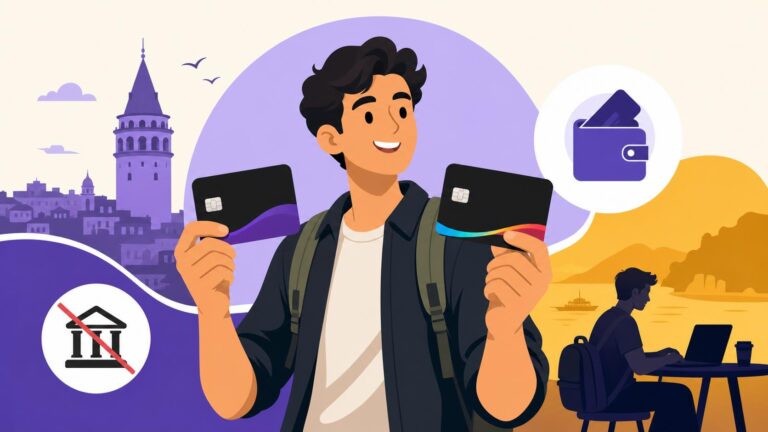
If the traditional banks are too slow for you, the fintech scene in Turkey is incredible. Apps like Papara, Oldubil, and Tosla have become essential for expats, especially those who don't yet have an Ikamet. Papara, in particular, offers a "Black Card" that you can order to your home. It provides instant cashback on popular services like Netflix, YouTube Premium, and even some pharmacies.
These digital wallets are also great for online security. Instead of linking your main bank account to every food delivery app like Getir or Yemeksepeti, you can just transfer a few hundred Lira to your Papara account. It adds a layer of protection and makes it easier to track your "discretionary" spending. Many digital nomads also use these cards to bypass the regional pricing blocks on various streaming services, often combined with NordVPN to ensure their digital footprint matches their physical location in Turkey.
Cash vs. Card Culture in Turkey
Turkey is rapidly becoming a cashless society, but we aren't there yet. In Istanbul, you can tap your phone for the Metro, your coffee, and your groceries. However, if you head to the local butcher or a small lokanta in a residential neighborhood like Üsküdar, they may strongly prefer cash or a "Havale/EFT" (direct bank transfer). Always carry at least 500-1,000 TRY in small bills for tips, taxis, and small purchases.
One peculiar thing you'll notice is the "IBAN payment" trend. Some small business owners, frustrated by high credit card commission fees, will ask you to send money directly to their IBAN via your banking app while you stand at the counter. While this is common, be careful—technically, businesses are supposed to provide a fiscal receipt from a POS machine. If you're doing a large transaction, like paying for a dental procedure, always insist on using a card or getting a formal invoice to ensure you're protected by consumer laws.
Taxes and Financial Compliance for Foreigners
Tax is a word that makes every expat's heart sink, but in Turkey, it’s actually quite straightforward once you understand the basic triggers. The Turkish Revenue Administration (GİB) has become much more tech-savvy, and they are increasingly cross-referencing bank data with residency records. You don't want to be caught off guard by a Filing an Annual Tax Return in Turkey (Mart Ayı Beyannamesi) Before March 31 deadline you didn't know existed.
Understanding Tax Residency: The 183-Day Rule
The most important number to remember is 183. If you spend more than 183 days in Turkey in a calendar year, you are generally considered a Turkish tax resident. This means Turkey technically has the right to tax your "worldwide" income. However, don't panic just yet. Turkey has double taxation treaties with over 80 countries, including the US, UK, and most of the EU. This means you usually won't pay tax on the same dollar twice; you'll just need to prove where you paid it.
If you are a remote worker or a digital nomad, this area is a bit of a "grey zone." Many people live here on touristic permits while earning from abroad and never register for local taxes. While common, the introduction of the Digital Nomad Visa Turkey (2027): Full Requirements and Application Guide has created a more formal pathway. If you are planning on staying for several years or eventually applying for citizenship, it is vital to have a clean tax record. I've seen residency renewals denied simply because the applicant had "unexplained" large transfers into their Turkish account that looked like local, untaxed income.
Getting Your Tax ID and Using e-Devlet
Your Vergi Numarası (Tax ID) is the key to your financial life. You need it for everything: opening a bank account, buying a car, or even signing a long-term internet contract. Luckily, you can get this online in about five minutes via the Interactive Tax Office website. You'll just need your passport details and a Turkish address. Once you have your Ikamet, this Tax ID will eventually be linked to your 99-series "Foreigner ID Number," centralizing all your records.
Once you are set up, you must get your e-Devlet password from any PTT (Post Office). This portal is where you can check if you have any outstanding tax debts, traffic fines, or even see if your landlord has properly registered your rental contract. I make it a habit to check my E-Devlet Financial Services: Tracking Taxes, SGK Debts, and Bank Accounts once a month. It’s better to find a small 200 Lira "stamp duty" debt now than to be stopped at the airport because it grew into a major legal issue.
Double Taxation Treaties and Foreign Pensions
For retirees moving to the coast, the tax treatment of your pension is a major concern. Generally, under most treaties, private pensions are taxed in the country where you are a resident (Turkey), while "government service" pensions (like those for former civil servants) are taxed at the source. The good news is that Turkey’s tax brackets for lower and middle incomes are often quite favorable compared to Western Europe.
However, you must be proactive. If you are a US citizen, for example, you still have to file with the IRS regardless of where you live. This is where things get complicated, as you'll need to navigate FBAR and FATCA reporting for your Turkish bank accounts. It is advisable to find a "Mali Müşavir" (Certified Public Accountant) who has experience with foreigners. Paying a few thousand Lira for a consultation can save you ten times that in potential fines from your home country's tax authorities.
Investing and Wealth Management in Turkey
If you have extra capital, Turkey offers some unique—and high-risk—investment opportunities. While most expats prefer to keep their long-term wealth in "hard" currencies or home-country index funds, the local market in 2026 has some interesting quirks that can be used to your advantage if you have a stomach for volatility.
High-Interest Lira Accounts and KKM
Because of high inflation, Lira interest rates in Turkish banks are often astronomical compared to the 1-2% you might see in Europe. It’s not uncommon to see "Time Deposit" (Mevduat) accounts offering 40% or 50% annual interest. On paper, this looks like a dream, but you have to subtract the inflation rate to see your real return. If inflation is 45% and your interest is 40%, you are actually losing 5% of your purchasing power.
The KKM (Exchange Protected Deposit) scheme was designed to fix this by guaranteeing that your Lira return would at least match the depreciation of the Lira against the USD. While the government has been trying to phase this out in favor of "standard" Lira accounts, various versions of FX-protected savings still exist. These are great for people who have a large chunk of Lira—perhaps from a property sale—and want to "park" it safely for 3-6 months while they decide their next move.
Crypto in Turkey: Binance and Local Exchanges
Turkey is one of the world's leading countries for cryptocurrency adoption. For many locals, Bitcoin and Tether are seen as safer "stores of value" than the Lira. As an expat, having a Binance or Binance TR account is incredibly useful. It provides an alternative way to move money in and out of the country if you hit a bureaucratic wall with the traditional banking system.
Using Binance TR (the local, regulated arm) allows you to link your Turkish bank account directly for easy Lira deposits and withdrawals. Many expats use this to convert their Lira to USDT (Tether) as a way of "holding" dollars without the high fees of a bank's exchange desk. Just be aware that Turkey has introduced new crypto regulations in 2025/2026, so you will need to complete full KYC (Know Your Customer) verification using your Ikamet. It's also a smart idea to use NordVPN when accessing your global crypto accounts to prevent any "suspicious activity" flags that often occur when logging in from a new country.
International Investing for Residents: Trade Republic
If you are a European expat living in Turkey, you might find that your home-country brokers (like those in Germany or France) will try to close your account once you change your tax residency to Turkey. This is a major headache. Services like Trade Republic are often more flexible for European expats, allowing you to maintain your portfolio of ETFs and stocks while living abroad.
For those looking to invest specifically in the Turkish market, the Borsa Istanbul (BIST) has seen record growth in recent years as locals flock to stocks to hedge against inflation. You can buy Turkish stocks directly through your bank app (like Garanti or İş Bankası), but be warned: the Turkish stock market is highly speculative and can be influenced by sudden political shifts. I generally advise expats to keep their "serious" retirement money in diversified global funds via Trade Republic and only use the Turkish market for "play money."
Essential Financial Tools Comparison
Managing your money in Turkey requires a "toolkit" of different apps and services. No single bank or app does everything perfectly, so most veteran expats use a combination of the following:
| Service | Primary Use Case | Why It’s Essential for 2026 |
|---|---|---|
| Wise | International Transfers | Best exchange rates for sending EUR/USD to Lira. |
| Garanti / İş Bankası | Local Banking & Bills | Reliable apps for paying utilities and using the FAST system. |
| Papara | Daily Spending & Tech | Instant cashback and easy online payments for those without credit cards. |
| Binance TR | Crypto & Currency Hedge | Easiest way to convert Lira to stablecoins during high volatility. |
| NordVPN | Security & Access | Essential for accessing home-country banks and securing public Wi-Fi. |
| e-Devlet | Legal & Tax Tracking | The only way to officially check for debts, fines, and residency status. |
| Trade Republic | Global Investments | Best for maintaining a European-style ETF portfolio as a resident. |
Digital Security and Financial Privacy
In a country as digitally connected as Turkey, your biggest financial risk isn't just the exchange rate—it's cybercrime. Phishing scams are incredibly common, often disguised as "urgent" SMS messages from the PTT or the Ministry of Finance claiming you have an unpaid fine. Many newcomers have lost thousands of Lira by clicking a link that looked exactly like a government portal.
Protecting Your Banking with NordVPN
Whenever you are using your banking app or checking your Trade Republic portfolio from a cafe in Cihangir or a co-working space in Antalya, you must use a VPN. Public Wi-Fi in Turkey is notoriously insecure. Using NordVPN encrypts your connection, ensuring that your login credentials and 2FA codes aren't being intercepted by someone on the same network. It also allows you to "appear" as if you are in your home country, which is often necessary to access certain government or banking sites that block Turkish IP addresses due to high fraud rates.
Furthermore, a VPN is essential for maintaining your "digital residency." Many financial services will flag your account for "unusual activity" if they see you suddenly logging in from a Turkish IP every day. By consistently using a home-country server on NordVPN, you can often avoid these automated security lockdowns. Just make sure you choose a provider with "obfuscated servers" that can bypass the occasional VPN blocks implemented by Turkish ISPs.
Staying Safe from Phishing and Scams
The rule of thumb in Turkey is: the government will never send you a payment link via SMS. If you receive a message saying you have a "Trafik Cezası" (traffic fine) with a link to pay, ignore it. Instead, log in to your official e-Devlet account or the E-Devlet Guide: Checking Your Tax Debt (Vergi Borcu) and Traffic Fines Online portal to verify it. If it’s real, it will show up there with an official payment button.
Another common scam involves "Rent Payment Assistance." If someone offers to pay your rent or convert your currency at a "special rate" better than Wise, they are almost certainly trying to launder money or steal your data. Always stick to regulated entities. Turkish banks are very safe and highly regulated; the "weak link" is usually the user falling for a social engineering trick. Keep your 99-number and your bank passwords as guarded as your passport.
Disclaimer
The information provided in this guide is for educational and informational purposes only and does not constitute professional financial, legal, or tax advice. Financial regulations in Turkey, including exchange rates, tax laws, and banking policies, are subject to frequent and sudden changes. While we strive to keep this information up to date for 2026, always consult with a certified financial advisor or a "Mali Müşavir" before making significant investment or tax-related decisions. The author and publisher are not responsible for any financial losses or legal issues arising from the use of this information.