Installments on Phones: Why Foreign Tourists Don’t Qualify for Taksit Payments
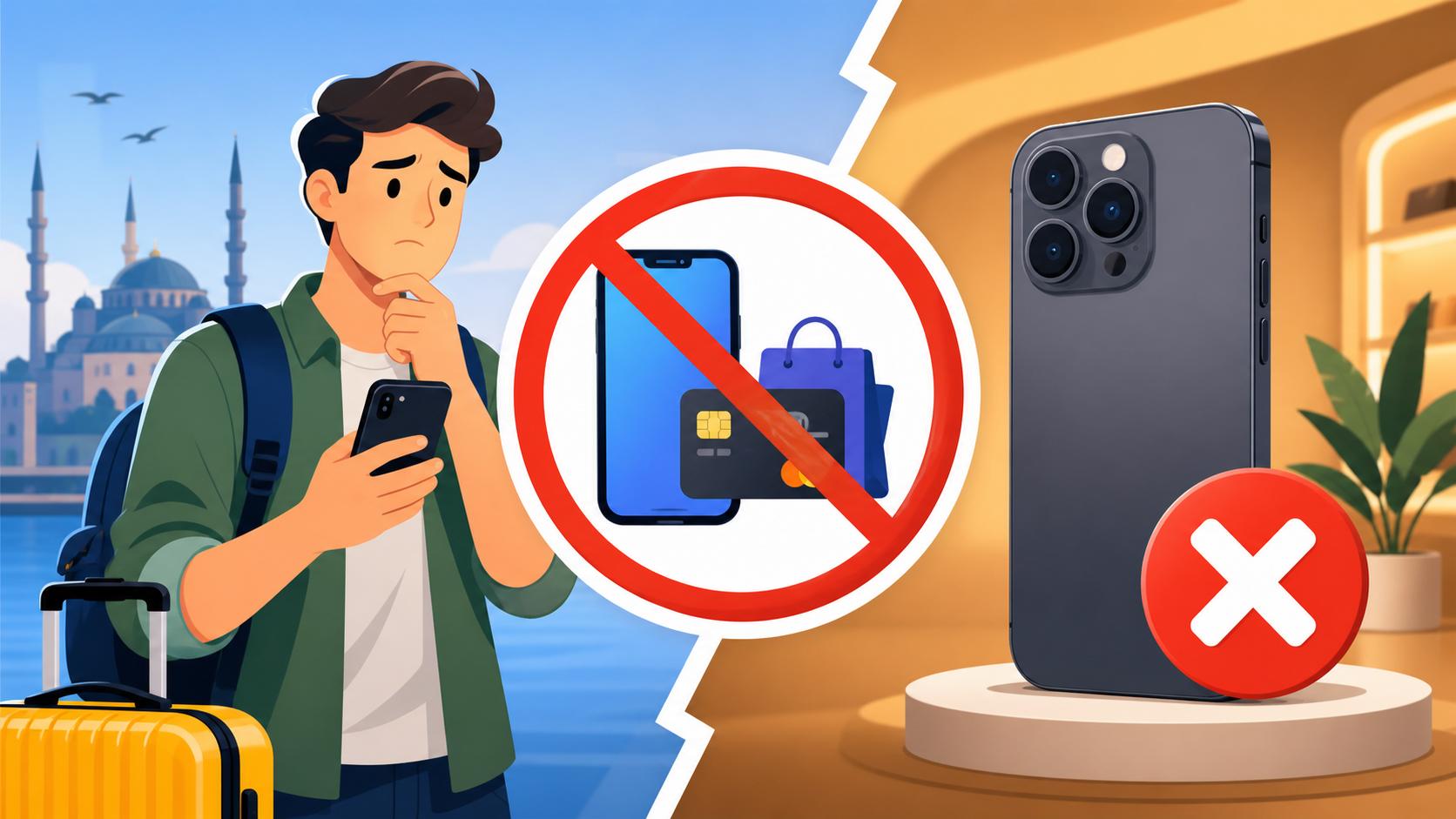
Walking into a gleaming electronics store in Istanbul and seeing a high-end smartphone advertised for a low monthly installment feels like an easy win until the clerk sees your foreign passport and shakes their head. I still remember the confusing sting of being rejected for a simple payment plan during my first months here, despite having a healthy bank balance. This guide explains why the "taksit" system remains elusive for foreigners and how you can actually navigate high tech costs in Turkey.
The Allure of Taksit: Why Installments Rule the Turkish Market
If you spend more than a few days in Turkey, you will see the word "taksit" everywhere—from supermarkets to clothing boutiques. In a high-inflation environment, the ability to split a large purchase into six, nine, or twelve monthly payments isn't just a luxury; it is a fundamental survival strategy for the local population. By the time a consumer reaches their final payment, the nominal value of that installment has often decreased significantly in real terms, making the item "cheaper" over time.
For a veteran expat, watching locals breeze through the checkout with interest-free installments while you are forced to pay the full, eye-watering price upfront can be incredibly frustrating. This system is deeply ingrained in the Turkish banking sector. Most Turkish credit cards come with built-in installment capabilities that are automatically recognized by point-of-sale (POS) terminals. However, as a tourist or a newly arrived resident, you are essentially standing outside of a closed financial loop. Understanding the Cost of Living in Turkey 2026: Detailed Budgets for Singles and Families requires acknowledging that "sticker prices" for electronics are often based on these payment plans, which may not be available to you.
The psychological impact is also significant. Turkish retailers often lead with the installment price in large fonts, while the total cash price is tucked away in the fine print. This marketing tactic is designed for the local consumer who carries multiple credit cards from various banks like Garanti, İş Bankası, or Yapı Kredi. For the foreigner, this creates a "tourist tax" feeling, even though the price is technically the same—it’s the access to credit that differs.
The Hard Reality: Why Your Passport is a No for Retail Credit
The primary reason you cannot get an installment plan as a tourist is the lack of a "Findeks" score. Findeks is the Turkish equivalent of a credit bureau (like Experian or Equifax). When a local applies for a phone plan or uses a credit card for taksit, the system runs an instantaneous check on their debt-to-income ratio and payment history. As a tourist, you don't exist in this system. Even if you have a million dollars in a foreign account, the local POS terminal has no way to verify your creditworthiness or "catch" you if you leave the country without paying.
Furthermore, most installment plans are tied directly to a Turkish credit card. Many foreigners confuse their local debit card with a credit card. If you have successfully navigated Opening a Bank Account in Turkey: Rules for Expats, Tourists, and Investors, you likely received a "Bankkart" or a debit card. These cards pull money directly from your Turkish Lira account. They do not have a credit line, and therefore, they cannot support "taksit." Retailers generally cannot offer "in-house" financing to foreigners because they lack the legal mechanism to garnish wages or pursue debt across borders once a tourist visa expires.
Even for those with a residence permit (Ikamet), the hurdle remains high. Banks are notoriously hesitant to issue credit cards to foreigners without a work permit or a significant "bloke" (a cash deposit held as collateral). If you don't have a credit card, you can't use the store’s installment system. Many expats try to use their foreign credit cards from home, thinking the "installment" option would pop up. It won't. The taksit system is a proprietary protocol between Turkish banks and Turkish retailers. Your home-country bank will simply see a single, large transaction in Lira.
Breaking Down the Taksit System: Credit Cards vs. Store Credit
It is important to distinguish between the two ways installments happen in Turkey. The first, and most common, is the credit card installment. This is where the bank pays the retailer in full, and then the bank bills you in monthly chunks. This is why you see logos of various banks on the windows of electronics stores. Each bank has different "campaigns" (kampanyalar)—one might offer 3 installments on electronics, while another offers 6.
The second method is "Mağaza Kredisi" or store credit. Shops like Evkur or Vatan Bilgisayar sometimes offer their own financing through partner "participation banks" or consumer finance companies. These are even harder for foreigners to access. They require a Turkish ID number (starting with 99), a registered address in the Address Registration (Nüfus): The Most Critical Post-Arrival Step for Foreigners system, and often a Turkish guarantor. As a tourist, you simply do not meet the residency requirements for these financial products.
| Feature | Turkish Credit Card Taksit | Store Credit (Consumer Loan) | Foreign Credit Card (Single Pay) |
|---|---|---|---|
| Availability to Tourists | No | No | No |
| Availability to Residents | Only with high credit score/deposit | Very Rare (Needs Turkish ID) | Yes (Always single payment) |
| Interest Rates | Often 0% for 3-6 months | High interest (2-5% monthly) | N/A (Depends on your home bank) |
| Documentation Needed | Turkish Credit Card | Ikamet + Proof of Income + Bill | Passport only |
| Processing Time | Instant at POS | 30-60 minutes for approval | Instant |
The Hidden Hurdles: From Ikamet to Findeks Scores
Let’s say you’ve moved past the tourist stage and now have your residency. You might think, "Great, now I can get my iPhone on installments." Not so fast. The path to a credit score in Turkey is a long one. Most banks will require you to hold a residence permit for at least six months to a year before they even consider a credit card application. Even then, they might only give you a card with a 5,000 TL limit—hardly enough to buy a modern smartphone which can cost upwards of 80,000 TL in 2026.
To bridge this gap, some foreigners use a "cash-backed credit card." You deposit, say, 100,000 TL into a locked account, and the bank gives you a credit card with a 90,000 TL limit. This is one of the few ways to start building a Findeks score. Once you have this card, you can finally use the "taksit" button at the checkout. However, you must ensure you have updated your status correctly in the bank's system. If the bank still has you listed as a "tourist" in their records, their internal risk algorithms will automatically decline any credit product.
You should also be aware of the "closed neighborhood" issue. If you are living in an area where new registrations are blocked, as detailed in Navigating Closed Neighborhoods: A Guide to Areas Where Foreigners Cannot Register, you might find it difficult to provide the "clean" utility bill or address certificate that banks require for credit applications. Without a verified address, the chain of trust required for installments breaks down immediately.
Why 'Local' Phones Cost So Much: The Tax Factor
You might wonder why you’d even want to buy a phone in Turkey on installments when you could just buy one in London, New York, or Berlin for 40% less. The answer lies in The Turkey IMEI Rule: How to Register Foreign Phones in 2026. Turkey imposes some of the highest taxes in the world on imported electronics (TRT share, SCT, and VAT). If you bring a phone from abroad, you must pay a massive registration fee to keep it working on a Turkish SIM card after 120 days.
For many, the calculation is simple: the registration fee for an imported phone is now so high that it’s almost the same as the "taxed" price of a local phone. Buying a local phone means it is "officially" registered forever, it has a local warranty, and it works with all Turkish carriers without any extra steps. Because the price of these local phones is so high, the "taksit" option becomes the only way many people can afford them. As a foreigner, being forced to pay 90,000 TL in a single swipe is a heavy hit to your Healthcare Budgeting: Understanding Copays, Tariffs, and Billing in Turkey or your general relocation fund.
If you decide to buy a phone locally, you are paying for the convenience of avoiding the e-Devlet IMEI registration nightmare. But since you likely won't get installments, you need to have a solid plan for transferring large amounts of capital into the country. This is where services like Wise become invaluable, allowing you to move your home currency into Lira at mid-market rates so you can make that one-time "big swipe" at the store.
Managing Your Money While Settling in Turkey
Since the "taksit" door is mostly closed to you, your strategy should focus on liquidity and smart saving. If you know you'll need a new phone in six months, consider using a platform like Trade Republic to keep your savings in a high-yield environment until you’re ready to make the purchase. Keeping large amounts of Lira in a standard Turkish checking account is risky due to currency fluctuations; it’s better to keep your bulk funds in a stable currency and convert only what you need.
For those who are more tech-savvy, Binance can be a useful tool for moving funds quickly between international markets and the Turkish ecosystem, especially if you need to bypass traditional banking delays when a store has a "one-day-only" cash discount. I have used this method many times to ensure I had enough Lira in my local account to catch a sale on a laptop or phone that I couldn't get on installments.
Another tip: always use NordVPN when accessing your home country’s banking apps or credit card portals while in Turkey. Sometimes, making a large purchase on a Turkish website using a foreign card can trigger an "out of country" fraud alert. By using a VPN to appear as if you are in your home country, you can often authorize the transaction more smoothly, ensuring that your one-off "full price" payment actually goes through without your home bank freezing your account.
Smart Workarounds for Expats and Long-Term Travelers
If you absolutely need the "feel" of installments but don't have a Turkish credit card, you can create your own. Using your home-country credit card (like a Chase, Amex, or Barclaycard) may allow you to "split" a transaction after the fact via their own mobile apps. You pay the Turkish retailer in full, and then you go into your home bank app and choose to "Plan It" or "Split" the transaction over 6 months. You will pay your home bank interest, but it solves the immediate cash flow problem.
Another option is to look for "unlocked" or "refurbished" phones from reputable dealers on platforms like Sahibinden, though this requires extreme caution. You won't get installments there either, but the lower entry price makes the single payment more palatable. Just ensure you are not buying a "cloned" IMEI phone. If you are ever in doubt about your legal rights as a consumer, checking the Labor Rights in Turkey: Employment Contracts, Minimum Wage, and Severance section might give you some insight into how contracts are handled, though retail is a different beast.
Finally, consider the timing of your purchase. Retailers often offer a "Peşin Fiyatına Taksit" (Installments at the cash price). While you can't use the installments, you can often negotiate a further 5-10% discount if you are paying "peşin" (cash/single swipe). In Turkey, cash is king, and if the retailer doesn't have to pay a commission to the bank for an installment plan, they might be willing to pass some of that saving on to you.
Summary of How to Handle High Phone Costs
To survive the high-cost electronics market in Turkey without access to the local installment system, follow these steps:
- Do the Math: Compare the price of a local phone (high tax) vs. an imported phone + the IMEI registration fee.
- Fund your Lira Account: Use Wise to transfer funds into your Turkish account early so the money is "ready to spend."
- Negotiate: Ask for a "Peşin indirimi" (cash discount) since you aren't using the store's credit system.
- Use Home-Bank Splits: If your foreign credit card offers an "after-purchase" installment plan, use it.
- Secure your Connection: Use NordVPN when authorizing large payments to prevent fraud blocks from your home bank.
For more detailed financial advice, see our guide on Money in Turkey for Expats: Banking, Payments, and Finance Guide (2027). Navigating the Turkish financial system is a marathon, not a sprint, and while the lack of "taksit" is a hurdle, it’s one you can easily clear with a little bit of veteran foresight.
Disclaimer
The information provided in this article is for informational purposes only and does not constitute financial, legal, or professional advice. Tax rates, registration fees (including IMEI), and banking regulations in Turkey are subject to frequent changes by the authorities. Always verify current rates and requirements with official government sources or qualified professionals before making significant financial decisions.