Financial Checklist for Your First 30 Days as a Newly Arrived Expat in Turkey
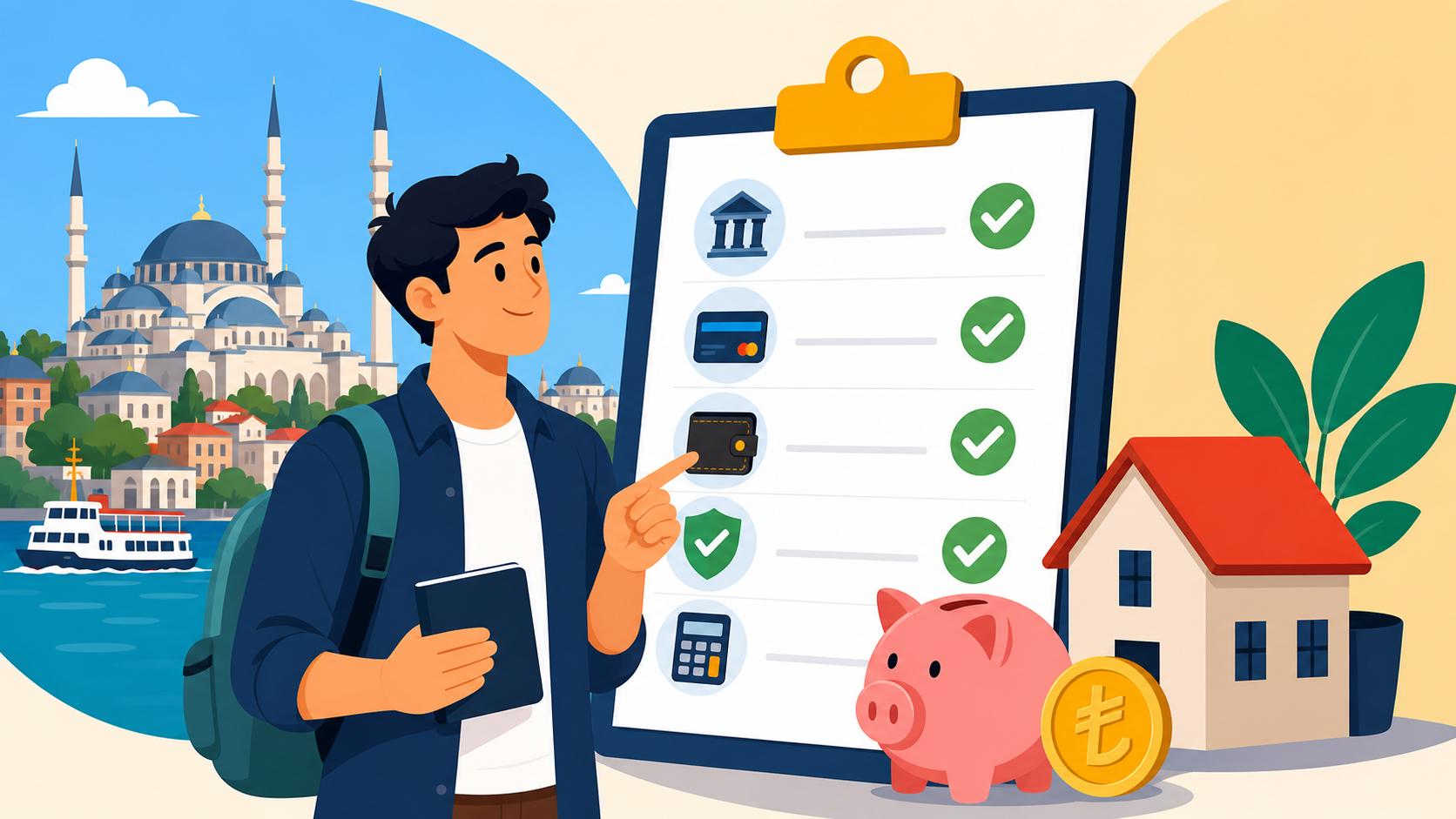
Trying to figure out why your foreign bank card was suddenly blocked while you were just trying to pay a rental deposit in a crowded office is a rite of passage no one wants. I spent my first week in Istanbul wandering between bank branches with a folder of papers that no one seemed to want, only to realize I was missing one tiny number. This guide provides a meticulous financial roadmap for your first 30 days to ensure you avoid the administrative traps I fell into.
Securing Your Foundation: The Turkish Tax ID and Digital Identity
Before you can even think about signing a long-term lease or setting up a home internet connection, you need a Vergi Numarası (Tax Identification Number). This ten-digit number is the "skeleton key" for your financial life in Turkey. Without it, you cannot open a bank account, pay for your residence permit, or even register a mobile phone in your name.
The first thing you should do after dropping your bags at your temporary accommodation is apply for this number. In the past, this required a physical trip to a local tax office (Vergi Dairesi), often involving long queues and a language barrier that felt insurmountable. Today, the process is significantly more streamlined. You can use the Getting a Turkish Tax ID (Vergi Numarası) Online via Dijital Vergi Dairesi portal. All you need is your passport information and a local address (your Airbnb or hotel address usually works for the initial application).
However, do not assume that having the number on a PDF is enough. I highly recommend printing three or four copies. Turkish bureaucracy still heavily favors physical paper. You will also need this number to navigate Taxes in Turkey for Foreigners: Residency, Income, and Filing Basics later in your journey. Once you have your tax ID, your next hurdle is the e-Devlet (Electronic Government) system. While you cannot get full access until you have your residence permit (Ikamet), keeping your tax ID handy will make the eventual transition to the digital state much smoother.
Navigating the Turkish Banking Maze Without an Ikamet
The "chicken and egg" problem of Turkish residency is famous among expats: you need a bank account to prove financial sufficiency for your residency, but many banks won't open an account without a residency card. This is where most newcomers get stuck and frustrated. From my experience, the key is persistence and knowing which branches are "expat-friendly."
Major banks like Ziraat Bankası, VakıfBank, and İş Bankası are your best bets. However, policies can change from one branch to another, even on the same street. One branch manager might demand a 50,000 TL deposit to open an account for a tourist, while another might just ask for your passport and your tax ID. When you go, bring your passport, your freshly printed tax ID, and a "proof of address." This is often a utility bill from your home country, but it must be translated and notarized in Turkey to be accepted.
When you finally sit down with a representative, ask specifically about "Gold Accounts" and "Foreign Currency Accounts." Given the local economic climate, having the ability to hold USD or EUR alongside your Lira is essential. You should also refer to our guide on Opening a Bank Account in Turkey: Rules for Expats, Tourists, and Investors to understand which banks currently have the lowest fees for foreigners. Once your account is open, immediately ask the clerk to help you download the mobile app and ensure your "SMS notification" number is set to your Turkish SIM card. Without this, you will be locked out of every online transaction.
| Financial Task | Required Document | Estimated Timeline |
|---|---|---|
| Potential Tax ID | Passport + Local Address | 15 Minutes (Online) |
| Local SIM Card | Passport | 30 Minutes |
| Bank Account | Tax ID + Passport + Notarized Address | 1-3 Days |
| Money Transfer | Foreign Bank App + Local IBAN | 1-24 Hours |
| Address Registration | Ikamet + Rental Contract | Post-Residency |
Moving Money and Managing Cross-Border Logistics
Once you have a local IBAN, the next challenge is getting your startup capital into the country without losing a fortune to "hidden" exchange rate markups and SWIFT fees. If you use a traditional bank transfer from London, New York, or Berlin, you might see 3-5% of your money vanish into thin air. This is a significant blow when you are already dealing with the Cost of Living in Turkey 2026: Detailed Budgets for Singles and Families and trying to furnish a new apartment.
I personally rely on Wise for almost all my international transfers. It allows you to send money to a Turkish IBAN at the mid-market rate with a transparent fee. In your first 30 days, you will likely need to make several large transfers for your rent deposit and first month's rent. Be aware that Turkish landlords often insist on receiving rent via bank transfer to comply with tax laws, and they will expect the exact Lira amount. Using a service like Wise ensures that you aren't guessing how much will actually land in their account after the banks take their cut.
Security is another factor often overlooked during the move. When you are accessing your home country’s bank accounts or investment platforms like Trade Republic from a Turkish IP address, your home bank might flag the activity as "suspicious" and freeze your access. I’ve found that using NordVPN to maintain a "home" IP address is vital for managing my overseas finances without interruption. Furthermore, public Wi-Fi in Turkish cafes is notoriously insecure. Whenever I’m checking my balance or Sending Money to and from Turkey: SWIFT, IBANs, and International Apps, I always ensure my VPN is active to encrypt my data.
Budgeting for the Lira and Local Lifestyle Costs
The Turkish Lira can be volatile, and as a new expat, this can be terrifying. In your first month, you will likely suffer from "price shock"—not because things are expensive, but because the numbers are so large. You might find yourself paying 57,000 TL just to register your foreign phone, a requirement explained in The Turkey IMEI Rule: How to Register Foreign Phones in 2026. This is why having a diversified financial strategy is important from day one.
Start by Setting up Automatic Bill Payments (Otomatik Ödeme Talimatı) with Your Bank for your electricity (Enerjisa) and water (İSKİ/ASKİ). This prevents your services from being cut off while you are still learning the ropes of the local payment systems. For daily spending, get used to using "Contactless" (Temassız) payments, which are ubiquitous in Turkey. However, always keep at least 500 TL in cash for smaller shops or "dolmuş" (shared taxi) rides where cards aren't accepted.
If you are looking to protect your savings from inflation or if you want to continue your investment habits, look into local options. Many expats use Binance or its local arm, Binance TR, to move funds or hedge against currency fluctuations. Turkey has one of the highest rates of crypto adoption in the world, and you will see "Bitcoin Cash" exchanges on many street corners. For more traditional stock market enthusiasts, services like Trade Republic remain popular for managing European portfolios while living abroad. Just be sure to read up on Cryptocurrencies in Turkey: Legal Status, Taxation, and Best Local Exchanges to stay on the right side of the evolving 2026 regulations. Finally, remember that your budget will vary wildly depending on your location; the Cost of Living in Istanbul vs Coastal Cities (Antalya, Bodrum, Fethiye) differs significantly, and you must plan your first month's liquidity accordingly.
Managing Digital Services and Unexpected Expenses
By the end of your first 30 days, you should have your tax ID, a functioning bank account, and a reliable way to move money. However, there are smaller financial "leaks" that can drain your budget if you aren't careful. For instance, many expats forget to register their address once they get their residency permit, which can lead to fines. You can eventually track these obligations using E-Devlet Financial Services: Tracking Taxes, SGK Debts, and Bank Accounts once your full access is granted.
One major unexpected expense is the "Depozito" (Deposit) for utilities. When you sign up for electricity or gas, you will be asked to pay a security deposit. These are often returned when you leave, but they require an upfront cash layout in your first month. Additionally, if you are buying furniture or appliances, try to pay in full rather than seeking "Taksit" (installments). While locals love installments, as a new foreigner without a Turkish credit score, you will likely be denied or charged a much higher rate.
Keep your first month's finances as simple as possible. Focus on liquidity and security. Use NordVPN to keep your foreign accounts accessible, use Wise to bring in your "setup" funds, and keep a close eye on your spending via your local bank’s mobile app. Once the initial 30-day chaos subsides, you’ll be much better positioned to enjoy the incredible lifestyle that Turkey offers without the constant worry of a frozen bank account or a surprise tax bill.
Disclaimer
This guide is for informational purposes only and does not constitute professional financial, legal, or tax advice. Regulations in Turkey, particularly regarding banking and immigration, change frequently. Always consult with a certified public accountant (SMMM) or a qualified legal professional before making significant financial decisions.