Coffee Shop Etiquette for Remote Workers: Internet Use and Seating in Turkey
Finding a quiet corner with a reliable Wi-Fi connection and a functional power outlet in a bustling Turkish city can feel like a high-stakes scavenger hunt. I once spent four hours wandering through Kadıköy with a dying laptop, only to realize that the most beautiful cafes were strictly "no-laptop" zones. This guide breaks down the unwritten rules of Turkish coffee shop culture to ensure you stay productive without offending the locals.
The Evolution of the Turkish Workspace
For decades, the Turkish coffee house (Kahvehane) was a male-dominated sanctuary for tea, backgammon, and political debate. However, the surge in remote work has transformed the landscape. Today, you will find a sharp divide between traditional spots where a laptop is seen as a social barrier and the "Third Wave" coffee shops that cater specifically to the laptop-bound crowd.
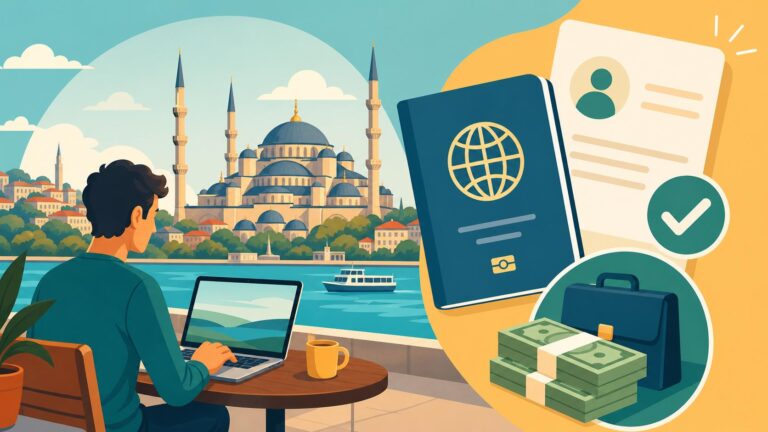
As a veteran expat, I have seen the frustration on a freelancer’s face when they are asked to close their laptop during lunch hours. Understanding this shift is the first step toward a successful remote workday. If you are here on the Digital Nomad Visa Turkey (2027): Full Requirements and Application Guide, you likely already know that your "office" is wherever you can find a stable signal. But in Turkey, the "office" comes with specific social expectations.
The modern Turkish cafe is a hybrid space. In neighborhoods like Nişantaşı in Istanbul or Alsancak in Izmir, coffee shops have become the de facto headquarters for startups. Yet, the hospitality culture remains rooted in interaction. If you sit in silence for six hours over a single cold espresso, you aren't just a customer; you are a "masa işgalcisi" (table occupier). To navigate this, many nomads use resources like TurkishPod101 to learn the polite way to ask if a table is reserved or how to order a "refill" to keep the staff happy.
The Unspoken Rules of Seating and Duration
The most common mistake newcomers make is assuming that any empty table is fair game for a four-hour deep-work session. In Turkey, space is a premium commodity. During the week, most modern cafes are quite relaxed, but weekends are a different story.
The Peak Hour Pivot
On Saturdays and Sundays, the Turkish "Kahvaltı" (breakfast) culture reigns supreme. Tables that were laptop-friendly on Tuesday become family dining zones on Sunday. If you show up at 11:00 AM on a weekend with a laptop, don't be surprised if the waiter gives you a hesitant look. The rule of thumb is simple: if people are waiting for tables to eat, it is time for you to move.
The One-Drink-One-Hour Ratio
While there is no formal "rent" for a table, the consensus among the expat community is the "one drink per 60 to 90 minutes" rule. If you are settled in for a long haul, order a coffee, then maybe a tea, and perhaps a snack. This keeps the revenue flowing for the owner and ensures you won't be given the "side-eye" when the lunch rush hits. If you're struggling to understand the menu or the bill, Business Turkish: Essential Vocabulary and Phrases for Emails and Meetings can actually help you decipher the social cues and professional language used in these environments.
Power Outlets: The Hunt for the Priz
Power outlets (priz) are the "gold" of the remote work world. In older buildings, they are rare. Before you sit down and unload your gear, always ask: "Priz var mı?" (Is there an outlet?). It is considered polite to ask even if you see one, as that specific table might be reserved for diners. Using TurkishPod101 to master these small interactions makes a world of difference in how you are treated by the staff.
Internet Connectivity and the SMS Wall
Internet in Turkey has improved drastically, with many central areas offering fiber speeds. However, the way you access it can be a hurdle. Most public Wi-Fi networks in cafes are governed by laws that require user identification.
| Feature | Global Chains (Starbucks/Caffe Nero) | 3rd Wave Local Shops | Dedicated Co-working Spaces |
|---|---|---|---|
| Wi-Fi Stability | Average (often requires SMS) | High (Direct password) | Very High (Reliable) |
| Power Outlets | Plentiful but often occupied | Limited to specific tables | Guaranteed |
| Noise Level | Loud/Social | Moderate/Ambient | Quiet/Professional |
| Etiquette | Very lenient | Moderate | Strict work focus |
The "SMS Wall" is a common frustration. To log in, the system often sends a verification code to a Turkish phone number. If you are still using a foreign SIM, you might find yourself blocked. This is why Mobile Networks in Turkey: Comparing Turkcell, Vodafone, and Türk Telekom is essential reading for any nomad. Without a local number, you’ll be relying on the kindness of strangers or your own mobile hotspot.
If you find the cafe Wi-Fi is consistently dropping, you might want to look into Choosing an Internet Provider in Turkey: Fiber vs VDSL (Turk Telekom, Superonline) for your home base, as relying solely on cafes can be risky for important video calls.
Navigating Social Etiquette and Volume
Turkish culture is inherently social and, at times, quite loud. If you are looking for a library-quiet atmosphere, a standard coffee shop in Beşiktaş might not be the right choice.
Taking Calls and Meetings
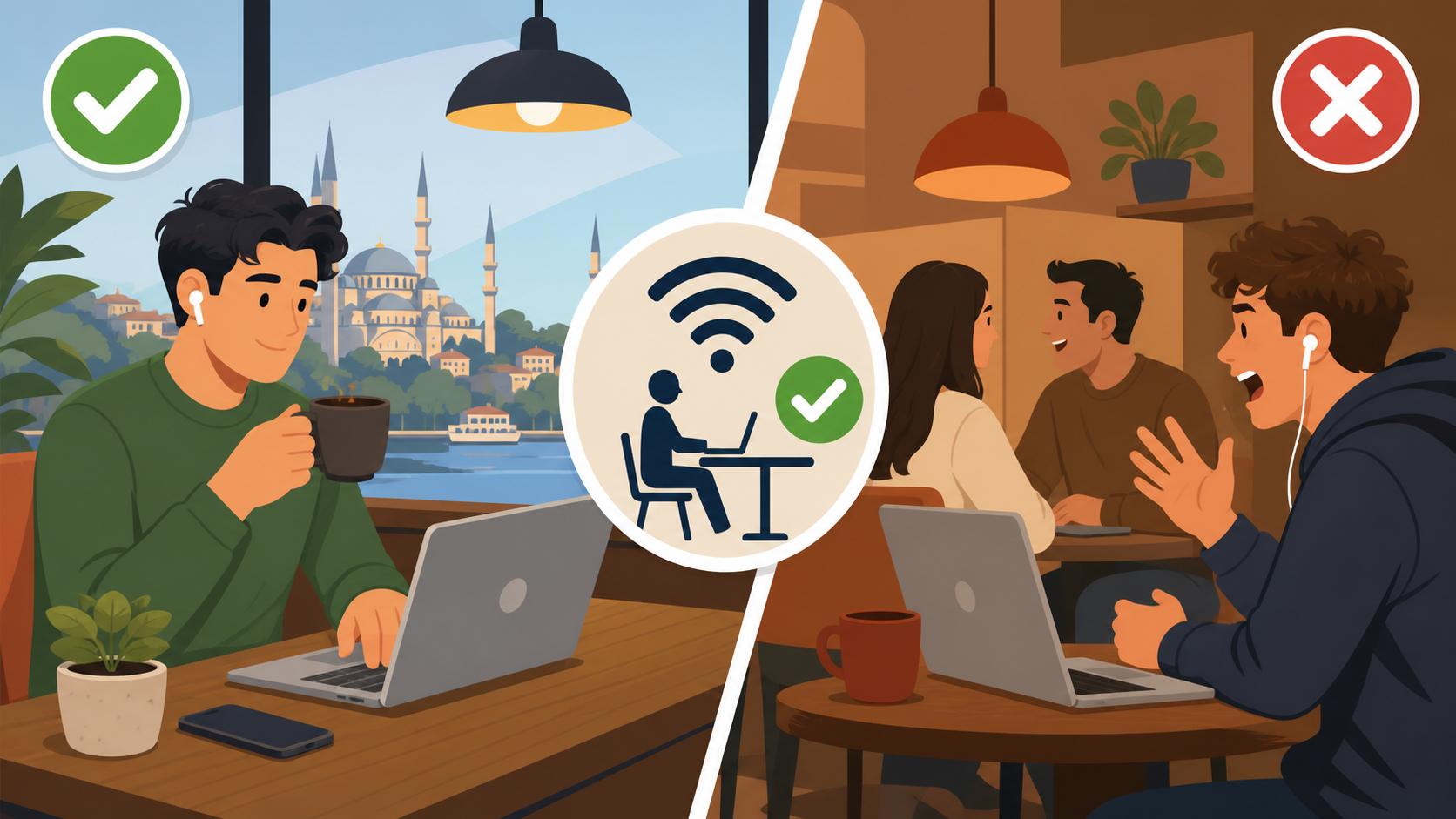
Taking a Zoom call in a crowded cafe is generally frowned upon if it lasts more than a few minutes. If you must take a call, use noise-canceling headphones and keep your voice low. In the Turkish workplace, there is a certain Hierarchy in Turkish Companies: Properly Using 'Bey' and 'Hanım' in the Office, and while you are an independent worker, showing respect for the collective environment is highly valued. Shouting into a microphone while others are trying to enjoy a conversation is seen as "kaba" (rude).
The "Can You Watch My Stuff?" Dilemma
In many Western countries, leaving a laptop on a table while you go to the restroom is a gamble. In Turkey, especially in student-heavy or upscale neighborhoods, it is surprisingly common. However, the "I've-been-there" advice is to always ask a neighbor: "Bakar mısınız?" (Could you watch this?). Most people will happily agree. That being said, always take your phone and wallet with you.
The Çay vs. Kahve Dynamic
While you are in a coffee shop, don't ignore the Office Tea Culture (Çay): Surviving and Enjoying Turkish Workplace Socializing. Often, after you’ve finished an expensive latte, a waiter might offer you a small tulip glass of tea "on the house" if you've been a friendly patron. This is a sign of hospitality. Accepting it and offering a quick "Teşekkürler" (Thanks) goes a long way in building rapport with the staff, which might lead to them "forgetting" how long you've been sitting there.
Choosing the Right Neighborhood for Your Vibe
Not all neighborhoods are created equal when it comes to the laptop lifestyle. Your experience will change depending on where you set up your mobile office.
- Kadıköy (Moda): The heart of the creative remote work scene. You will see hundreds of people with MacBooks. It’s very laptop-friendly but can get extremely crowded.
- Beşiktaş: Vibrant and student-oriented. Great for energy, but the tables are often small and the music can be loud.
- Cihangir: The "writer's" neighborhood. Many cafes here are used to people staying for hours to work on scripts or articles.
- Ankara (Çankaya): More professional and quiet. You’ll find people here on the Learning Turkish for Life and Work: TÖMER, Language Schools, and Self-Study path, studying in between meetings.
If the cafe scene becomes too distracting, there are always Top Co-Working Spaces in Istanbul for Tech Entrepreneurs and Digital Nomads that offer ergonomic chairs and "phone booths" for private calls—luxuries a standard cafe simply cannot provide.
Essential Phrases for the Remote Worker
To truly blend in and respect the etiquette, you should move beyond English. Even a few words show that you are trying to integrate into the local culture. Using a platform like TurkishPod101 can help you memorize these quickly:
- "Wi-Fi şifresi nedir?" (What is the Wi-Fi password?)
- "Burada çalışabilir miyim?" (Can I work here?) – Best to ask if you have a laptop in hand.
- "Boş yer var mı?" (Is there any empty space?)
- "Bir kahve daha alabilir miyim?" (Can I have another coffee?) – The universal sign that you intend to keep your seat.
By treating the cafe staff with the same respect you would show a colleague, you ensure that the "remote work" revolution in Turkey remains a positive experience for both the expats and the local business owners. Turkey is a country where relationships (torpil and tanışıklık) matter, and being the "polite foreigner" at the corner table can lead to local tips, better service, and perhaps a new friend.
Disclaimer regarding Coffee Shop Etiquette for Remote Workers
This guide is intended for informational purposes and reflects the cultural norms and personal experiences of the author. Business policies regarding laptop use can change without notice, especially in response to economic shifts or local regulations. Always check for "No Laptop" signs upon entry and respect the individual rules of each establishment.