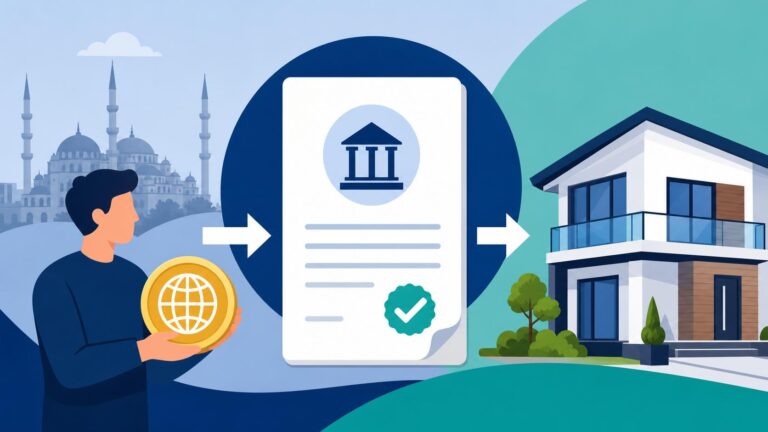
The Tapu Transfer Process: What Happens at the Land Registry Office
Walking into a Turkish Land Registry office (Tapu Dairesi) without a plan is the fastest way to experience a bureaucratic panic attack. I remember the first time I stood in a crowded corridor in Istanbul, clutching a folder of documents and feeling completely invisible as numbers flashed on a screen in a language I barely understood. This guide demystifies the entire Tapu transfer process, from the initial digital application to the moment you finally hold that pink-bordered title deed in your hands.
Preparing for the Big Day: Essential Documents and Pre-Registration
The journey to property ownership in Turkey does not start at the Land Registry office; it begins weeks earlier at your computer and your bank. Unlike many Western countries where a notary or a solicitor handles the entirety of the closing process in a private office, the Turkish system is centralized through the General Directorate of Land Registry and Cadastre. The very first hurdle you will encounter is the WebTapu system. This is the official online portal where the seller must initiate the application. You cannot simply walk in off the street and ask for a transfer. The seller uploads the current deed, their ID, and your passport translation to the system, which then triggers a series of background checks by the government.
While you wait for the system to process the application, you need to be busy gathering your "physical" folder. You will need a professional translation of your passport, which must be notarized. I learned the hard way that a simple photocopy is useless; the registry office requires the "wet signature" and seal of a Turkish notary. During this prep phase, it helps to use Amazon Turkey to order a sturdy, multi-pocket expanding file. You will be juggling original passports, translated copies, tax ID certificates, and bank receipts, and losing one piece of paper can set your appointment back by weeks. Organization is your only defense against the chaos of a busy government building.
Lastly, do not forget the "Rayiç Bedel" document. This is a statement from the local municipality (Belediye) confirming the current market valuation of the property for tax purposes. The seller usually obtains this, but you must ensure it is the version for the current calendar year. If you are buying in January but the document is from December, the Land Registry will reject it immediately. This document ensures that the sale price declared at the registry is not lower than the municipality's minimum valuation, which is a common check to prevent tax evasion.
The Critical Foreign Exchange Document
Since early 2022, a new and somewhat frustrating requirement has been added to the pile for all foreign buyers: the Döviz Alım Belgesi, or DAB. This document proves that you have sold your foreign currency (USD, EUR, or GBP) to a Turkish bank, which in turn sold it to the Central Bank of Turkey, to obtain the Turkish Lira needed for the purchase. You cannot simply transfer Lira from your home country or use Lira you already had sitting in a local account. The bank must specifically state on the DAB that the currency was sold for the purpose of a "property purchase" and include your full name and passport number.
Many expats get stuck at this stage because their bank clerk didn't include the specific phrasing required by the Land Registry. When you are at the bank, stay until you have checked every character on that receipt. This is also why having a reliable mobile connection is vital. If there is a mistake, you’ll need to contact your agent or lawyer on the spot. It is worth getting an e-sim from Airalo before you even land for your house-hunting trip. Having high-speed data ensures you can pull up your digital bank records or send a quick photo of a document to your translator while you are standing at the bank teller's window.
The amount on the DAB must match the full sale price you are declaring to the Land Registry. If you are buying a home for $250,000, your DAB must show the exchange of exactly that amount into Lira. Any discrepancy, even a few cents due to fluctuating exchange rates during the transaction, can cause the Land Registry officer to pause the proceedings. It is always better to exchange slightly more than the expected price to cover any sudden dips in the Lira’s value between the time you get the document and the time you sign the deed.
Navigating the Appointment: What Happens Inside the Tapu Dairesi
Once the WebTapu application is approved, both the buyer and seller will receive an SMS. This message contains the date and time of the appointment, as well as a link to pay the "Tapu Harcı" (Title Deed Fee). Do not ignore this text! The appointment is often set for the very next day, leaving you very little time to scramble. On the day of the appointment, arrive at least 30 minutes early. The Land Registry offices are high-energy environments with people rushing in every direction. Look for the "Sıramatik" machine to get a queue number, though many offices now direct you straight to a specific desk mentioned in your SMS.
The most important person in the room for you will be the sworn interpreter. If you do not speak fluent Turkish, the Land Registry officer is legally prohibited from letting you sign the registry without an authorized translator present. This person’s job is to read the entire deed to you in your native language, ensuring you understand exactly what you are buying, including any debts or restrictions attached to the land. You can find more about how to hire these professionals in our guide on Sworn Translators (Yeminli Tercüman): Expected Costs for Official Documents. Do not try to bring a bilingual friend; the interpreter must be registered with the local judicial commission and provide their ID to the officer.
During the meeting, the officer will verify your identity. They will compare your face to your passport and your notarized translation. They will also take your fingerprints using a digital scanner—a relatively new security measure to prevent identity theft. You will be asked, through the interpreter, if you are buying the property of your own free will and if you have paid the seller the full amount. This is the moment of truth. Once you say "Yes" and sign the large ledger (and the digital pad), the property is legally yours. The officer will then print the "Tapu" document, which is the physical proof of your ownership.
Costs Taxes and Hidden Fees of the Transfer
The financial side of the Tapu transfer is often where foreigners feel the most "sticker shock." The primary cost is the Title Deed Transfer Fee, which is 4% of the declared sale price. Legally, this is supposed to be split 2% by the buyer and 2% by the seller, but in the reality of the Turkish real estate market, the buyer is almost always expected to pay the full 4%. You should negotiate this early in the process so you aren't surprised at the registry office. This fee must be paid via a state bank (like Ziraat or VakıfBank) or through the online tax office link provided in your SMS.
In addition to the 4% fee, there are smaller but mandatory costs. The "Döner Sermaye" (Circulating Capital) fee is a service charge for the Land Registry office itself. For foreigners, there is also an additional service fee that is higher than what locals pay. This covers the extra administrative work of verifying foreign passports and checking against the military prohibited zones. You also cannot complete a transfer without a valid DASK policy. This is the Mandatory Earthquake Insurance. Even if the building is brand new, it must have this insurance before the title can change names. You can read more about this in our article on Mandatory Earthquake Insurance (DASK): Premium Costs and Coverage Limits.
| Expense Category | Estimated Cost (2026) | Who Usually Pays? |
|---|---|---|
| Title Deed Fee (Tapu Harcı) | 4% of declared value | Buyer (by custom) |
| Circulating Capital Fee | 2,500 – 5,000 TRY | Buyer |
| Sworn Interpreter Fee | 1,500 – 3,000 TRY | Buyer |
| Notary Passport Translation | 1,000 – 2,000 TRY | Buyer |
| DASK (Earthquake Insurance) | Varies by m2 and age | Buyer |
| Valuation Report (Appraisal) | 8,000 – 15,000 TRY | Buyer |
Post Transfer Steps: Address Registration and Utilities
Congratulations, you have the Tapu! But the work isn't over yet. The Land Registry does not automatically tell the electric company or the water board that you are the new owner. You have to do this manually. For many expats, this is the most tedious part of moving. You will need to take your new Tapu and your DASK policy to the local branches of the utility providers. However, if you have your residency permit already, you can often do this via the e-Devlet portal, which saves you hours of standing in line. For a detailed walkthrough on this, check out Setting Up Electricity and Water in Your Name via e-Devlet.
Another critical step is registering your ownership with the local municipality (Belediye). You have until the end of the calendar year in which you bought the property to do this, but I suggest doing it immediately. This registration is what determines your annual property tax. If you fail to register, you will face "late declaration" fines. At the municipality office, they will record your Tapu details and give you a document that you might need later for your residence permit application. If you are feeling overwhelmed by the transition, you might consider staying in a managed apartment from Blueground for a month or two while you sort out your permanent home's utilities and renovations. It gives you a "base of operations" with working Wi-Fi and furniture so you aren't sleeping on a floor while waiting for your own bed to be delivered.
Lastly, don't forget the physical side of moving. Once the keys are in your hand, you'll likely realize the house needs everything from lightbulbs to a new kettle. Amazon Turkey is incredibly efficient for this, often offering next-day delivery in major cities like Istanbul or Ankara. I remember ordering my first set of Turkish tea glasses and a toolkit on the very afternoon I got my Tapu. Having those essentials delivered to your door while you are busy scrubbing floors or painting walls is a massive relief.
Common Pitfalls and How to Avoid a Failed Transfer
The most common reason a Tapu transfer fails at the last minute is the presence of an "İpotek" (lien or mortgage) on the property. In Turkey, it is quite common for sellers to still have an active mortgage on the home they are selling. The Land Registry will not allow the transfer until the bank provides a "release" letter. It is wise for buyers to have their lawyer or agent do a "Tapu Sorgulama" (Title Search) the day before the appointment. This ensures that no new debts have been registered against the property at the eleventh hour. This is a core part of Buying Property in Turkey: Understanding Title Deeds (Tapu) and Valuation and should never be skipped.
Another modern pitfall is the "Closed Neighborhood" rule. The Turkish government has restricted new foreign residency in over 1,100 neighborhoods across the country to maintain demographic balance. If you buy a property in one of these areas, you will get the Tapu, but you will NOT be able to get a residence permit based on it. For many, this is a dealbreaker. Always cross-reference the neighborhood list before you pay a deposit. You can find the most updated list in our guide to Navigating Closed Neighborhoods: A Guide to Areas Where Foreigners Cannot Register.
Finally, ensure the "Kat Mülkiyeti" status. You want your Tapu to have a checkmark in the box for Kat Mülkiyeti, which means the building has a final "Iskan" (habitation permit). If the box for "Kat İrtifakı" is checked instead, it means the building is technically still a construction site in the eyes of the law, even if it looks finished. While many people buy Kat İrtifakı properties, they often come with higher utility rates and more legal risks. For more on how to navigate these complexities, see our Real Estate Residence Permits: Understanding the Strict USD 200,000 Tapu Rule guide to ensure your investment also secures your right to live in the country long-term.
Understanding the Tapu Document Colors
When you receive your deed, you might notice different colors. Traditionally, a Tapu with a blue border signifies land that is vacant or has a small cottage/agricultural building on it. A Tapu with a pink/red border signifies "independent units" like an apartment in a complex or a finished villa. As an expat buying a home, you almost certainly want a pink-bordered Tapu. This confirms that the specific apartment number you are standing in is the one registered to your name in the government ledger.
Within the document, look for the "Arsa Payı" section. This tells you what percentage of the total land the building sits on belongs to you. Even if you live on the 10th floor of an Istanbul tower, you technically own a tiny slice of the dirt beneath it. This is important if the building is ever demolished for "Urban Transformation" (Kentsel Dönüşüm), as your compensation will be based on that land share. To understand how this impacts your legal rights as a tenant or owner, you can read Renting in Turkey: Lease Contracts, Deposits, and Tenant Rights Explained.
The process is undoubtedly intense, but once you are through it, the feeling of security is worth it. Turkey's land registry system is one of the most secure in the world because it is managed entirely by the state. There is no such thing as "Title Insurance" here because the state's guarantee is the insurance. As long as you have followed the steps, checked for liens, and have your DAB document ready, the moment the officer hands you that folder is the moment you truly become a part of your new community.
Mandatory Legal Disclaimer
The information provided in this guide is for informational purposes only and does not constitute legal, financial, or real estate advice. Turkish property laws and immigration regulations are subject to frequent changes, and individual cases may vary significantly based on location and nationality. We strongly recommend consulting with a licensed Turkish attorney and a certified real estate professional before making any financial commitments or signing legal documents. The author and publisher are not responsible for any actions taken based on the content of this article.