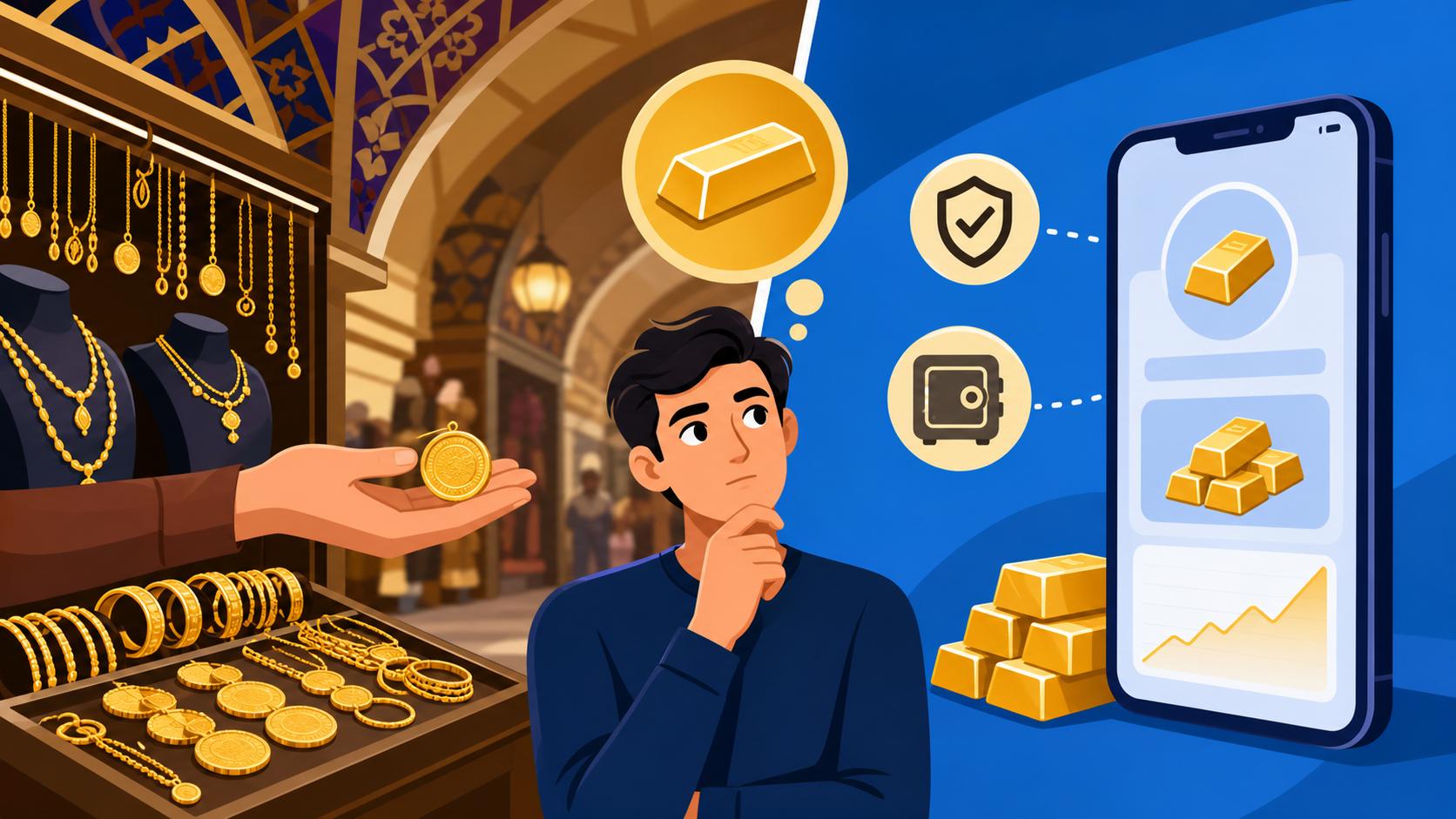
Buying Gold in Turkey: The Grand Bazaar vs Digital Bank Gold Accounts
Walking down any high street in Istanbul, you are immediately confronted by the glittering windows of dozens of gold shops, a sight that often confuses newcomers used to digital-only portfolios. I remember my first month here, staring at the flashing "Altın" signs and wondering why everyone was queuing to buy tiny gold coins instead of using a savings account. This guide solves the dilemma of how to protect your savings by comparing the cultural tradition of physical gold at the Grand Bazaar with the modern convenience of digital bank gold accounts.
The Cultural Weight of Gold in Turkish Daily Life
To understand why you should even consider buying gold, you have to understand the local psyche. In Turkey, gold isn't just an investment; it is a secondary currency, a social safety net, and a mandatory gift for every major life event. Whether it is a wedding, a circumcision ceremony, or the birth of a child, gold is the language of value. When you see your Turkish neighbors buying "çeyrek altın" (quarter gold coins), they aren't just speculating on market prices; they are participating in a centuries-old tradition of "under-the-pillow" savings (yastık altı birikim).
For an expat, gold serves as a critical hedge against the volatility of the Turkish Lira. While you might be focused on Navigating High Inflation: Budgeting Strategies for Expats Earning Turkish Lira, locals have already diversified into physical assets. Gold is globally priced in USD but traded locally in Lira, meaning if the Lira dips, your gold value usually rises in local terms. It is the ultimate "sleep well at night" asset in a country where the economic headlines can change by the hour.
I’ve spent years watching the crowds at the local kuyumcu (jeweler) and realized that gold is the great equalizer. From the wealthy business owner in Nişantaşı to the shopkeeper in Kadıköy, everyone trusts the weight of a 24-karat bar over a digital balance. However, as a foreigner, you need to be savvy about where you buy and how much you pay for the "spread"—the difference between the buying and selling price.
Buying Physical Gold at the Grand Bazaar and Local Jewelers
The Grand Bazaar (Kapalıçarşı) is the beating heart of the global gold trade, and for many expats, it is the first place they think of. But you don't actually need to trek to the historical peninsula every time you want to save. Every neighborhood has a trusted kuyumcu. The experience of buying physical gold is tactile and immediate. You hand over your Lira, and you walk out with a certified gram of gold or a minted coin.
When buying physical gold, you must be aware of "işçilik" (workmanship or labor cost). If you buy elaborate jewelry, a significant portion of the price goes toward the design. When you sell it back, you will lose that portion of your investment. This is why most serious savers buy "Gram Altın" (pure 24k gold bars) or "Cumhuriyet Altını" (Republic gold coins). These have minimal labor costs, ensuring that more of your money is actually buying the metal itself.
One thing I learned the hard way: always check the daily rates on a reliable app or website before entering a shop. While most jewelers are honest, the "tourist tax" can occasionally manifest as a wider spread. If you are moving large sums of money to fund these purchases, using a service like Wise can help you get the mid-market exchange rate when converting your home currency to Lira, which you then use to buy your physical gold. This prevents you from losing money twice—once at the bank and once at the jeweler.
Digital Gold Accounts in Turkish Banks
If the idea of hiding gold bars under your mattress makes you nervous, the Turkish banking system offers a highly sophisticated alternative: the Gold Deposit Account (Altın Mevduat Hesabı). Almost every major bank, from Garanti to Ziraat, allows you to open a gold account in seconds through their mobile app. You can find more details on setting up these platforms in our guide on Choosing a Turkish Bank: Comparing Ziraat, Garanti, İş Bankası, and Akbank.
Digital gold accounts allow you to buy gold in increments as small as 0.01 grams. The "gold" in your account is typically 995/1000 or 1000/1000 purity. The biggest advantage is security; there is no risk of theft or loss. Furthermore, these accounts are often liquid 24/7. If you suddenly need Lira for an emergency, you can sell your digital gold instantly on the app, even at 2 AM.
However, there is a catch: the "makas" (spread). During periods of high market volatility or outside of Turkish market hours (9:00 AM to 5:30 PM), banks significantly widen the gap between the buy and sell price. If you aren't careful, you could be buying gold at a 5% premium over the market rate. Whenever I access my Turkish banking apps to check my gold balance, I always ensure I'm using NordVPN to protect my financial data, especially if I’m on a public Wi-Fi network in a coffee shop. Security is paramount when your savings are just a few taps away.
Comparative Analysis: Physical vs. Digital Gold
Choosing between the two depends on your long-term goals and your comfort level with the local system. If you are here for the long haul and want a "doomsday" fund, physical gold is king. If you are a digital nomad who moves frequently, a bank account is far more practical.
| Feature | Physical Gold (Bazaar/Jeweler) | Digital Gold Account (Bank) |
|---|---|---|
| Accessibility | Requires physical travel to a shop | 24/7 via mobile app |
| Storage Risk | High (Theft, loss, fire) | Low (Insured by the state up to a limit) |
| Transaction Fees | Low "işçilik" on bars/coins | "Makas" (Spread) can be high after hours |
| Minimum Purchase | Usually 0.5 or 1 gram | As low as 0.01 grams |
| Privacy | High (Cash transactions possible) | Low (Reported to tax authorities) |
| Liquidity | Requires physical exchange | Instant digital conversion |
For those who want to balance their portfolio beyond just Turkish assets, you might also look into international platforms. For instance, Trade Republic offers various ways to invest in gold-backed ETFs and other commodities that aren't tied specifically to the Turkish banking system. This provides a layer of geographical diversification that can be very comforting for expats.
The Role of Alternative Digital Assets
In recent years, many younger expats and locals have shifted their "digital gold" focus toward the crypto space. Platforms like Binance have a massive presence in Turkey, offering "stablecoins" and even gold-pegged tokens (like PAXG) that track the price of gold but live on the blockchain. This is an interesting middle ground for those who find the local bank spreads too high but don't want the hassle of physical storage.
If you are curious about how this fits into the local legal framework, you should read our deep dive into Cryptocurrencies in Turkey: Legal Status, Taxation, and Best Local Exchanges. While crypto offers high liquidity and often tighter spreads than local banks, it doesn't carry the same state insurance protections as a gold account at a regulated Turkish bank. For many, the traditional bank account remains the safer bet for large-scale savings.
Regardless of which digital path you take—be it a gold account or a crypto-asset—always remember the importance of a secure connection. There are many reports of expats losing access to accounts because of compromised credentials. Using NordVPN is a non-negotiable part of my financial routine here, providing an encrypted tunnel for all my transactions on Binance or my local bank apps.
Practical Steps for Your First Gold Purchase
If you decide to go physical, start small. Go to a local jeweler in a residential area rather than a tourist trap. Ask for the "gram altın" price and compare it to the live "Harem Altın" or "Altın.in" websites which are the local benchmarks. If the jeweler's price is within 1-2% of the screen price, you are getting a fair deal. Always ask for a "fatura" (invoice) or a small business card with the weight and date written on it.
For those preferring the digital route, you will first need your residency permit and a tax ID. You can learn about this initial setup in our guide on Opening a Bank Account in Turkey: Rules for Expats, Tourists, and Investors. Once your account is active, you can use Wise to move your foreign savings into your Turkish Lira account and then convert that Lira into gold during market hours to ensure the best "makas."
Don't forget to track your assets. Using E-Devlet Financial Services: Tracking Taxes, SGK Debts, and Bank Accounts can help you keep an eye on your overall financial health in Turkey. While gold is a fantastic hedge, it shouldn't be your only asset. A balanced approach involving gold, some local currency for expenses, and international investments via Trade Republic is usually the most resilient strategy for a life abroad.
Understanding the Risks and Exit Strategy
Gold is not a "get rich quick" scheme. It is a preservation of wealth. The price can go down in USD terms even if the Lira is weakening, meaning your "profit" might just be keeping pace with the rising Cost of Living in Turkey 2026: Detailed Budgets for Singles and Families. You must also consider your exit strategy. If you decide to leave Turkey, taking physical gold across the border has strict limits.
Turkish customs generally allow you to export personal jewelry, but large amounts of bullion or coins may require declarations and could be subject to heavy scrutiny or taxes. Digital gold is much easier to "move" in the sense that you can sell it for Lira or USD within your bank and then wire the funds out. However, always be aware of the daily transfer limits and potential fees.
Finally, keep an eye on the evolving tax landscape. In 2026, the government occasionally introduces "gold-protected" accounts similar to the KKM (FX-protected) schemes of the past. These are designed to keep gold within the banking system rather than under mattresses. Before committing a large sum, check if there are new tax incentives or withholding taxes (stopaj) applied to gold account gains.
Final Thoughts for the Savvy Expat
Buying gold in Turkey is more than a financial transaction; it is a rite of passage for any expat who wants to truly integrate into the local economy. Whether you enjoy the thrill of the haggle at the Grand Bazaar or the clinical efficiency of a banking app, you are following in the footsteps of millions of people who have used this "eternal metal" to survive and thrive through decades of economic shifts.
Start by setting up your infrastructure. Get your bank account ready, secure your internet with NordVPN, and perhaps experiment with a small amount on Binance or Trade Republic to see which interface suits your style. Once you have a feel for the market, you can begin building your "Altın" portfolio with confidence. Turkey is a land of opportunities, and gold is the golden key that ensures your hard-earned money remains yours, no matter which way the wind blows.
Disclaimer
This guide is for informational purposes only and does not constitute professional financial, investment, or legal advice. Economic conditions and regulations in Turkey can change rapidly; always consult with a certified financial advisor or legal expert before making significant investment decisions. All brand mentions are based on typical expat use cases and do not imply a guarantee of service.