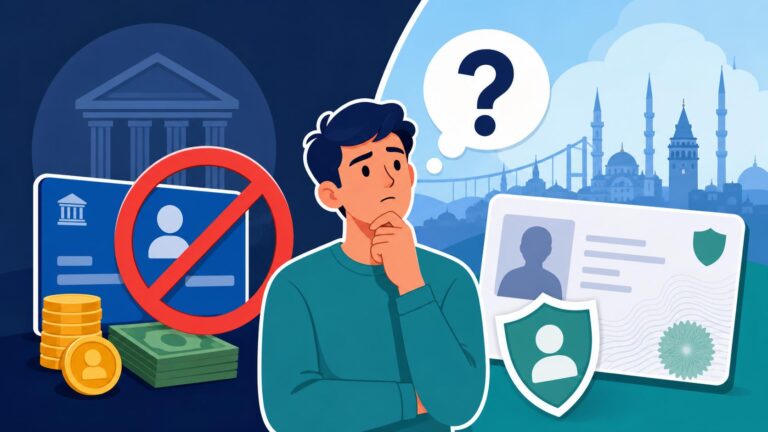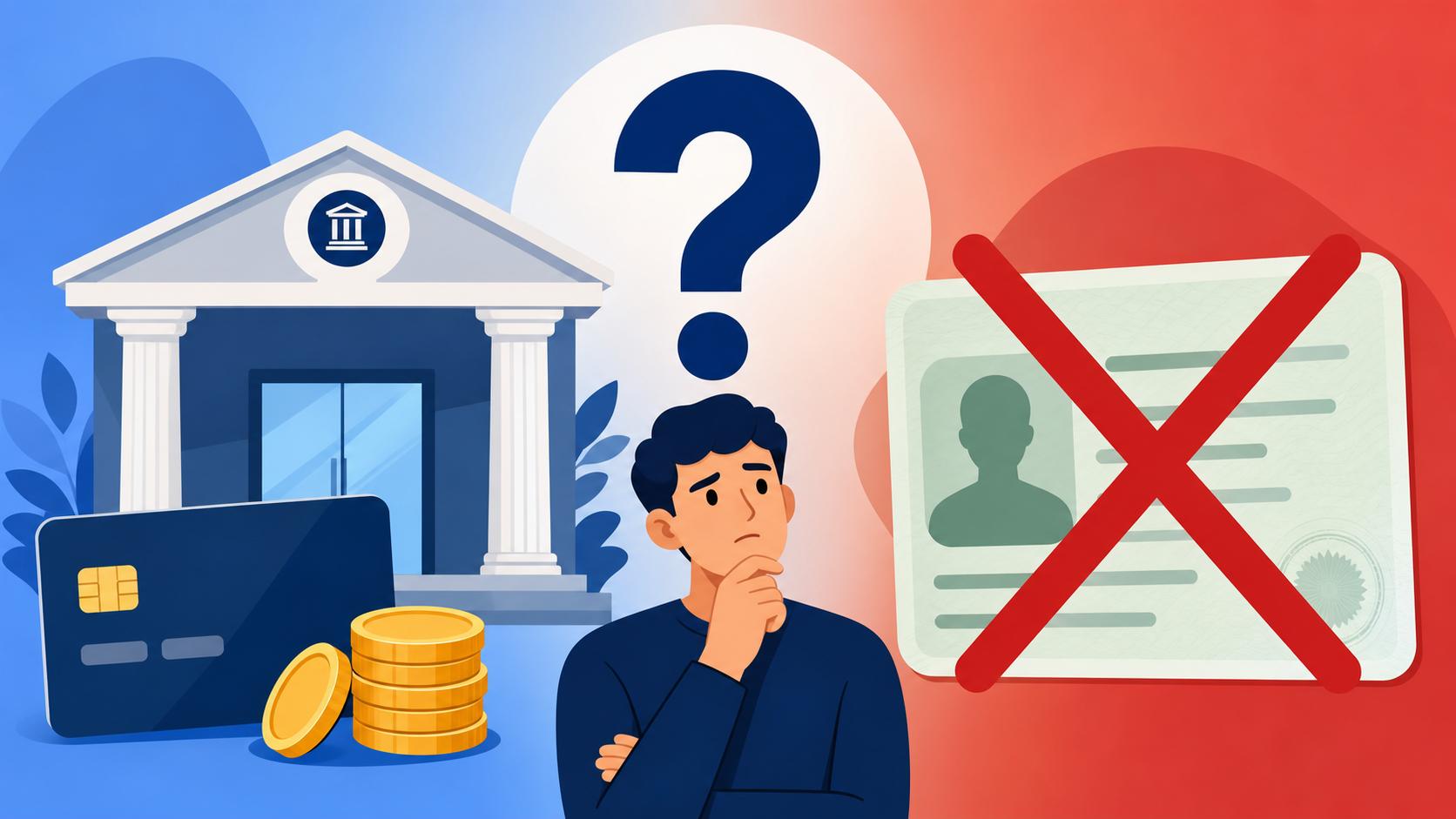
Can I Open a Turkish Bank Account Without a Valid Residence Permit (Ikamet)?
Walking into a sleek marble-floored bank in Istanbul only to be told "No Ikamet, no account" is a frustrating rite of passage for almost every newcomer. I remember sweating through my shirt in a stuffy Beşiktaş branch while the teller simply shook her head at my passport, despite my legal right to an account. This guide breaks down exactly how to navigate the bureaucratic maze and legally open a Turkish bank account before your residency permit is ever approved.
The Legal Reality Versus the Branch Reality
Technically, Turkish law does not strictly forbid banks from opening accounts for non-residents. The Central Bank and the BDDK (Banking Regulation and Supervision Agency) allow it, provided the bank follows "Know Your Customer" (KYC) and anti-money laundering protocols. However, if you have spent any time in Turkey, you know that what is written in the law and what happens at a specific branch desk in Kadıköy or Antalya are two very different things.
Most branches are hesitant to deal with the paperwork required for a "tourist" or a foreigner without a 99-series identification number. To them, you represent a higher compliance risk and a lot of extra work in a language they might not speak fluently. I spent my first two weeks "branch surfing," which is the exhausting process of going from one bank to another until you find a manager who is willing to hit the "enter" key on a non-resident application. If you are struggling with the initial move, reviewing a Financial Checklist for Your First 30 Days as a Newly Arrived Expat in Turkey can help you organize your priorities while you hunt for a bank.
The main reason for these rejections is the lack of a residence permit, which provides a permanent Turkish ID number. Without it, the bank has to manually enter your tax number and passport details, which often triggers system alerts or requires upper-management approval. It is not impossible; it just requires a level of persistence that can feel quite alien if you are coming from a country with highly automated banking.
The Essential Document Checklist for Non-Residents
Before you even step into a bank, you need to have your "dossier" ready. You cannot wing this. If you are missing one stamp or one translation, they will send you away, and you will lose your spot in the queue. You should also ensure your digital life is secure before accessing financial portals; using a service like NordVPN is a standard practice for many of us when we are accessing Turkish mobile banking apps on public Wi-Fi or even local home connections to ensure our data remains encrypted and private.
The most critical document is your Turkish Tax ID (Vergi Numarası). You do not need a residence permit to get this. You can obtain it in about ten minutes online, and it is the key that unlocks almost everything in Turkey. You will also need your original passport. Some banks are fine with the original, but many will demand a "notarized translation." This is a classic Turkish hurdle where a sworn translator translates your passport’s ID page, and a government-appointed Noter (Notary) stamps it for a fee.
| Document Required | Purpose | Where to Get It |
|---|---|---|
| Passport | Primary Identification | Your Home Country |
| Potential Tax ID | Mandatory for all financial actions | (Step-by-Step: Applying for a Tax ID Number at the Interactive Tax Office) |
| Proof of Address | Verifies your residency status (even if abroad) | Home country utility bill or Turkish lease |
| Turkish SIM Card | Required for SMS verification and app logins | Turkcell, Vodafone, or Türk Telekom |
| Cash Deposit | Often required to "incentivize" the branch | Your own funds |
Another major hurdle is the proof of address. Many expats ask, "How can I prove my address if I don't have a permit yet?" This is Why Turkish Banks Ask for a Translated Utility Bill From Your Home Country. They need to see a utility bill (electric, water, or internet) in your name from your home country, translated into Turkish. Alternatively, if you have already signed a lease, a notarized copy of that lease might suffice, but the home-country bill is the gold standard for "non-resident" accounts.
Which Turkish Banks are the Most Foreigner Friendly
Not all banks are created equal. In my experience, the state-owned banks are often your best bet because they have broader mandates to serve the public, including foreigners. Ziraat Bankası and VakıfBank are the two heavyweights here. They have thousands of branches, and while the service might be "old school," they are the most likely to have a procedure for opening accounts for people without an Ikamet.
If you are Choosing a Turkish Bank: Comparing Ziraat, Garanti, İş Bankası, and Akbank, you will find that private banks like Garanti BBVA or Akbank are much more technologically advanced. Their apps are beautiful and easy to use. However, they are also much stricter. They often flatly refuse anyone without a residence permit unless you are bringing in a massive amount of capital. Non-residents have reported that Garanti branches ask for a $10,000 deposit to be "blocked" for three to six months just to open a basic Lira account for a non-resident.
Kuveyt Türk is another excellent alternative. As a participation bank (Islamic banking), they often have different internal regulations and are generally very welcoming to foreigners. They are one of the few banks that allow you to hold multiple currency gold accounts easily. Regardless of the bank, you will likely need to move money in from abroad. For this, many of us use Wise to avoid the predatory exchange rates and high SWIFT fees that Turkish banks love to charge. Wise allows you to send money directly to a Turkish IBAN, often arriving in minutes.
The Deposit Trap and How to Handle It
Since 2023, a new "soft" rule has emerged across Turkish banking: the mandatory deposit. Because you don't have an Ikamet, the bank sees you as a low-value, high-risk customer. To offset this, branch managers will often tell you that they can only open the account if you deposit a certain amount of money and "freeze" it for a set period.
This amount varies wildly. Some tenants have reportedly got away with a 5,000 TL deposit in small Anatolian towns, while in Zeytinburnu or Kağıthane, they might ask for $5,000 or even $10,000. It feels like a bribe, but it is actually a "block" (bloke). The money stays in your account, but you cannot withdraw it for 30, 60, or 90 days. This is their way of ensuring you are a "serious" resident and not just someone opening an account to move money and disappear.
When you are negotiating this, stay calm. If one branch asks for $10,000, go to the branch three blocks away. It is incredibly common for different branches of the same bank to have completely different "minimum deposit" requirements. This is why Opening a Bank Account in Turkey: Rules for Expats, Tourists, and Investors is such a complex topic; the rules change based on the mood of the manager and the branch's monthly quota for new foreign clients.
Digital Alternatives for the In-Between Period
If you are waiting for your appointment and simply cannot find a bank that will take you, don't panic. You can survive quite comfortably using international digital solutions. For daily spending at Migros or paying for your coffee, Wise is indispensable. You can hold a Lira balance and use their debit card just like a local one. While it isn't a "full" Turkish bank account (it doesn't give you a local IBAN for things like SGK payments), it covers 90% of your daily needs.
For those looking to invest or manage wealth while in Turkey, you might look toward Trade Republic. While they don't offer a Turkish Lira account, they provide a great way to keep your savings in Euros or Dollars earning interest while you deal with the local Lira inflation. It is often safer to keep the bulk of your savings in a European-regulated entity like Trade Republic and only move what you need into Turkey via Wise.
If you are into the crypto scene, Turkey is a haven. Binance (specifically Binance TR) is widely used here. Many expats use Binance to off-ramp their foreign currency into Lira. You can send USDT to your Binance TR account and then withdraw Lira directly to a Turkish bank account once you finally get one open. It is often faster than waiting for a Sending Money to and from Turkey: SWIFT, IBANs, and International Apps to clear the global banking hurdles.
Step-By-Step Process to Getting Your Account
If you are ready to try your luck, follow this sequence to maximize your chances of success. Do not skip steps, or you will end up making four trips instead of one.
- Get your Tax ID: Go to the Interactive Tax Office website and get your potential tax number. Print out the PDF. You will need this for Getting a Turkish Tax ID (Vergi Numarası) Online via Dijital Vergi Dairesi (Getting a Turkish Tax ID (Vergi Numarası) Online via Dijital Vergi Dairesi).
- Translate and Notarize: Take your passport to a sworn translator. Then, take that translation to a Noter. This will cost you roughly 1,500 to 2,500 TL, but it is non-negotiable for most state banks.
- Get a Local Number: Buy a Turkish SIM card. You cannot use your foreign number for most banking apps because they won't send the "3D Secure" or login SMS to non-Turkish prefixes.
- Target Specific Branches: Don't go to the busiest branch in Sultanahmet. Go to a residential neighborhood where they see fewer tourists but are still accustomed to "white-collar" foreigners.
- Be Prepared to Deposit: Have at least 10,000 TL (or the equivalent in USD/EUR) ready to deposit immediately. If you show them the cash, they are much more likely to find a way to make the system work.
- Ask for Mobile Banking Access: Before you leave the desk, make sure they have activated your "Mobil Şube." Test the app right there in front of them. If you leave without it working, getting it fixed later without an Ikamet is a nightmare.
Overcoming the Language Barrier
The biggest reason for a "no" is often a simple lack of communication. If the teller doesn't speak English, they will tell you "sistem kapalı" (the system is closed) just to get you to leave. If you can, bring a Turkish-speaking friend. If not, have your Google Translate ready with phrases like "İkametim henüz yok ama vergi numaram var" (I don't have a residence permit yet, but I have a tax number).
Be patient and polite. In Turkey, relationships (torpil or just general "good vibes") matter. If you are friendly and persistent, the manager might decide to help you. If you are demanding and cite "international law," you will be shown the door very quickly. Banking here is as much a social interaction as it is a financial one.
Once your account is open, remember that you are still a "non-resident" in their system. This means you might have lower daily transfer limits. Until you get your physical card, you can often use the QR code feature in the bank's app to withdraw cash from ATMs. Always keep your NordVPN active when using these apps to prevent any regional IP flags that might temporarily lock your account, which is a common headache for expats who travel frequently between Turkey and their home countries.
Why Your Account Might Get Blocked Later
Opening the account is only half the battle. Turkish banks are under heavy pressure to monitor "suspicious" activity. If you suddenly receive a $50,000 wire transfer from an unknown source, your account will be flagged and likely frozen until you can provide a "source of wealth" document.
Keep your transactions "normal" for the first few months. Use the account for rent, utilities, and grocery shopping. If you need to move large sums, do it in smaller increments or provide the bank with documentation (like a house sale contract or a remote work contract) beforehand. Being an expat in the Turkish financial system means being over-prepared with paperwork. It’s better to have a folder full of documents you don't need than to have your funds sitting in limbo while you wait for a human to review your file.
Legal Disclaimer
This guide is for informational purposes only and does not constitute legal or financial advice. Banking regulations in Turkey are subject to frequent and sudden changes by the BRSA (BDDK) and individual bank policies. Requirements for opening accounts can vary significantly by branch, city, and the nationality of the applicant. While we strive to provide the most accurate and up-to-date information, always verify current requirements directly with the financial institution or a qualified legal professional before making significant financial commitments.