Buying Stocks on the Borsa Istanbul: Platform Options for Foreign Residents
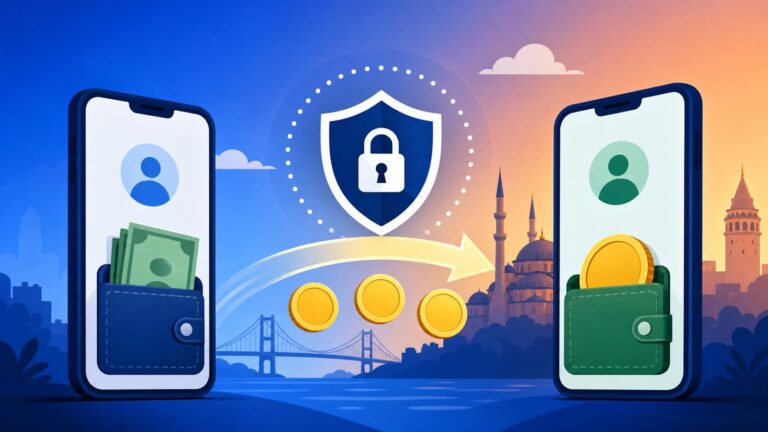
Holding Turkish Lira in a high-inflation environment often feels like watching an ice cube melt in the middle of a July afternoon in Antalya. I remember my first year in Istanbul, sitting in a Çengelköy cafe, realizing my savings were losing value faster than I could spend them. This guide solves the mystery of how foreign residents can legally access the Borsa Istanbul to hedge against inflation and grow their local wealth.
Eligibility and the 99 Number Barrier for Foreign Investors
Before you can even think about placing a "buy" order for Turkish blue-chip stocks like Turkish Airlines (THY) or Koç Holding, you have to navigate the administrative gateway. The most common hurdle I see expats stumble over is the assumption that a passport is enough. In the Turkish financial ecosystem, everything revolves around your T.C. Kimlik Number—specifically the one starting with 99. This number is your golden ticket to The 99-Number: What Your T.C. Kimlik Number Gives You Access To in Daily Life which includes the right to open investment accounts. Without a valid residence permit (Ikamet), most traditional banks will flat-out refuse to open a brokerage sub-account for you, citing internal compliance risks.
If you are a newcomer still waiting on your plastic card, the process is significantly more difficult. You must first ensure you have completed the process of Getting a Turkish Tax ID (Vergi Numarası) Online via Dijital Vergi Dairesi to even be seen by the bank’s system. Even with a tax ID, many banks will require the actual residence permit to verify your long-term "intent to stay." I spent three weeks bouncing between branches in Levent and Maslak before I realized that having the physical card is non-negotiable for 95% of brokerage houses. Once you have that 99 number, the Borsa Istanbul (BIST) opens up, but you still need to prove your tax residency status, especially if you want to avoid being double-taxed on your dividends.
It is also vital to understand that your "foreignness" doesn't inherently bar you from the market, but it does trigger extra "Know Your Customer" (KYC) layers. Turkish regulations under the Capital Markets Board (SPK) are quite robust. When you open an account, you will be asked to fill out a suitability test (Uygunluk Testi). This is a series of questions about your financial knowledge and risk tolerance. Do not rush through this; if you mark yourself as a "conservative" investor, the app might literally block you from buying volatile stocks or participating in Initial Public Offerings (IPOs), which are incredibly popular in Turkey right now.
Top Brokerage Platforms: Traditional Banks vs. Fintech Disruptors
When choosing where to park your money, you essentially have two paths: the traditional "Big Four" banks or the modern, agile brokerage houses. Most expats naturally gravitate toward their existing bank. If you already have an account for daily spending, opening an investment sub-account is often just a few clicks within the mobile app. For instance, Choosing a Turkish Bank: Comparing Ziraat, Garanti, İş Bankası, and Akbank will give you a head start on which interface might feel most intuitive. I personally found that İş Bankası and Garanti BBVA have some of the most robust English-language support for their investment modules, although specific technical terms might still occasionally pop up in Turkish.
However, traditional banks often charge higher commission rates per trade. This is where specialized brokerage houses (Aracı Kurumlar) come in. Over the last few years, a few fintech apps have revolutionized the market for foreign residents. "Midas" is perhaps the most famous example currently, offering a sleek, Robinhood-style interface that allows you to trade both BIST and US stocks in one place. While platforms like Trade Republic are fantastic for those with European bank accounts, they don't provide direct access to the Turkish Borsa. For local stocks, a local broker is essential. These fintech platforms often have much lower barriers to entry and lower commissions than the established banks.
On the other end of the spectrum, if you are also interested in the digital asset space, many expats use local exchanges. While Binance offers a global perspective, their Turkish entity (Binance TR) allows for direct Lira transfers, which many use as a bridge between the stock market and the crypto market. Regardless of which platform you choose, ensure they are SPK-licensed. You can verify this on the Capital Markets Board of Turkey website. Avoid any "wealth manager" or "investment bot" that promises guaranteed returns on the BIST; the Turkish market is famously volatile, and if it sounds too good to be true, it probably is.
| Platform Type | Typical Commission | English Support | Best For |
|---|---|---|---|
| Traditional Banks | 0.15% – 0.25% | Moderate to Good | Long-term holders, one-stop shop |
| Specialized Brokers | 0.05% – 0.10% | Variable | Frequent traders, lower fees |
| Fintech Apps (e.g. Midas) | Very Low / Flat | Excellent | Expats, US & TR stock mix |
| Local Crypto Bridges | 0.10% – 0.20% | Good | Moving between Lira and Digital Assets |
The Mechanics of the Trade: MKK, E-Devlet, and Security
Once you have chosen a platform and deposited your Lira, you aren't just buying digital numbers on a screen; you are interacting with a sophisticated national infrastructure. Every stock you buy is registered under your name at the Merkezi Kayıt Kuruluşu (MKK), which is the Central Registry Agency of Turkey. Within a few days of your first purchase, you will likely receive an SMS or a physical letter with your MKK registration number. This is a crucial security feature. It means that even if your brokerage house goes bankrupt, your stocks are legally yours and held at the central depository.
You can actually monitor these holdings through the E-Devlet Financial Services: Tracking Taxes, SGK Debts, and Bank Accounts portal. By logging into e-Nabız or the MKK’s own portal "e-YÖNET," you can see every single share you own across different brokers. This level of transparency is actually superior to many Western systems I’ve used. However, accessing these portals often requires a secure connection, especially if you are traveling. I have found using NordVPN helpful for maintaining a stable Turkish IP address when I need to access my sensitive financial accounts from abroad without triggering security blocks or "suspicious login" alerts from my bank.
Understanding market hours is another practical "must." The Borsa Istanbul operates from 10:00 to 18:00, with a lunch break and specific "opening" and "closing" sessions where orders are matched. Unlike the US markets, the BIST can be heavily influenced by local political news and central bank interest rate decisions. If you are living in a high-cost area, you already know that Cost of Living in Istanbul vs Coastal Cities (Antalya, Bodrum, Fethiye) can vary, but the market's volatility is a constant across the country. Keeping a portion of your portfolio in "Hedge" stocks—those with high export revenues in USD or EUR—is a common strategy used by veteran expats to protect against Lira depreciation.
Taxation and Compliance for Foreign Residents
Now, let's talk about the part everyone hates: taxes. Turkey generally uses a withholding tax system (Stopaj) for stocks. For most individual investors, the tax on capital gains from stocks held for more than a certain period (usually 0% for stocks traded on the BIST held by individuals, but this can change) is very favorable compared to Europe or the US. However, dividends are typically subject to a 10% withholding tax at the source. This means the money that hits your account is already "net" of Turkish tax.
The complexity arises when you consider your home country. Most expats are still subject to Taxes in Turkey for Foreigners: Residency, Income, and Filing Basics. Turkey has a wide network of Double Taxation Treaties: How Turkey Taxes Foreign Income and Pensions which usually prevents you from being taxed twice on the same profit. For example, if you are a UK or German citizen, you may be able to claim the tax paid in Turkey as a credit against your taxes back home. US citizens, as always, face the most complex situation due to citizenship-based taxation and PFIC (Passive Foreign Investment Company) rules. If you buy a Turkish Mutual Fund (Yatırım Fonu) instead of individual stocks, the US IRS might treat it very differently, often with much harsher tax rates.
If you ever decide to leave Turkey and want to liquidate your portfolio, you will need to consider the most efficient way to move those funds. Using Wise is often the most cost-effective method for converting your Lira gains back into your home currency, as traditional bank SWIFT transfers out of Turkey can be plagued by high fees and unfavorable exchange rates. Always keep your "Investment Account Closing" documents and tax payment receipts. If you are managing a significant portfolio, it might be worth checking Navigating High Inflation: Budgeting Strategies for Expats Earning Turkish Lira to see how to balance your stock investments with your day-to-day liquidity needs.
Strategic Tips for the Turkish Market
The Borsa Istanbul is not for the faint of heart. It is a market driven by "momentum" and "retail frenzy." In 2026, we are seeing a massive influx of local investors trying to outpace inflation, which creates high liquidity but also "bubbles" in certain sectors like technology or energy. As a foreign resident, you have the advantage of an outside perspective. While locals might be chasing the latest IPO, you can focus on companies with strong balance sheets and "hard currency" earnings.
When budgeting for your investments, always account for your Cost of Living in Turkey 2026: Detailed Budgets for Singles and Families first. Never invest money in the BIST that you might need for your rent or permit renewals in the next six months. The market can drop 10% in a day based on a single tweet or a policy shift. A common approach is a "barbell" strategy: keep your essential savings in a high-yield Lira deposit account (KKM or similar) and put only your "risk capital" into the Borsa.
Finally, stay informed through local sources but verify them with international context. The "Big Four" banks often provide daily research reports in English. Reading these can give you a sense of the "market sentiment" in Istanbul. Even if your Turkish isn't perfect, learning the basic terminology—like hisse senedi (stock), temettü (dividend), and emir (order)—will go a long way in making you feel like an active participant in the Turkish economy rather than just a bystander watching the numbers roll by.
Legal Disclaimer
The information provided in this guide is for informational purposes only and does not constitute financial, legal, or tax advice. Investing in the Borsa Istanbul involves significant risk, including the potential loss of principal. Currency fluctuations can also impact the value of your investments. You should consult with a qualified financial advisor or tax professional who is familiar with both Turkish law and the regulations of your home country before making any investment decisions. The author and publisher are not responsible for any financial losses incurred based on the content of this article.