The e-Ikamet System: How to Apply, Renew, and Track Your Residence Permit
Trying to navigate the Turkish e-Ikamet website at 2:00 AM while it repeatedly crashes is a rite of passage for every foreigner moving to Turkey. I vividly remember my first application in Istanbul, staring at a "System Error" screen and wondering if I’d be deported by morning. This guide solves the mystery of the e-Ikamet system, providing a clear roadmap for your application, renewal, and card tracking.
Understanding the e-Ikamet Portal Basics
The e-Ikamet system is the digital gateway to your life in Turkey, but it is far from a standard government website. It is a complex database that communicates with the Ministry of Interior, the Directorate General of Migration Management (Göç İdaresi), and the Nüfus (Civil Registry). For most of us, the journey begins at the official portal, where you must choose between a "first-time application" and a "renewal."
One of the most confusing aspects for newcomers is the distinction between these two paths. If you have never held a residence permit before, or if your previous permit has been expired for more than ten days, you must select the first-time application. This involves a much more rigorous data entry process and requires a physical appointment at the migration office. Expats can lose their legal status simply because they wait until the last minute and the website underwent "maintenance," a frequent occurrence on weekends and public holidays.
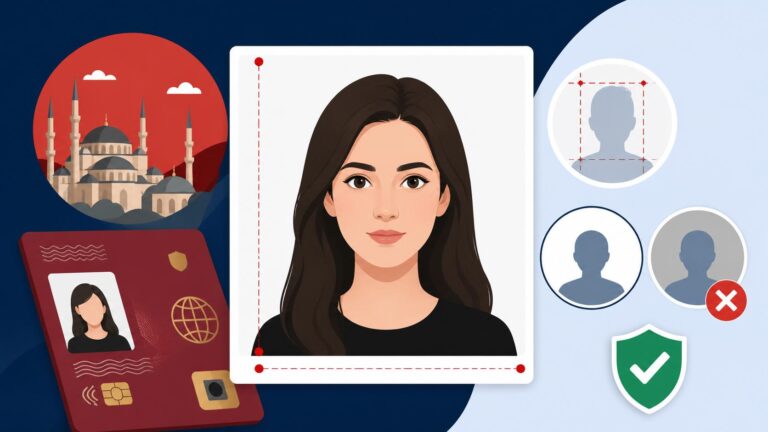
The system is also notoriously picky about technical specifications. Using a mobile phone to fill out the forms is essentially a recipe for disaster. You need a stable desktop connection, preferably using Chrome or Edge, and a high degree of patience. Before you even click the "first application" button, ensure you have a digital biometric photo that is less than six months old. The system uses facial recognition software to verify your identity against your passport, and a low-quality selfie will result in an immediate error message.
First-Time Applications vs. Renewals
A first-time application is essentially your "introduction" to the Turkish state. You are asking for permission to reside based on specific grounds—usually tourism, property ownership, or a family connection. The e-Ikamet system will generate a unique application number that acts as your temporary legal shield until your appointment day. It is vital to understand that once you submit this form, you are legally allowed to remain in Turkey until your appointment date, even if your original visa expires in the meantime.
Renewals, on the other hand, are for those who already hold a valid Kimlik (ID card) and want to extend their stay. The renewal portal opens exactly 60 days before your current permit expires. It is wise to apply on day 60. Waiting until the final week is dangerous because if the system glitches—and it will—you might fall out of the legal window. Renewals used to be handled entirely by mail, but in 2026, many provinces are returning to in-person biometric verification even for extensions.
The Importance of Technical Compatibility
The e-Ikamet portal was built with specific security protocols that often clash with modern browser extensions. If you are using a VPN or an aggressive ad-blocker, the site may fail to load the CAPTCHA or the payment gateway. I learned the hard way that turning off my VPN was the only way to get the SMS verification code to actually arrive on my Turkish SIM card. Always ensure your Turkish phone number is active and capable of receiving international-format messages before starting.
Additionally, the document upload section has very strict file size limits. If your passport scan is even one kilobyte over the limit, the system will simply refresh the page without telling you why. This lack of feedback is the most frustrating part of the process. You’ll need to be proficient in resizing PDFs and JPEGs to navigate the portal successfully. Many expats find that having their documents professionally handled by a service like RushTranslate ensures that the digital versions meet the bureaucratic requirements before they even hit the upload button.
Preparing Your Essential Document Dossier
The physical folder you bring to your appointment is just as important as the digital form you fill out. In Turkey, the "paper trail" is king. Even though we live in a digital age, the officer at the Göç İdaresi will want to see every document in its original form, plus a high-quality photocopy. The Required Documents Checklist for a Short-Term Turkish Residence Permit is your bible here, and missing even one signature can result in a "30-day notice" to provide the missing paperwork.
Your passport is the foundation of your dossier. You need a copy of the photo page, the page containing the entry stamp from your last arrival in Turkey, and the visa page if applicable. If your passport is nearing its expiration date, be careful; Turkey requires your passport to be valid for at least 60 days beyond the duration of the residence permit you are requesting. If you want a one-year permit, your passport must have at least 14 months of validity remaining.
Finally, the address verification has become the most scrutinized part of the dossier. You cannot simply provide a handwritten lease. Your rental contract must be notarized, and in many cases, the landlord must accompany you to the notary or provide a notarized copy of their own ID and the property’s title deed (Tapu). This is to prevent the "ghost addresses" that were common in previous years.
Health Insurance Requirements
You cannot obtain a residence permit without valid health insurance that covers the entire duration of your stay. For those under age 65, this is mandatory. While there are many "cheap" local policies designed solely to satisfy the visa requirement, it is wise to look at comprehensive options like Cigna Global. These policies provide much better coverage if you actually end up in a private hospital in Istanbul or Ankara.
The e-Ikamet system will ask for your insurance policy number and the company’s "u-net" number. If you buy a local Turkish policy, this data is usually synced automatically. However, if you are using international coverage like Cigna Global, you will likely need to present the policy details during your physical appointment to prove it meets the minimum requirements for inpatient and outpatient care. Make sure the policy specifically mentions that it complies with the "Circular on Private Health Insurance for Residence Permit Applications."
Notarized Documents and Professional Translations
Any document not issued in Turkish must be translated and notarized. This includes marriage certificates for family permits or birth certificates for children. Using a reputable service like RushTranslate is essential because the translation must be "sworn" (yeminli). A simple translation from a friend or an AI tool will be rejected immediately at the migration office.
The notary system in Turkey is the final gatekeeper. Once you have your sworn translation from RushTranslate, you must take it to a Turkish Noter to get it stamped. This process can be expensive, but it is unavoidable. Some applicants try to skip this step to save a few hundred Lira, only to have their entire application rejected and be forced to leave the country. Keep every receipt, as you may need to prove you paid the administrative fees if there is a dispute later.
| Document Type | Requirement | Notarization Needed? |
|---|---|---|
| Passport | Valid for +60 days of permit | Only if not in Latin script |
| Rental Contract | Signed by landlord and tenant | Yes, mandatory |
| Health Insurance | Must cover full permit period | No, but must be Turkish-compliant |
| Biometric Photos | 4 copies, white background | No |
| Marriage Certificate | Apostilled or Consulate-approved | Yes, plus sworn translation |
Step-by-Step Guide to the Online Application
Once you have your documents ready, it’s time to face the e-Ikamet form. This is where most people get tripped up by the "Address" section. The system uses a centralized national address database (UAVT). If your building doesn't appear in the dropdown menu, you cannot simply type it in. You’ll have to go to the local municipality (Belediye) to get your address registered in the system before you can finish the application.
The form will ask for your "Reason for Stay." For most, this is "Short-term / Tourism." However, be aware that in 2026, Turkey has become much stricter about granting touristic permits. If you are staying in a rental, you are more likely to be scrutinized than someone who owns property. If you have been following the Step-by-Step: Filling Out the Complex e-Ikamet Application Form Online guide, you’ll know that honesty is the best policy, but you must be precise with your dates.
When you reach the "Financial" section, you are declaring that you have enough money to support yourself without working in Turkey. Usually, this means having the equivalent of the Turkish minimum wage for each month of your stay. While the system doesn't always ask for bank statements at the time of the online upload, the officer at the appointment almost certainly will.
Navigating the e-Ikamet Form
The form is divided into several pages: Personal Information, Contact Information, Address Information, and Insurance Information. One tip I learned from years of doing this: always save your progress on every page. The session timeout is aggressive, and there is nothing more soul-crushing than filling out your entire family history only to have the site kick you out because you spent too long looking for your insurance policy number.
The "Identity Information" page must match your passport exactly. If your passport has a middle name, include it. If the system asks for What Exact Size and Background is Needed for Turkish Biometric Ikamet Photos?, ensure your digital upload is 50mm x 60mm and under 1MB. If the photo doesn't upload correctly, the "Forward" button will remain greyed out, and the site won't tell you why. It's these little UI quirks that make the process feel like an endurance test.
Paying the Taxes and Card Fees
After you submit the form, the system will generate a "Residence Permit Application Form" PDF. This document contains your appointment date and a breakdown of the fees you owe. There are two main fees: the "Card Fee" (Değerli Kağıt Bedeli) and the "Taxes" (İkametgah Tezkeresi İzin Harcı). The tax amount varies significantly depending on your nationality, as it is based on reciprocal agreements between Turkey and your home country.
You can often pay these fees directly through the e-Ikamet website using a Turkish credit card, or via the Interactive Tax Office (GİB) website. If the online payment fails—which happens often with foreign cards—you must go to a state bank like Ziraat Bankası or Halkbank with your tax ID number. Make sure the teller gives you two original receipts with a wet stamp. Do not lose these; you must staple them to your application folder.
The Biometric Appointment (Randevu)
The appointment day is when the process becomes "real." You will go to the Biometric Appointments (Randevu) at the Provincial Migration Office (Göç İdaresi) that was assigned to you by the system. In big cities like Istanbul, this could be in Fatih, Pendik, or Esenyurt. Show up at least 30 minutes early. Even if your appointment is at 10:00 AM, the system often works on a "first-come, first-served" basis within that time block.
When you enter the building, you’ll go through a security check and then receive a queue number. When your number is called, you’ll sit with an officer who will review your folder. They are looking for consistency. Does the address in your notarized lease match the address you typed in the e-Ikamet system? Does your Cigna Global insurance cover the full date range? If everything is in order, they will take your fingerprints and give you a "Certificate of Residence Permit Application" (Müracaat Belgesi).
This certificate is your most important document for the next few weeks. It allows you to stay in Turkey legally while your card is being printed. It also allows you to leave and re-enter Turkey for up to 15 days, provided you have the document stamped by the manager at the migration office. Without that stamp, the border police might fine you for an overstay when you try to return.
What to Expect at the Göç İdaresi
The atmosphere at the migration office can be tense. Hundreds of people from all over the world are all vying for the same thing, and the officers are often overworked. My best advice is to be extremely polite and organized. Have your documents in the exact order requested by the checklist. If you appear "hazır" (ready), the officer is much more likely to process you quickly without asking extra questions.
Language can be a barrier. While some officers in Istanbul speak English, many do not. If you don't speak Turkish, it's a good idea to bring a translator or a Turkish-speaking friend. However, be wary of "agents" standing outside the building offering to "fix" your application for a fee. Most of these are scams. If you’ve used a professional translation service like RushTranslate for your paperwork, you’re already ahead of the game.
Common Interview Questions and Conduct
The "interview" isn't usually a formal sit-down interrogation. It’s more of a brief conversation while they click through the computer system. They might ask, "Why are you living in Turkey?" or "What do you do for a living?" Remember, you are likely on a tourist permit, so you cannot say you are working for a Turkish company unless you have a work permit.
If they suspect you are working illegally, they may ask for more detailed bank records. This is why Proving Financial Sufficiency for a Turkish Ikamet Application in 2026 is so important; you need to show that your funds are coming from abroad. Stay calm, answer directly, and don't offer more information than is asked for. If they ask for an additional document you don't have, they will give you 30 days to bring it back to the office.
Post-Appointment: Tracking and Residence Cards
Once your appointment is successful, the wait begins. Your application moves from "Received" to "Approved" and finally to "In Printing." This can take anywhere from two weeks to three months, depending on the backlog at the central printing bureau in Ankara. You can check your status on the e-Ikamet website using your application number and passport details.
When the card is printed, it is handed over to PTT (the Turkish postal service). You will receive an SMS with a Tracking Your Newly Printed Ikamet Card Delivery via PTT Tracking Codes. This is a critical stage. The PTT driver will come to your door and they are legally required to hand the card only to you or a first-degree relative living at the same address. They will check your passport before handing over the envelope.
Using the PTT Tracking System
The PTT tracking website is purely in Turkish, so you’ll need to look for the phrase "Dağıtıcıya Verildi" (Given to the Courier). If you are not home when they arrive, they will leave a yellow slip on your door, and you will have to pick up the card at your local PTT branch within a few days. If you don't pick it up, the card is sent back to the Göç İdaresi, and retrieving it from there is a bureaucratic nightmare.
I recommend downloading the PTT mobile app to get real-time notifications. If you see that your card has been "undeliverable," go to the post office immediately. I’ve known people who had their cards mailed back to Ankara because they didn't see the slip on their door, which led to months of extra waiting. Your life in Turkey—opening a bank account, getting a phone contract, or using The 99-Number: What Your T.C. Kimlik Number Gives You Access To in Daily Life—all depends on having that physical card in your hand.
Dealing with Delays and "Pending" Status
If your application has been "Pending" for more than 90 days, it’s time to take action. You can call the YİMER 157 helpline, which offers support in several languages, including English, Arabic, and Russian. They can see if there is a "V-code" or an issue with your file that isn't showing up on the public website.
Sometimes, the delay is simply due to a missing address registration. If the police did a random check and you weren't home, your application might be put on hold. In these cases, you may need to go back to the migration office to prove you actually live where you say you do. If your card is ever lost in the mail, you'll need to follow the steps for What to Do If Your Ikamet Card is Lost or Stolen While Inside Turkey to get a replacement.
Renewing Your Ikamet Before Expiry
Renewal is a much smoother process if you haven't changed your address or your status. The e-Ikamet system remembers your previous data, which saves a lot of typing. However, the requirements for renewals are just as strict as first-time applications. You still need notarized leases, valid health insurance from a provider like Cigna Global, and fresh biometric photos.
The golden rule of renewal is the "60-day window." You can apply for a renewal as soon as there are 60 days left on your current card. Do not wait until the last week. If you apply even one day after your card expires, the system may force you to do a "First-Time" application again, which is more expensive and requires a new appointment. Use the How to Renew Your Residence Permit Without Triggering Document Rejections guide to ensure your renewal is a "set it and forget it" affair.
The 60-Day Renewal Window
During this 60-day period, the "Extend" button will appear on your e-Ikamet dashboard. The process is almost identical to the first application, but you will select "Renewal" (Uzatma). You will still need to pay the card fee and the taxes. In many cases for renewals, you can choose to have your documents sent via the postal service rather than attending an appointment, but this depends on the current regulations of your specific province.
Always check the latest announcements on the Göç İdaresi website. Policies change fast in Turkey. For example, in 2026, some provinces have started requiring a "UETS" (electronic notification) address for all renewals. This is an official digital mailbox you can get from the PTT. If you don't have one, your renewal might be rejected.
Avoiding Document Rejections during Renewal
The most common reason for renewal rejection is a discrepancy in the address. If you moved house during your previous residency and didn't update your address at the Nüfus office within 20 days, your renewal will likely be flagged. Turkey is very strict about where foreigners live, especially with the current list of Navigating Closed Neighborhoods: A Guide to Areas Where Foreigners Cannot Register. If your neighborhood has been "closed" since your last permit, you might not be able to renew at that same address.
To ensure success, have your documents translated again by RushTranslate if they have expired (some documents like "Criminal Record Checks" from your home country only have a 6-month validity). Make sure your health insurance with Cigna Global is renewed before you even click the "Uzatma" button. If the system sees your insurance expires before your current permit does, it will error out.
Troubleshooting Common e-Ikamet Hurdles
No guide to the e-Ikamet system would be complete without a section on how to fix things when they go wrong. The system is prone to E-Ikamet Glitches: How to Resolve System Errors During Online Application Submission, and knowing a few "hacks" can save you hours of stress. For instance, if the website says your passport number is "invalid," try removing any spaces or dashes. If the payment button doesn't work, try a different browser or clear your cache.
Another major hurdle is the "Closed Neighborhoods" policy. Since late 2022 and into 2026, over 1,100 neighborhoods across Turkey have been closed to new foreign residents because the foreigner population exceeded 20% of the total population. If you sign a lease in one of these areas, you cannot get a residence permit. Always check the official list of closed districts before you pay a deposit on a flat.
System Glitches and Error Codes
One of the most common error codes is related to the "Biometric Photo." If the system says "Photo could not be verified," it usually means the file size is too large or the background isn't perfectly white. Use a professional photo studio and ask for the "Ikamet" version; they will give you a digital file that is already formatted correctly.
Another glitch happens at the very end of the application: the "Appointment Calendar" doesn't load. This is usually because the specific office is fully booked. Instead of giving up, try checking again at midnight or early in the morning when the system refreshes its slots. If you still can't get an appointment, you may need to visit the migration office in person to ask for a manual override.
Address Registration and Closed Neighborhoods
Address registration is the "final boss" of Turkish residency. Even after you get your permit, you must go to the Nüfus office to "link" your name to your address. The e-Ikamet system is directly linked to this database. If you aren't registered, you won't be able to get a phone line, home internet, or a bank account.
If you find yourself in a closed neighborhood, your only options are to move to an open area or to apply for a different type of permit (like a Work Permit or a Student Permit), which sometimes have different rules. For those who are already living in a closed neighborhood and need to renew, you are usually "grandfathered in" as long as you don't change your address. But the moment you move to a new flat in a closed zone, your residency is at risk.
Financial and Legal Considerations
Holding a residence permit is a privilege, not a right. It comes with responsibilities, such as notifying the authorities if you change your marital status, your job, or your address. Failing to do so can lead to a cancellation of your permit and a future entry ban. Your Kimlik card is more than just a piece of plastic; it gives you a "99 number," which is your key to the Turkish social system.
With this number, you can register for the e-Devlet (Electronic Government) portal. This portal allows you to track your medical records, see your tax debts, and even generate official documents like "Proof of Residence" without going to a government office. It is the most powerful tool an expat can have in Turkey.
Proving Financial Sufficiency
The migration office has become much more thorough in checking how foreigners support themselves. In the past, a simple declaration was enough. Now, they may ask for six months of bank statements showing regular transfers from abroad. If you are a remote worker, you might be asked for a contract translated by RushTranslate that proves your income is coming from outside Turkey.
The required amount is usually tied to the Turkish minimum wage. As inflation has fluctuated, these numbers change every January. Always assume you need more than the minimum to be safe. If you are applying for a family permit, the "Sponsor" must show even higher income levels to prove they can support the entire household.
Rights and Restrictions of a Residence Permit
It is vital to remember that a "Short-Term Touristic Residence Permit" does NOT give you the right to work in Turkey. If you are caught working for a local company without a separate Work Permit, you will be deported and fined. However, you can freely travel within Turkey, buy property, and enroll your children in local schools.
Also, be aware of the "absence rules." While the strict "120-day rule" (where your permit was cancelled if you stayed outside Turkey for more than 4 months) was largely abolished for short-term permits, being away for too long can still impact your ability to apply for "Long-Term Residency" (Permanent Residency) in the future. To qualify for permanent residency, you generally need 8 years of continuous legal stay with minimal time spent outside the country.
Disclaimer
The information provided in this guide is for informational purposes only and does not constitute legal advice. Immigration laws and e-Ikamet system requirements in Turkey are subject to frequent change by the Ministry of Interior and the Directorate General of Migration Management. Always consult with the official Göç İdaresi website or a qualified legal professional before making financial or residency decisions.