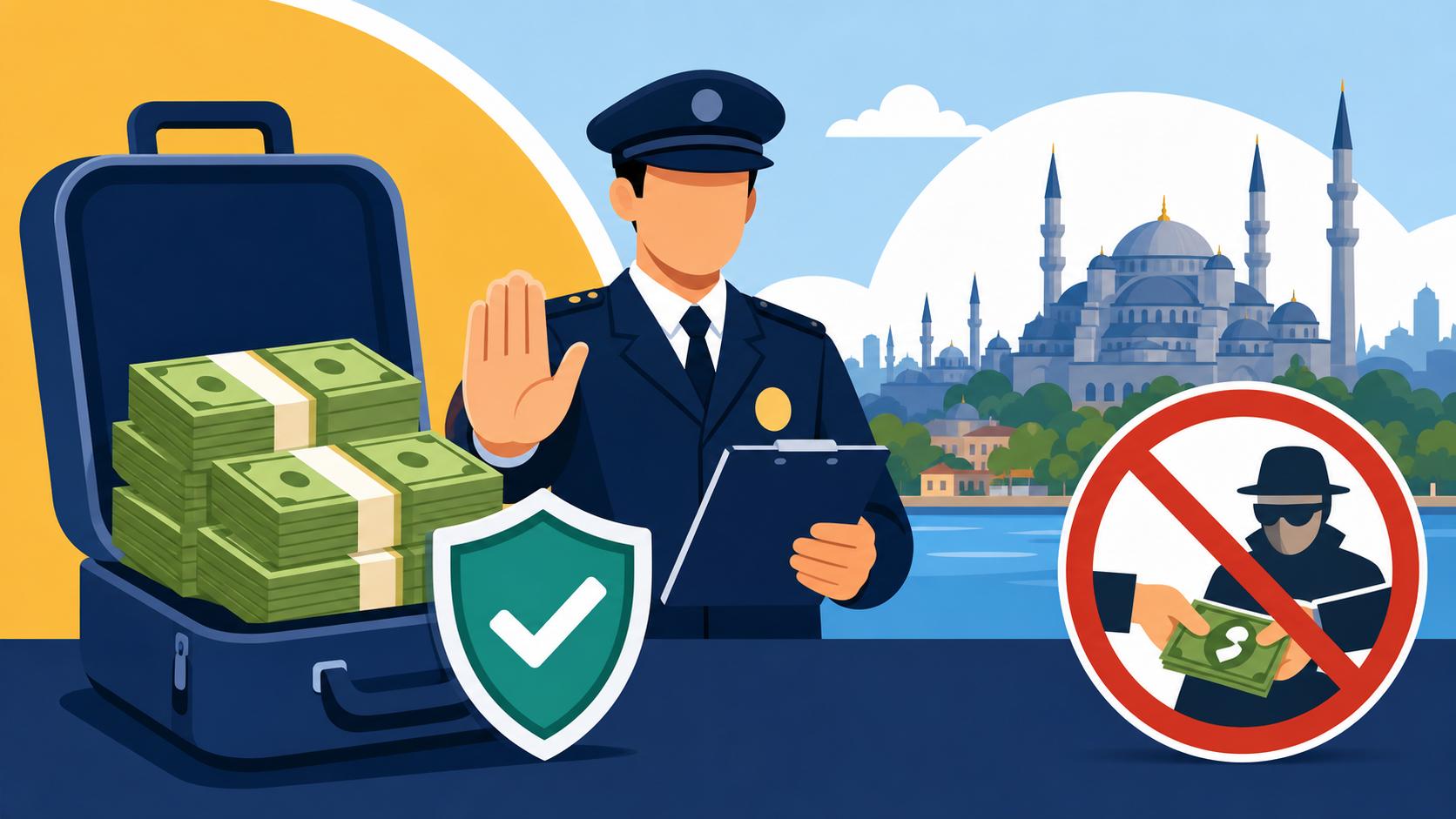
Bringing Cash into Turkey: Customs Declaration Limits and Anti-Laundering Rules
Landing at Istanbul Airport with a thick envelope of cash hidden in your carry-on is a rite of passage for many expats, but the fear of a random customs check can turn a dream move into a legal nightmare. I remember clutching my bag white-knuckled during my first move to Kadıköy, terrified that my life savings would be seized because I hadn't filled out the right form. This guide breaks down exactly how much cash you can legally bring into Turkey, how to declare it, and how to navigate the increasingly strict anti-money laundering regulations.
The Reality of Arriving in Turkey with Cash
The transition to a new life in Turkey often requires more physical cash than we are used to in more digitized economies. While major cities are catching up, you will quickly find that the "depozito" for a high-end flat or the initial costs of furnishing a home often demand liquid funds that local banks might not let you withdraw immediately upon arrival. This creates a dilemma: do you risk carrying large sums through the airport, or do you rely on digital transfers?
When I first arrived, I realized that while Turkey loves technology, the traditional "pazar" culture and the initial hurdles of Opening a Bank Account in Turkey: Rules for Expats, Tourists, and Investors mean you often need Turkish Lira (TRY) or USD/EUR in hand. However, the Turkish customs authorities have become significantly more sophisticated in their monitoring. They are no longer just looking for contraband; they are looking for "unexplained wealth" that hasn't been properly logged in the system.
If you are carrying significant funds, using a secure connection is vital before you even leave your home country. I always use NordVPN to log into my banking apps while at the airport or on public Wi-Fi to ensure my financial data isn't intercepted. NordVPN provides that extra layer of security that is non-negotiable when you are managing the logistics of a cross-border move. Once you land, the pressure is on to navigate the "Red" and "Green" channels correctly.
Understanding Customs Declaration Limits
The most important rule to memorize is the 10,000 Euro threshold. According to Turkish Customs Law, any amount of cash—whether in Lira, Dollars, Euros, or other convertible currencies—equivalent to or exceeding 10,000 EUR must be declared upon entry. There is no limit on how much you can bring in, but there is a massive legal penalty for failing to disclose it.
When you exit the plane and head toward baggage claim, you will see two exits: the Green Channel (Nothing to Declare) and the Red Channel (Goods to Declare). If you have more than that 10,000 EUR limit, you must walk through the Red Channel. Some people try to "split" the cash between family members to stay under the limit, a tactic known as structuring. This is a huge mistake; if customs officers suspect a family is intentionally dividing funds to avoid declaration, they can seize the entire amount under anti-laundering statutes.
Exiting Turkey is actually stricter than entering. For foreign residents and tourists, the limit for taking Turkish Lira out of the country is 25,000 TRY, and for foreign currency, it is the equivalent of $5,000 USD. If you are planning to take more than this out—perhaps because you sold a car or are moving back home—you must prove where the money came from. Keeping your Money in Turkey for Expats: Banking, Payments, and Finance Guide (2027) up to date with receipts and bank statements is essential for these moments.
The Nakit Beyan Formu and Documentation
If you enter the Red Channel, you will be asked to fill out the "Nakit Beyan Formu" (Cash Declaration Form). This isn't just a bureaucratic hurdle; it is actually your best friend. This form acts as a legal "birth certificate" for your money within the Turkish financial system. Without it, you might struggle to deposit that cash into a Turkish bank later, as banks are now required to ask for proof of source for large cash deposits.
When you fill out the form, be honest about the source. Whether it is from the sale of a property back home or personal savings, having a digital trail helps. I often keep my digital sales contracts and bank statements saved in a secure cloud folder, accessed only via NordVPN to ensure the connection is encrypted. Having these documents ready on your phone or tablet can save you hours of questioning in a small customs office.
Remember that the Turkish authorities are part of the global effort to combat financial crimes. They are looking for consistency. If you claim the money is for a property purchase, they might eventually cross-reference this with Real Estate Taxes and Fees in Turkey: Buying, Selling, and Renting Costs if you later apply for residency. The goal is to show that your funds are "clean" and that you are entering the country as a law-abiding resident.
Anti-Money Laundering Rules and MASAK
The Financial Crimes Investigation Board, known locally as MASAK, is the authority that oversees all large financial movements in Turkey. In recent years, Turkey has faced pressure to tighten its AML (Anti-Money Laundering) and KYC (Know Your Customer) protocols. This means that even if you get past customs, your financial journey in Turkey is just beginning. MASAK monitors bank transfers and large cash transactions across the country.
For expats, this means that "unexplained" deposits can lead to your Turkish bank account being frozen. I've had friends who moved to Turkey and tried to deposit $20,000 in cash without a customs declaration form, only to have the bank report the transaction to MASAK. To avoid this, it is often better to use a service like Wise for your initial expenses. Wise allows you to move money at the mid-market rate without the physical risk of carrying cash, and it creates a clear, electronic paper trail that MASAK and Turkish banks find acceptable.
If you are a high-net-worth individual or a trader, you might be tempted to use platforms like Binance to move value into the country via cryptocurrency. While Binance is widely used and legal in Turkey, you should still be aware of Taxes in Turkey for Foreigners: Residency, Income, and Filing Basics. Converting large amounts of crypto to Lira and withdrawing it to a Turkish bank account will still trigger MASAK's monitoring if the amounts are significant. Always ensure your Binance account is fully verified and that you can explain the original source of the crypto funds.
Practical Strategies for Moving Money Safely
If the thought of carrying a suitcase of cash makes you sweat, you aren't alone. Most veteran expats move the bulk of their funds digitally. For daily spending and initial rent payments, Wise is the gold standard. It’s far cheaper than traditional SWIFT transfers and avoids the awkwardness of the customs office altogether. You can send money to your own Turkish IBAN or directly to a landlord’s account with minimal fees.
For those looking to keep their savings in a more stable currency while living in Turkey, Trade Republic is one option often considered. It allows you to earn interest on your Euro or Dollar balance, which is a lifesaver when the Turkish Lira is volatile. By keeping your main capital in Trade Republic and only moving what you need into Turkey via Wise, you minimize your exposure to both physical theft and currency devaluation. It’s a strategy that many in the community use to maintain their Cost of Living in Turkey 2026: Detailed Budgets for Singles and Families without constant stress.
However, if you must bring cash for a specific reason—perhaps a private sale where the seller demands "nakit" (cash)—make sure you have NordVPN active on your devices at all times. Financial predators often hang out in transit hubs, and hackers can easily spoof airport Wi-Fi to see who is checking large balance statements. Staying "invisible" online is just as important as being discreet with your physical envelope of money.
Summary Table: Turkey Cash Limits at a Glance
| Transaction Type | Limit Amount | Requirement |
|---|---|---|
| Entering Turkey (All Currencies) | 10,000 EUR (Equivalent) | No limit, but amounts over this MUST be declared (Nakit Beyan Formu). |
| Exiting Turkey (Turkish Lira) | 25,000 TRY | Amounts over this are generally prohibited for non-residents. |
| Exiting Turkey (Foreign Currency) | $5,000 USD (Equivalent) | Amounts over this require a declaration and proof of origin. |
| Bank Deposit (Cash) | Varies by Bank | Deposits over 50,000 TRY often trigger "Source of Wealth" questions. |
| Digital Transfers (Wise/SWIFT) | No Official Limit | Subject to bank-specific KYC and MASAK monitoring. |
Common Pitfalls and How to Avoid Seizure
The biggest mistake I see is "The Silent Traveler" approach. Many people think that if they just act natural and don't say anything, they will breeze through customs. But Turkish customs officers are trained to spot the nervous "new expat" look. If you are pulled for a random search and they find undeclared cash over the limit, the consequences are severe. Typically, the authorities will seize the entire amount, fine you up to 10% or more of the total, and initiate a MASAK investigation that could jeopardize your Turkish Residence Permits (Ikamet): The Complete Application Guide (2027).
Another pitfall is relying on local "exchange houses" for large sums. While the "Döviz" offices in the Grand Bazaar offer great rates, they don't always provide the level of documentation required for MASAK-compliant bank deposits later on. If you are moving large amounts, stick to reputable platforms. Using Binance for p2p (peer-to-peer) transfers is common, but again, ensure you are using a secure NordVPN connection to prevent your location or data from being exploited during the trade.
Lastly, don't forget about E-Devlet Financial Services: Tracking Taxes, SGK Debts, and Bank Accounts. Once you are a resident, the government can see your registered Turkish bank accounts. If you suddenly deposit a large amount of cash that wasn't declared at the border, it creates a discrepancy in your financial profile. Consistency is the key to a long, hassle-free life in Turkey. If you're ever in doubt, it is worth the cost of Hiring an Immigration Lawyer in Turkey: Spotting Red Flags and Standard Costs to review your financial entry plan, especially if you are bringing funds for a major investment.
Moving Beyond Cash: The Digital Future
As we head further into 2026, Turkey is pushing harder toward a cashless society in formal sectors. While you'll still need coins for the "dolmuş" (minibus) or the local bakery, almost every major expense can now be handled via Sending Money to and from Turkey: SWIFT, IBANs, and International Apps. The days of carrying $50,000 in a money belt are largely over for the savvy expat.
By leveraging tools like Wise for transfers, Trade Republic for savings, and Binance for modern asset management—all while protected by NordVPN—you can move your wealth into Turkey with total transparency and security. This not only protects your money from physical loss but also ensures that you are building a "clean" financial history in your new home. Turkey is a land of incredible opportunity, but only if you play by the rules from the moment you step off that plane.
Disclaimer
This article is for informational purposes only and does not constitute legal, financial, or tax advice. Customs regulations and anti-money laundering laws in Turkey are subject to frequent change. Always consult with a certified public accountant (SMMM) or a qualified legal professional before moving large sums of money across international borders.